The Complete Guide to Outdoor Solar Spot Lights for Landscape Illumination
Understanding Modern Outdoor Solar Spot Lights
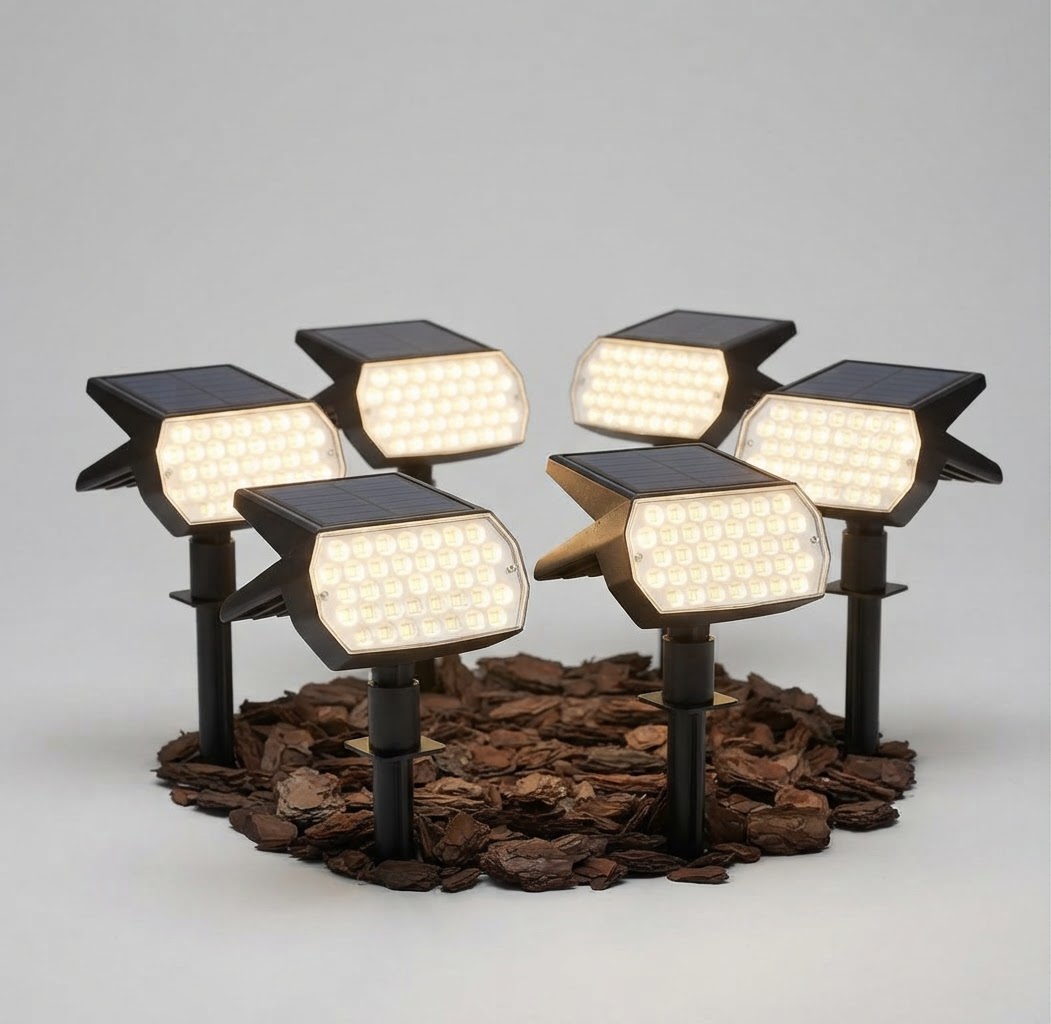
Upgrading your home exterior with outdoor illumination no longer requires complex electrical wiring or high power bills. Modern solar spot lights offer powerful, automated landscape lighting capable of highlighting architectural features, garden plants, pathways, and decorative elements seamlessly.
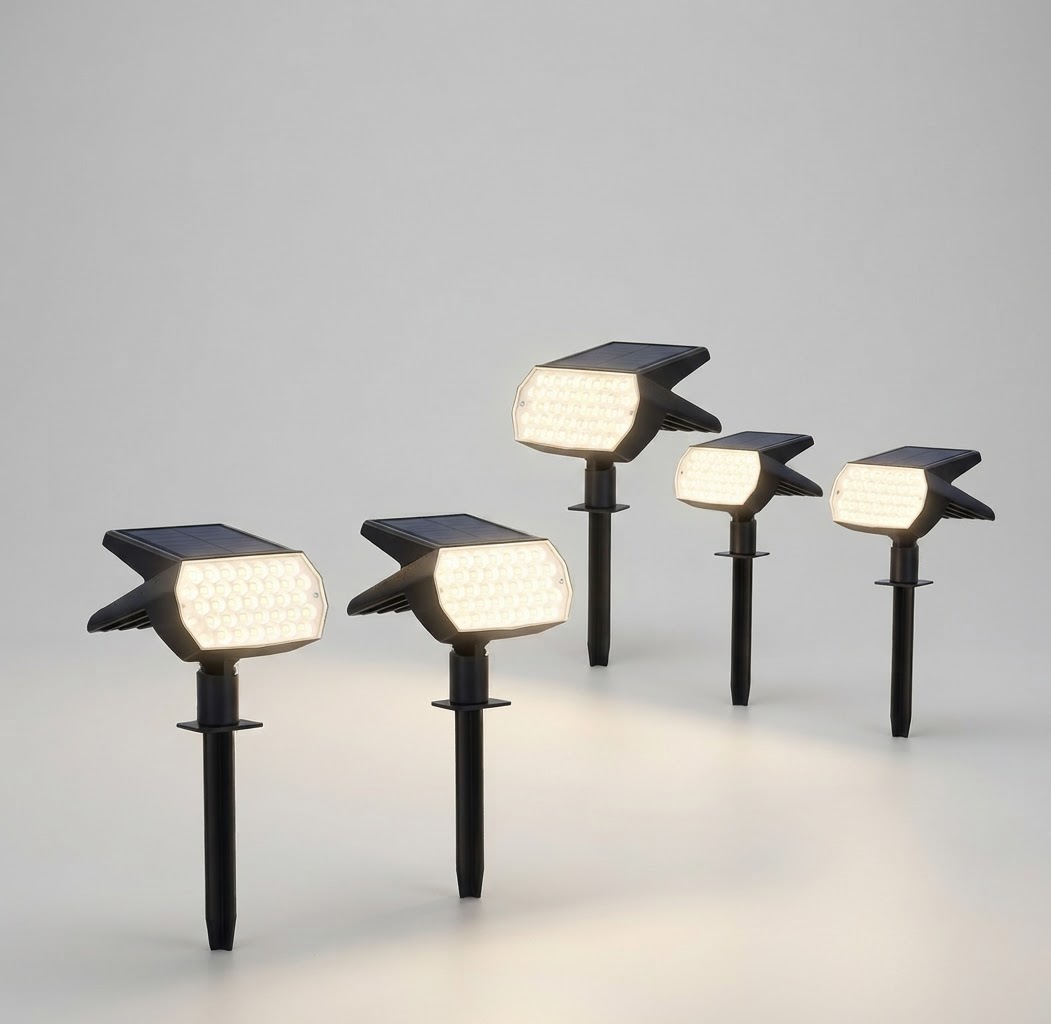
Equipped with 74 high-power LED beads producing up to 600 lumens of brightness, current solar spotlights provide functional and aesthetic illumination comparable to low-voltage wired fixtures. Built-in light sensors enable automatic dusk-to-dawn operation, ensuring lights activate at night and recharge during daylight hours. It is worth being clear at the outset about what this category is for, because most disappointment comes from expecting the wrong thing. Solar spotlights are accent lighting: they pick out individual features against darkness. They are not area lighting and will never make a garden bright.
That is a feature rather than a limitation. Darkness between lit objects is what gives garden lighting its effect, and a garden with three or four well-chosen focal points looks considerably better than one lit evenly throughout.
The architecture behind them is simple and explains most of their behaviour. A panel charges a battery during the day, and the battery runs an LED at night. The panel does not power the light directly, which is why performance depends on what was collected earlier rather than on conditions at the moment, and why siting the panel matters more than any specification on the box.
Solar Panel Efficiency and Illumination Duration
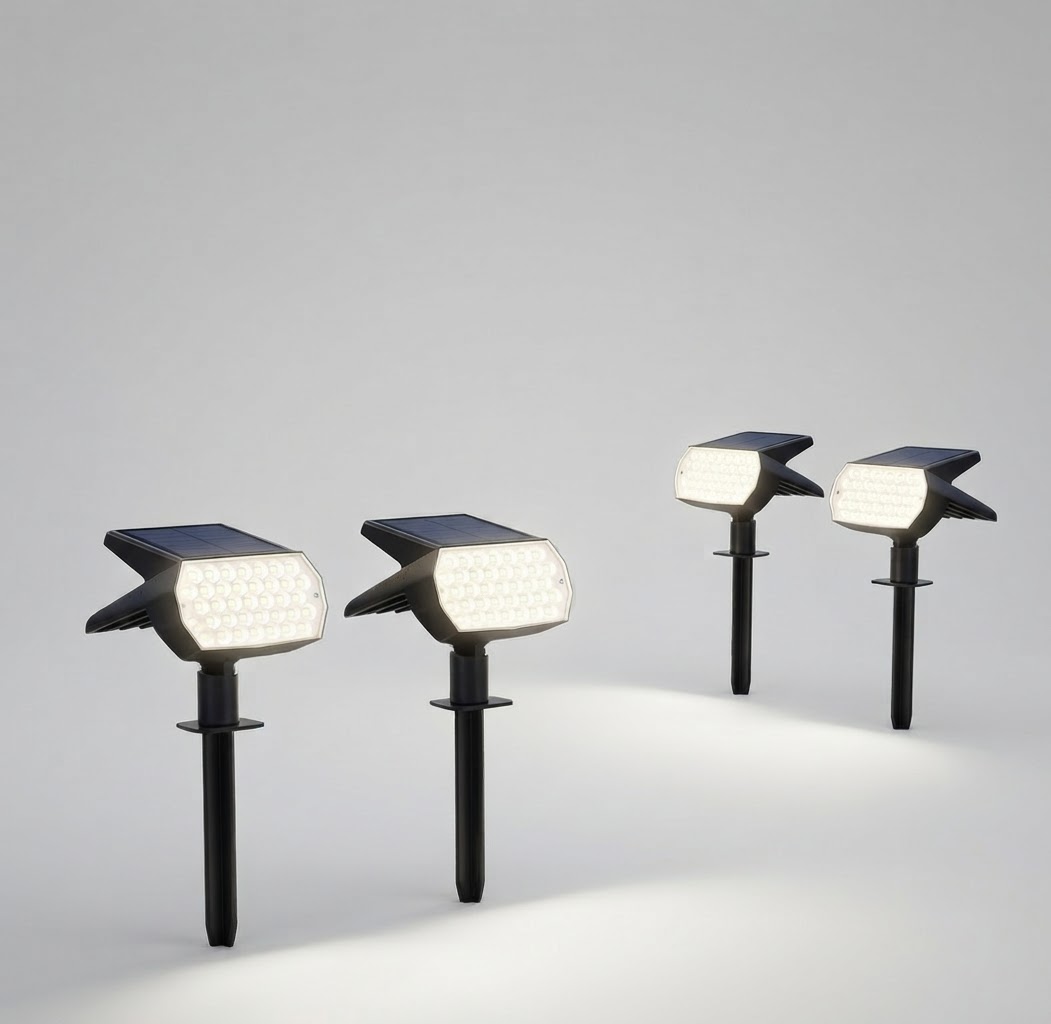
The foundation of reliable solar landscape lighting lies in panel efficiency and battery storage. Utilizing high-efficiency polycrystalline silicon solar panels with conversion rates up to 20%, these lights capture maximum solar energy throughout the day. With a 2000 mAh internal power cell, users can expect continuous illumination for 6-14 hours on a single charge.
Optimal positioning of the solar panel is essential. Placing fixtures where they receive direct sunlight maximizes charge efficiency, ensuring reliable light performance even during shorter winter days. Think of it as a daily budget: the panel collects, the light spends, and the battery is the reserve between them.
Collection varies enormously with orientation, tilt, season, latitude, and shade, and shade is the harshest of these because partial shading collapses output rather than reducing it proportionally. This is why a modest fitting in open sun outperforms a better one under an eave or a canopy.
Spending is set by brightness and run time, both usually adjustable. A lower brightness mode can multiply run time several times over, which for accent lighting is nearly always the better trade.
The practical implications are three. Site for winter rather than for the day you install, since a system that is exactly in balance in June will be in deficit in December. Wipe the panels two or three times a year, because dust and hard-water spotting cut charging measurably. And watch planting, since the border that shades a panel by July was clear in April, and growth is the most common reason lights that worked well for a season stop doing so.
Selecting Color Temperatures for Landscape Aesthetics
Lighting design relies heavily on color tone to set mood and contrast. Advanced solar spotlights feature 3 color lighting modes:
- Cool White: Sharp, high-contrast illumination ideal for modern home exteriors, security zones, and tall flagpoles.
- Warm White: Soft, inviting tones perfect for outdoor seating areas, wooden structures, and classic brick masonry.
- Natural White: Balanced, neutral clarity that enhances the vibrant greens and colorful blooms of garden foliage and shrubs.
Warm white flatters brick, stone, timber, and render, matches the light spilling from house windows, is the most comfortable to sit beside, and attracts noticeably fewer insects. Its weakness is foliage, which it renders dull and slightly brown.
Natural white renders greens accurately and is the better choice for trees, hedges, and borders. It looks slightly clinical close to a house lit warmly from inside.
Cool white suits contemporary materials and security applications, flattens warm materials, attracts more insects, and contributes more to sky glow.
The rule that matters more than any of these choices is consistency. Mixing temperatures across a garden is far more conspicuous than picking the wrong one, and it is what makes a scheme look unplanned. A defensible compromise is warm near the house and on seating, natural further out on planting, with the change happening across distance rather than side by side.
Flexible 2-in-1 Installation and Angle Adjustment
Versatility in mounting ensures tailored coverage across varied landscapes. A 2-in-1 design allows for ground insertion using included stakes or secure wall mounting with provided hardware screws. For ground placement, a recommended stake depth of 4-6 inches ensures stability in soil or turf.
Spacing units between 6-10 feet apart creates an even wash of light without harsh dark gaps. Furthermore, the spotlight head features 120-degree flexible adjustment, allowing precise beam targeting onto tall trees, sculptures, or entryway doors. Staking suits borders, soft ground, and anywhere the light may move, which is almost everywhere, since very few schemes are right first time. Wall mounting suits hard surfaces, higher angles, and positions that need to stay put. A sensible approach is to stake everything at first, live with it for a few weeks, and permanently mount only what proves itself.
A few practical notes. Water hard ground before pushing a stake in, and push on the stake rather than the light head, which is where they break. Keep staked lights out of the mown lawn itself and into the border edge, since mowing around them is a recurring annoyance and they get knocked out of alignment constantly. And expect staked fittings to need their panels cleaned more often, because rain splashes soil onto anything sitting that low.
On aiming, do it after dark. The two recurring errors are aiming too high, so the beam sails over the subject into the sky or a neighbour's window, and glare, where the fitting is visible from a seat or a path. Walk the garden from the places you actually use and turn or shield anything whose source you can see directly.
Weatherproofing and Year-Round Durability
Outdoor lighting must withstand constant exposure to environmental conditions. Built with an IP65 waterproof rating, these fixtures resist heavy rain, snow, wind, and frost. The durable casing prevents moisture ingress and UV degradation, delivering long-term reliability backed by [warranty duration] not specified peace of mind.
Check the IP rating, where the second digit covers water. IP65 or better suits an exposed position; IP44 wants shelter. Ground-staked fittings deserve the higher rating regardless, since heavy rain throws soil and water up at exactly that height.
Winter brings three problems that are separate from waterproofing. Cold reduces the capacity a battery can deliver, shortening run times independently of charging. Snow on a panel stops charging entirely until it is cleared. And ground frost can heave stakes out of position or crack one pushed into hard ground.
In a harsh climate, bringing accent lights indoors for the worst weeks is a reasonable choice rather than an admission of defeat. They contribute very little in deep midwinter anyway, and storing them dry and partly charged is better for the battery than leaving them to sit flat under snow.
Over a longer horizon, the battery is what determines lifespan. Capacity declines gradually over a few seasons, and whether the cell can be replaced is the single most useful question to ask before buying, far more so than the lumen figure on the front of the box.
Related in this cluster
- 5 Key Areas to Enhance with Outdoor Solar Spotlights
- Solar vs. Hardwired Landscape Spotlights: Performance & Cost Comparison
- How to Install Outdoor Solar Spot Lights in Ground or On Walls
- Solving Common Landscape Lighting Issues with Nacinic Solar Spot Lights
- Solar Spot Lights FAQ: Charging, Operation, and Maintenance
- Understanding Color Temperatures: Cool White vs Warm White vs Natural White