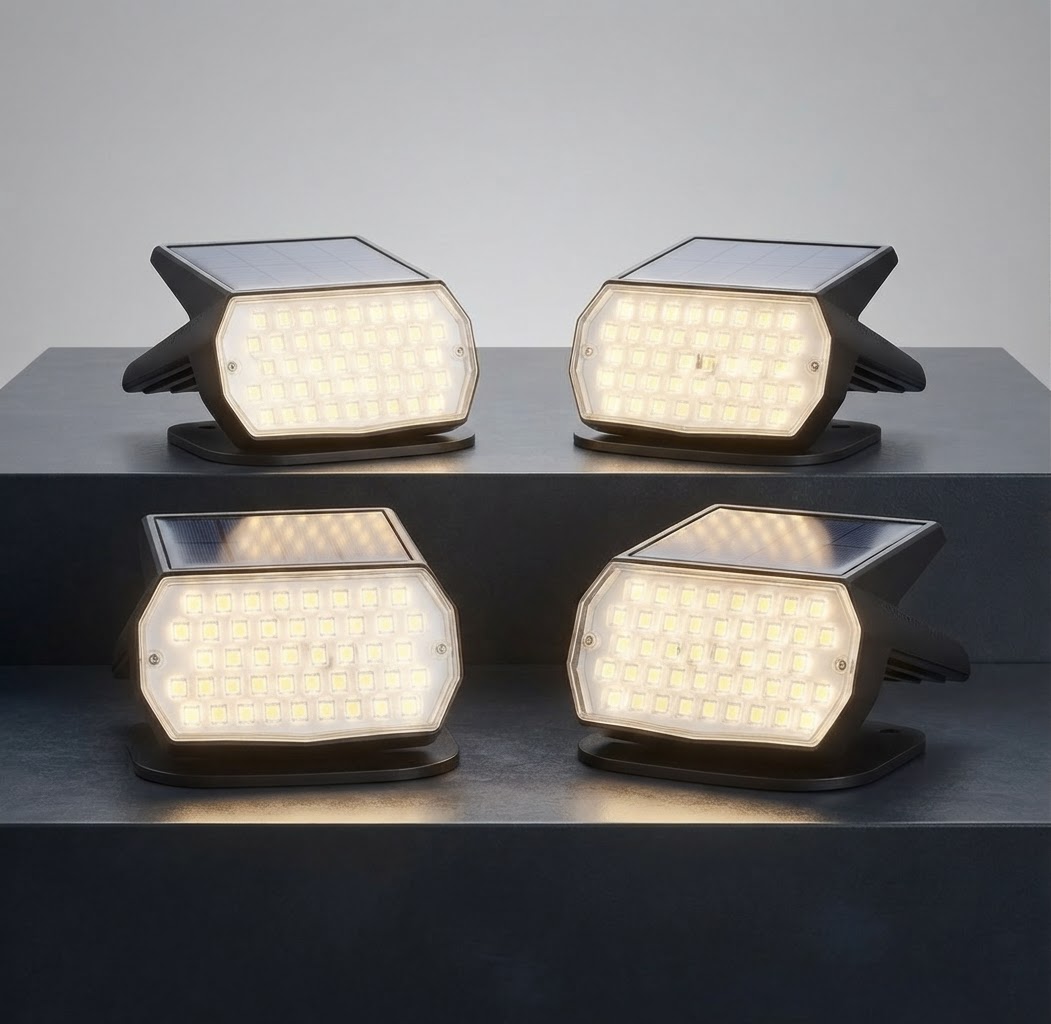
Understanding Color Temperatures: Cool White vs Warm White vs Natural White
Why Color Temperature Matters in Outdoor Design
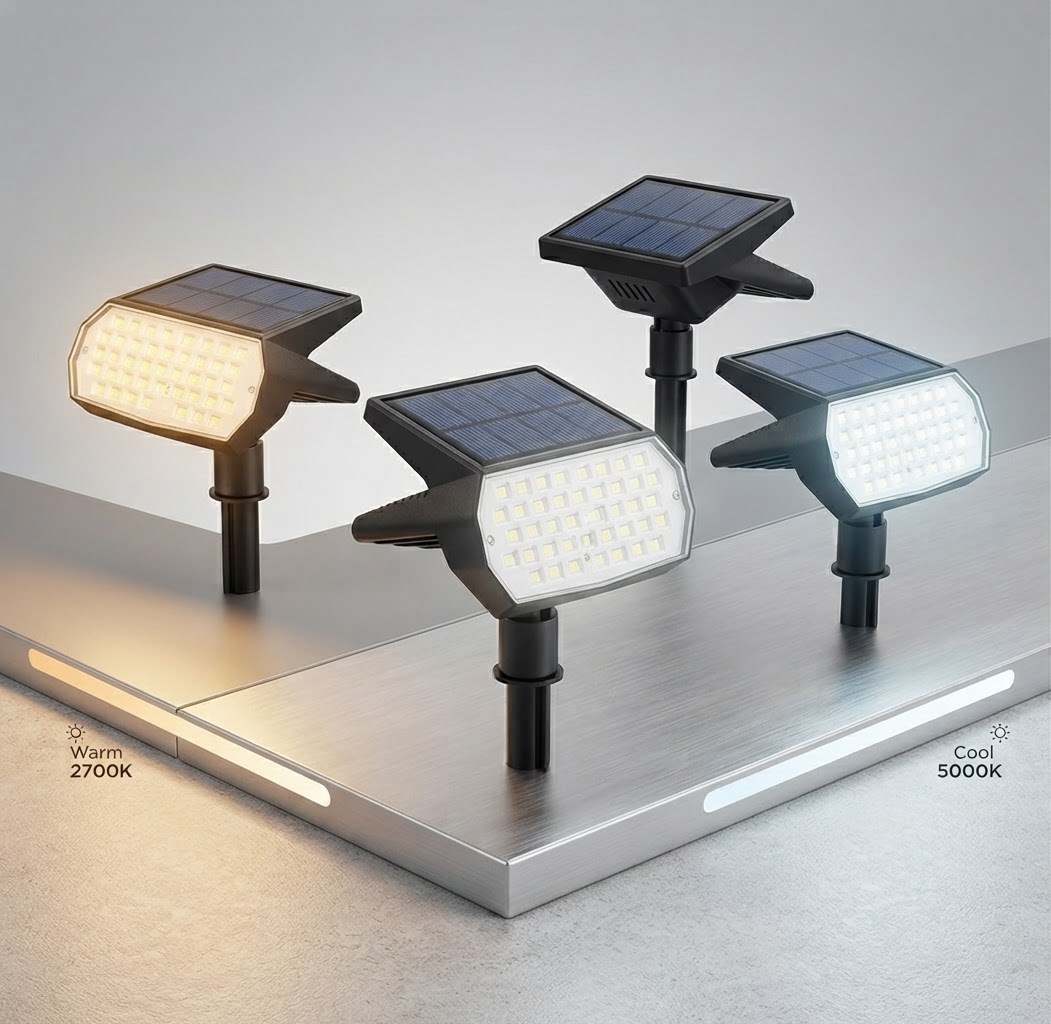
Selecting light fixtures isn't just about brightness; color temperature dramatically changes how your home and landscape look after dark. Expressed in Kelvin (3000K Warm to 6500K Cool White), light output ranges from warm golden tones to crisp cool white hues.
Modern solar spot lights offer 3 color lighting modes built into a single unit, eliminating the need to select fixed color bulbs before purchase. Consult the main guide for full installation hardware detail. Colour temperature is measured in kelvin, and the scale runs counter to intuition: lower numbers are warmer and more orange, higher numbers are cooler and bluer. Roughly, 2700K is the warm yellow of a traditional filament bulb, 4000K is a neutral white, and 6000K and above is the blue-white of daylight.
The reason it matters outdoors more than indoors is that a garden has no walls to bounce and blend light. Each fitting is seen directly against darkness, so differences that would be invisible in a lit room are conspicuous in a garden.
Which is why the most useful rule in the whole subject is consistency. Mixing colour temperatures across a garden is far more noticeable than any individual choice, and it is what makes an otherwise decent scheme look accidental. Pick one and stay with it, or at minimum keep each area internally consistent.
Warm White: Creating Cozy, Traditional Accent Lighting
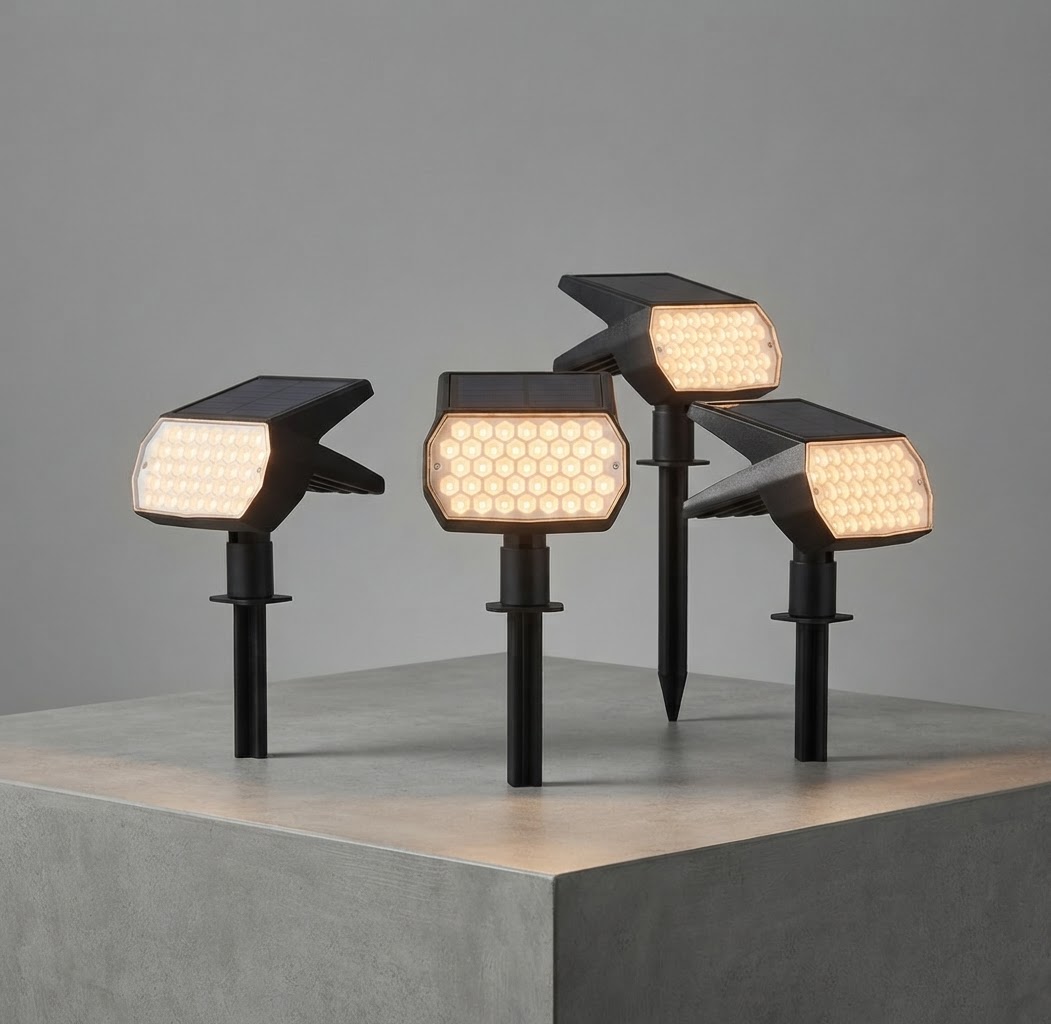
Warm light emits a soft, amber tone reminiscent of classic halogen bulbs. This mode complements wooden decks, dark brick architecture, stone entryways, and patio sitting zones. It creates an inviting atmosphere without feeling harsh on the eyes. Warm white, in the region of 2700K to 3000K, is the safest default for most domestic gardens and particularly for anywhere people sit.
It suits brick, stone, timber, and render, because those materials are warm-toned to begin with and warm light reinforces rather than fights them. It matches the light spilling from house windows, which is what stops a garden scheme looking disconnected from the building. And it is the more comfortable light to sit beside for an evening.
The trade-off is on foliage. Warm light dulls greens and can make a planted border look drab and slightly brown, which is why the same fitting that flatters a stone wall can disappoint aimed at a shrub.
Warm light also carries a practical advantage that gets little attention: it attracts noticeably fewer insects than cooler, bluer light. For anywhere near a seating area or a door, that alone is often reason enough.
Natural White: Accentuating Greenery and Foliage
Natural White mimics mid-day daylight. This balanced tone is tailored specifically for gardens, floral displays, shrubs, and specimen trees. Because it renders colors accurately without yellow or blue tints, green leaves look vibrant and natural. Natural or neutral white, around 4000K, is the best choice for planting, and the reason is straightforward: it contains enough of the blue-green part of the spectrum to render leaf colour accurately, so greens look green rather than washed out or brownish.
It suits specimen trees, hedging, borders, and anywhere the subject is living rather than built. It is also a reasonable compromise where one temperature must cover both planting and hard landscaping, since it flatters neither as well as the specialist choice but disappoints neither badly.
Where it sits awkwardly is close to a house whose windows spill warm light. The contrast between 4000K in the garden and 2700K from a kitchen window is visible and slightly clinical.
A practical compromise many gardens end up with is warm white near the house and on seating areas, natural white further out on planting. That works provided the transition happens across a distance rather than side by side.
Cool White: Modern Contrast and Security
Cool White produces crisp light with subtle blue undertones. Generating high contrast, it works effectively on modern white siding, contemporary concrete architecture, flagpoles, and perimeter security zones. With 74 LEDs yielding 600 lumens, Cool White maximizes visible perimeter detail. Cool white, 5000K and above, is the most specialised of the three and the easiest to overuse.
It suits contemporary architecture, glass, steel, and pale render, where its crispness reads as deliberate. It is also the conventional choice for security lighting, since higher contrast makes detail easier to pick out on camera and to the eye.
The drawbacks are real. It flattens warm materials and can make brick and timber look grey and lifeless. It is an uncomfortable light to sit beside, reading as institutional rather than domestic. And it attracts markedly more insects than warmer light, which is worth knowing before installing it near a door or a table.
There is also a growing awareness that blue-rich outdoor light contributes disproportionately to sky glow and has more effect on nocturnal wildlife than warmer light does. For a garden, that is a fair argument for keeping cool white to the specific places it earns.
Switching Light Modes on Multi-Color Solar Spotlights
Changing lighting tones is seamless. A simple button press toggles through the 3 modes, allowing seasonal adjustments for outdoor events or landscaping changes.
Read the full guide: The Complete Guide to Outdoor Solar Spot Lights for Landscape Illumination
The practical value of a switchable fitting is that it lets you decide after installation rather than before, which is worth a great deal. Colour temperature is very difficult to judge from a product photograph and obvious the moment a light is actually shining on a wall at night.
The sensible method is to install the lights, set them all to one temperature, and look at the garden after dark from the places you will actually see it from: the patio, the kitchen window, the front gate. Then change one thing at a time.
Two practical notes on solar units specifically. Higher colour temperatures usually correspond to slightly higher efficiency, so a cool white setting may run marginally longer on the same charge than a warm one. And if the fitting also offers brightness modes, running a lower brightness for a longer period is generally more useful in a garden than maximum output for two hours, since the point of accent lighting is that it is there through the evening.
Whichever you choose, keep the setting consistent across the scheme. A garden with three temperatures in it looks like an accident regardless of how good each individual light is.