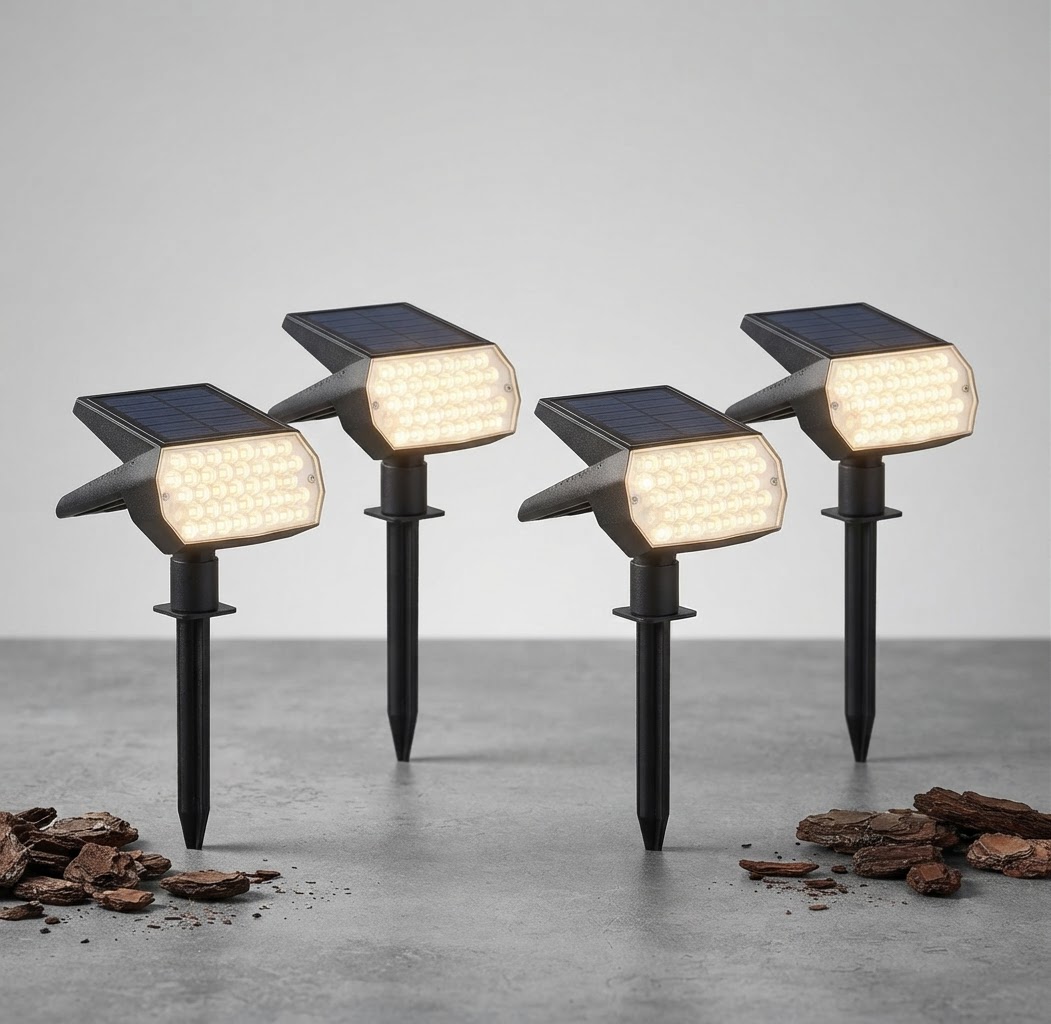
Solving Common Landscape Lighting Issues with Nacinic Solar Spot Lights
The Frustration of Low-Quality Landscape Lighting
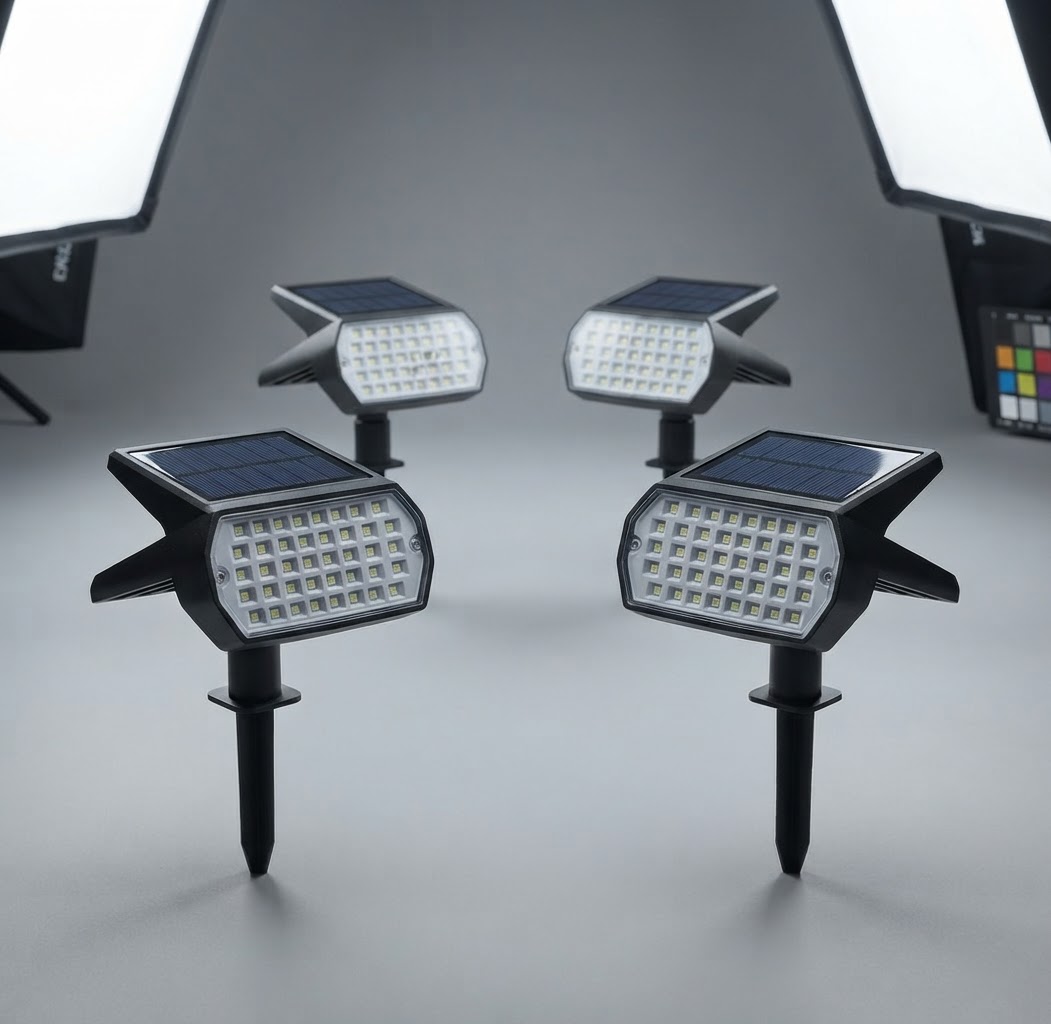
Many homeowners invest in outdoor solar lighting only to end up disappointed. Weak light output, short runtimes that die before midnight, and water leakage after a light rain shower turn promising landscaping projects into dark, frustrating spaces. The disappointment usually follows the same sequence. The lights work well for a few weeks in summer, then the evenings they stay lit get shorter, then by autumn they manage an hour or two and by winter they barely come on at all.
That pattern is often blamed on the product when the cause is elsewhere. Three ordinary things account for most of it: a panel that has become shaded by planting that grew through the season, a panel with a film of dust and hard-water spotting on it, and simple seasonal change as days shorten and the sun drops lower.
The fourth cause is the battery, which declines gradually over several seasons rather than failing suddenly. That is genuinely the product wearing out, and it is why replaceable cells matter so much in this category.
Why Ineffective Solar Lights Leave Yards in the Dark
Cheap solar lights typically fail due to sub-par components. Thin plastic casings crack under frost, low-efficiency solar panels fail to store power on cloudy days, and dim 10-lumen LEDs leave gardens shadowed and unsecured. Replacing failed lights every season creates unnecessary expense and hassle.
To see full installation distance recommendations, refer to the main guide. Beyond charging, the two things that most often make garden lighting ineffective are aiming and beam angle, and neither is a matter of product quality.
Aiming in daylight is guesswork, and the usual result is a beam passing over its subject entirely, lighting the sky and a neighbour's window instead of the tree it was bought for. Aiming after dark, and re-aiming a week later, fixes more disappointing installations than upgrading the fittings does.
Beam angle decides what a light is good for. A narrow beam picks out a single object; a wide one washes a surface. Using the wrong one is why a light can be perfectly bright and still look wrong.
There is also a common expectation problem. Solar accent lighting is for picking out features against darkness, not for illuminating a whole garden. Judged as area lighting it will always disappoint, because that is not what it is.
The Solution: Nacinic 74-LED 600LM Solar Spot Lights
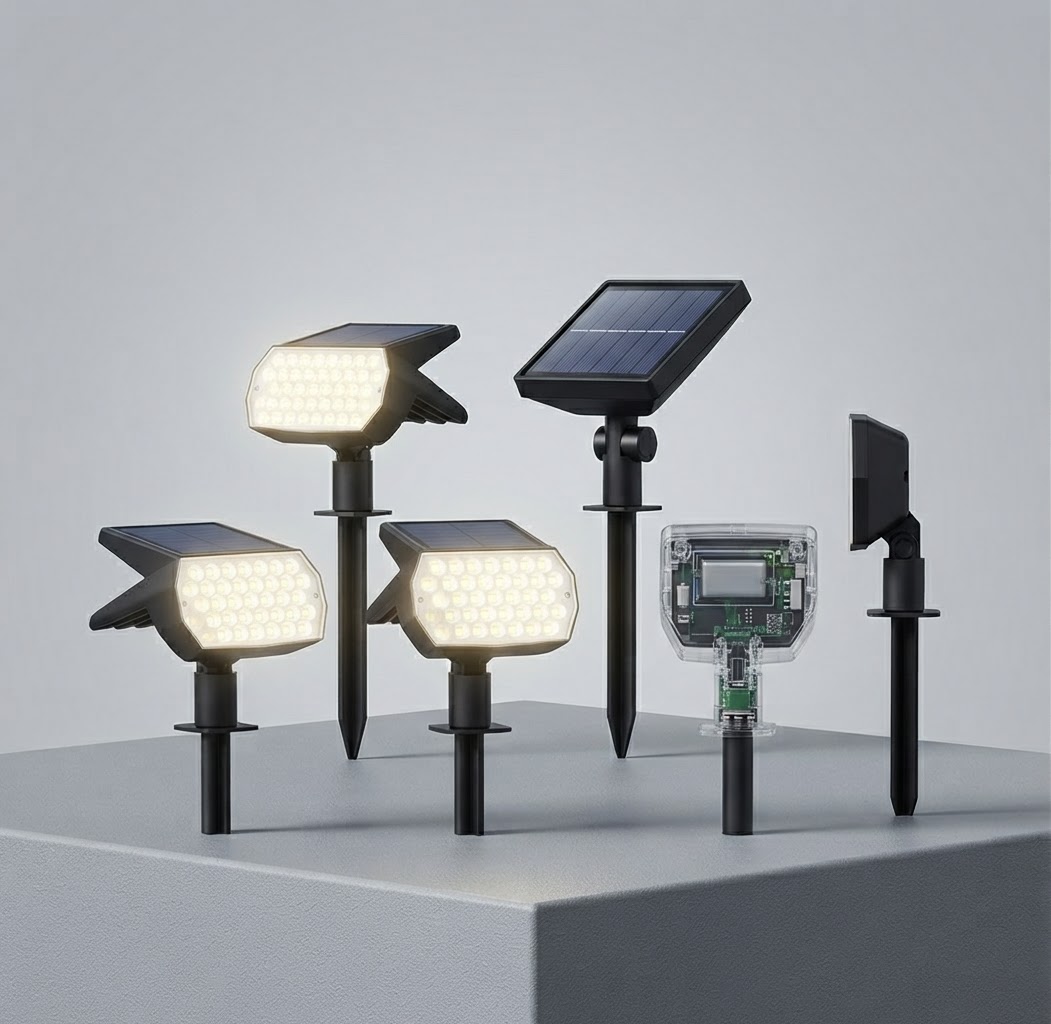
Nacinic Solar Spot Lights overcome common solar lighting flaws through engineered durability and high-capacity output. Engineered with 74 high-power LED beads generating 600 lumens, these fixtures deliver vibrant illumination across landscape features.
Equipped with 20% high-efficiency polycrystalline panels and dusk-to-dawn sensors, they convert sunlight efficiently to provide continuous runtime for 6-14 hours on a single charge. Set against those failure modes, it is worth being clear about what a better fitting solves and what still depends on installation.
Better hardware helps with output, battery capacity, weather sealing, and adjustability. What it cannot do is overcome a shaded panel, a beam aimed over its target, or an expectation that accent lights will light a whole garden.
So the specification worth caring about is not the headline lumen figure. It is whether the panel can be sited separately from the light head, since uplighting frequently puts the fitting in shade; whether the battery can be replaced, which determines whether the light lasts three years or ten; the IP rating, with IP65 or better for exposed positions; and how adjustable the head is, since aiming is what makes or breaks the result.
On the lumen figure itself, treat it as a ceiling reached at full charge on a clear day, not as what the light will do in November.
Key Features Built for Lasting Yard Illumination
- 3 Color Lighting Modes: Choose Cool White, Warm White, or Natural White to customize visual contrast.
- IP65 Weather Resistance: Built with weatherproof sealing that withstands rain, wind, frost, and snow.
- Flexible 2-in-1 Mounting: Install via 4-6 inch ground stakes or secure wall mounts.
- 120-Degree Adjustable Head: Aim light beams precisely where needed.
Read the full guide: The Complete Guide to Outdoor Solar Spot Lights for Landscape Illumination
Ranked by how much each affects the result over a few years.
Battery replaceability comes first. It is the difference between a fitting whose life ends with its first battery and one that carries on for the cost of a cell.
Panel separability comes second, and it is specific to spotlights. The best position for a beam and the best position for a panel are often different, and a panel on a lead resolves the conflict that otherwise makes uplighting underperform.
Weather rating is third. IP65 or better for an exposed border; a ground-staked light also faces soil splash that a wall-mounted one does not.
Adjustability is fourth, and it is what lets you correct the aim, which almost every installation needs.
Brightness modes are fifth and more useful than they sound, because a lower setting that lasts all evening usually beats full output for two hours.
Colour temperature options come last on the durability list but matter for appearance, with the single rule being consistency across the scheme rather than any particular choice.