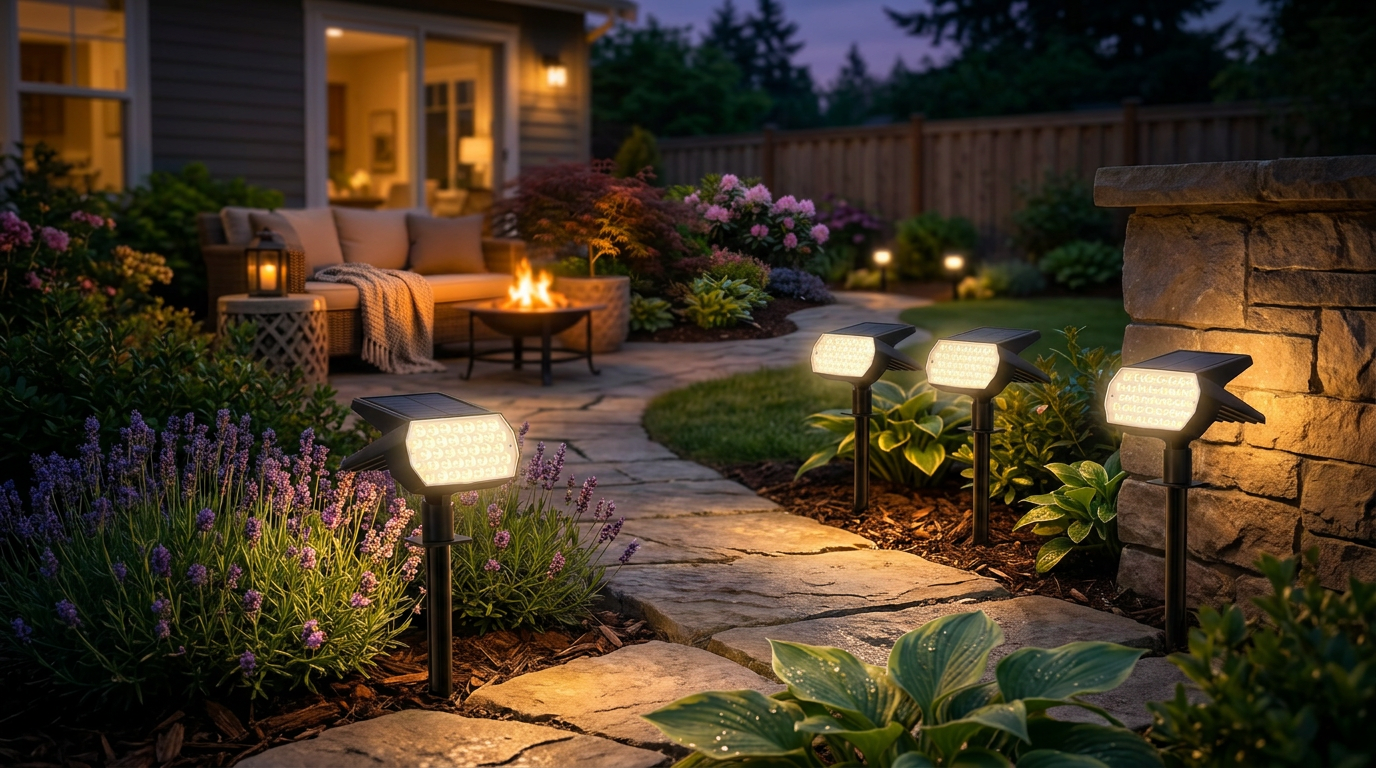
Aesthetic Landscaping with Warm White Solar Spotlights
 Priya RamanSenior Analyst
Warm white Solar Spot Lights are the definitive choice for homeowners and landscape designers seeking to craft an inviting, high-end outdoor ambiance. The key lies in their 2700K to 3000K color temperature, which bathes gardens, trees, and architectural features in a soft, golden light. This mimics the welcoming glow of traditional halogen bulbs, enhancing natural textures and colors without the sterile, harsh glare often produced by cooler-toned LEDs. As outdoor spaces increasingly serve as extensions of our homes, achieving the right mood through lighting is paramount for creating a relaxing and cohesive environment.
The Science of Ambiance: Why Color Temperature Matters
Color temperature, measured in Kelvin (K), is the technical term for the visual warmth or coolness of a light source. For landscape lighting, this single factor can make or break the design.
- Warm White (2700K–3000K): This range produces a soft, yellowish-white light reminiscent of a candle or incandescent bulb. It excels at enriching the deep greens of foliage, the warm browns of tree bark, and the varied tones of stonework. The result is a landscape that feels natural, organic, and visually comfortable to the human eye at night.
- Cool White (4000K+): This range emits a stark, bluish-white light. While it can appear brighter and is often used for security or commercial purposes, it tends to wash out the natural colors of a garden. Plants can look pale and the overall effect can feel clinical and unwelcoming, detracting from a home's curb appeal.
Key Features of High-Performance Warm White Solar Spotlights
Photo by Duy's House of Photo on Pexels
Beyond color temperature, several technical features determine the effectiveness and longevity of your lighting investment. A quality warm white solar spotlight balances aesthetics with robust performance.
- Brightness (Lumens): For most residential applications, a brightness of around 125 lumens per fixture is the gold standard. This provides enough focused light to illuminate medium-sized trees, garden beds, or architectural details from 5-15 feet away without causing light pollution or overwhelming the space.
- Durability and Weatherproofing: Look for fixtures with a high Ingress Protection (IP) rating. For example, some premium lights feature an IP67 rating, which means the unit is completely protected from dust and can be submerged in water up to one meter. According to Quntis Solar Spotlights specifications, this level of waterproofing ensures reliable operation through heavy rain and irrigation. Materials also matter; cast aluminum or heavy-duty PVC bodies offer superior protection against corrosion and physical damage compared to standard plastic.
- Battery and Charging: Modern solar panels are highly efficient, but battery capacity determines runtime. A high-output unit should provide 8-10 hours of illumination on a full charge. For added reliability during overcast weeks, some models incorporate a USB-C charging port, allowing you to manually top off the battery to guarantee performance.
Application Techniques for Trees and Vertical Landscapes
Proper placement is crucial for transforming a set of lights into a cohesive lighting design. The goal is to create visual interest through highlights and shadows. Warm white Solar Spot Lights are particularly effective for uplighting, a technique where the fixture is placed on the ground and aimed upward.
To illuminate a tree, place one or two spotlights at its base, aiming them up into the canopy. This creates a dramatic effect, highlighting the texture of the bark and the shape of the branches. For broader structures like stone walls or hedges, space the lights evenly to create a gentle, scalloped wash of light. The process of installing solar uplights for trees is straightforward, but angling the light correctly is key to achieving a professional look.
Different tree types may require unique approaches. For instance, there are specific strategies for using solar landscaping lights for palm trees to emphasize their unique fronds and slender trunks. Ultimately, experimenting with placement and angles will help you achieve the perfect balance, and a key part of that is optimizing outdoor landscape lighting solar performance by ensuring the solar panels receive adequate daily sunlight.
Frequently Asked Questions about Warm White Solar Spotlights
Photo by ROMAN ODINTSOV on Pexels
What is the best color temperature for landscape lighting?
For residential landscapes, the best and most widely recommended color temperature is warm white, specifically between 2700K and 3000K. This range creates a welcoming and natural ambiance that enhances the colors of plants and stonework without appearing harsh.How many lumens do I need for my solar spotlights?
A brightness of approximately 125 lumens is ideal for most residential tasks, such as illuminating trees, shrubs, and architectural features. This level is bright enough to be effective but subtle enough to avoid a floodlight appearance.Can warm white solar spotlights work on cloudy days?
Yes, high-quality solar panels can still charge on overcast days, though less efficiently than in direct sun. For guaranteed performance, look for models with large batteries and high-efficiency panels. Some advanced Solar Spot Lights even include a USB charging option as a backup for extended periods of poor weather.