Rethinking the Solar Powered Flag Pole Light: A Ground-Up Approach
 Maya ChenContributing Editor
The industry's focus on 'easy installation' has pushed a flawed product: top-of-pole lights that cast unflattering shadows and fail to illuminate the flag's full glory. The conventional wisdom says these all-in-one 'donut' lights are the peak of convenience for anyone needing a solar powered flag pole light. But this convenience comes at a significant cost to both aesthetics and long-term performance, failing the primary objective of respectful, consistent illumination.
The Illumination Problem with Top-Mounted Lights
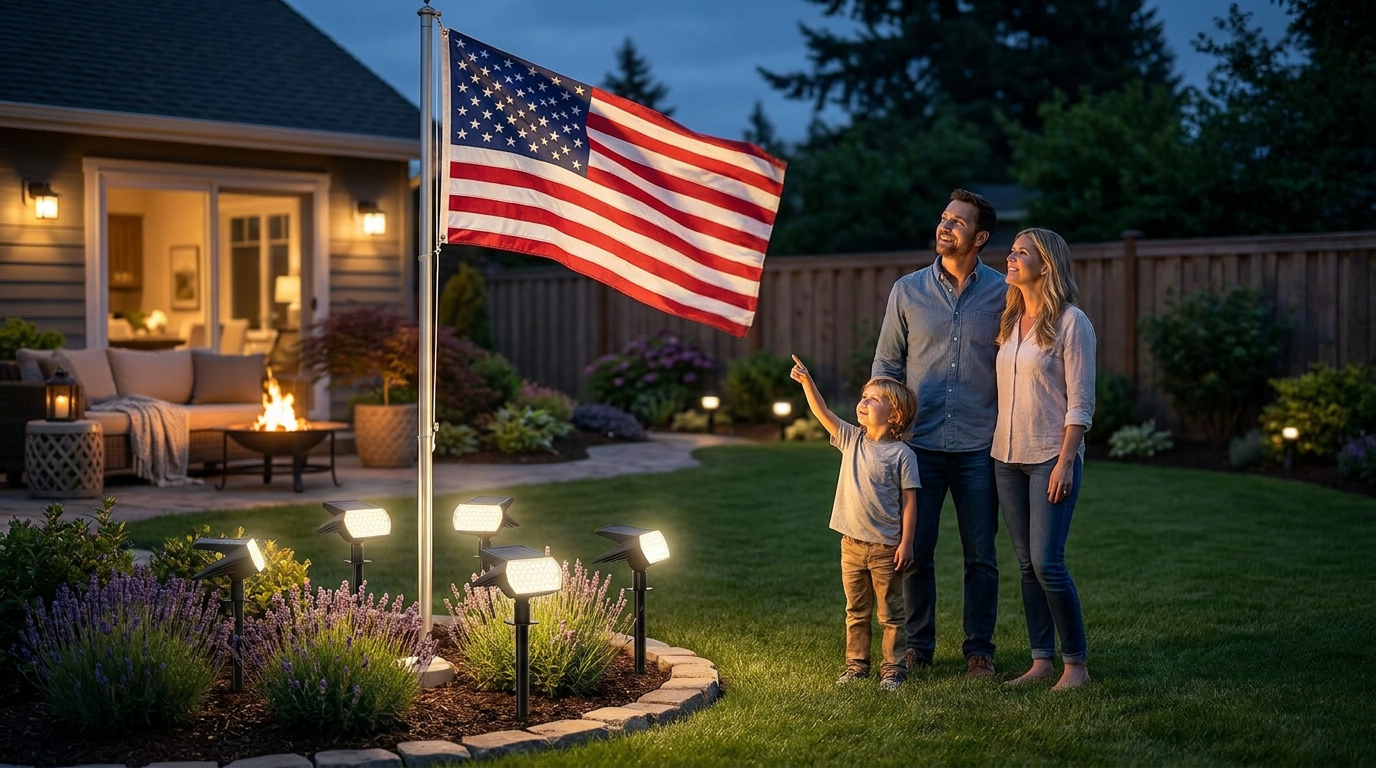
A top-mounted light casts a harsh, direct downlight. This creates a cone of light that often leaves the bottom third of the flag in shadow, especially as it moves in the wind. The texture of the fabric is lost, and the flag appears flat and lifeless. Proper illumination, as required by the U.S. Flag Code for nighttime display, should reveal the flag in its entirety. Uplighting from one or more ground-based spotlights achieves this by casting light across the flag's full surface, highlighting its colors and capturing its dynamic movement.The Practical Flaw: Access and Maintenance
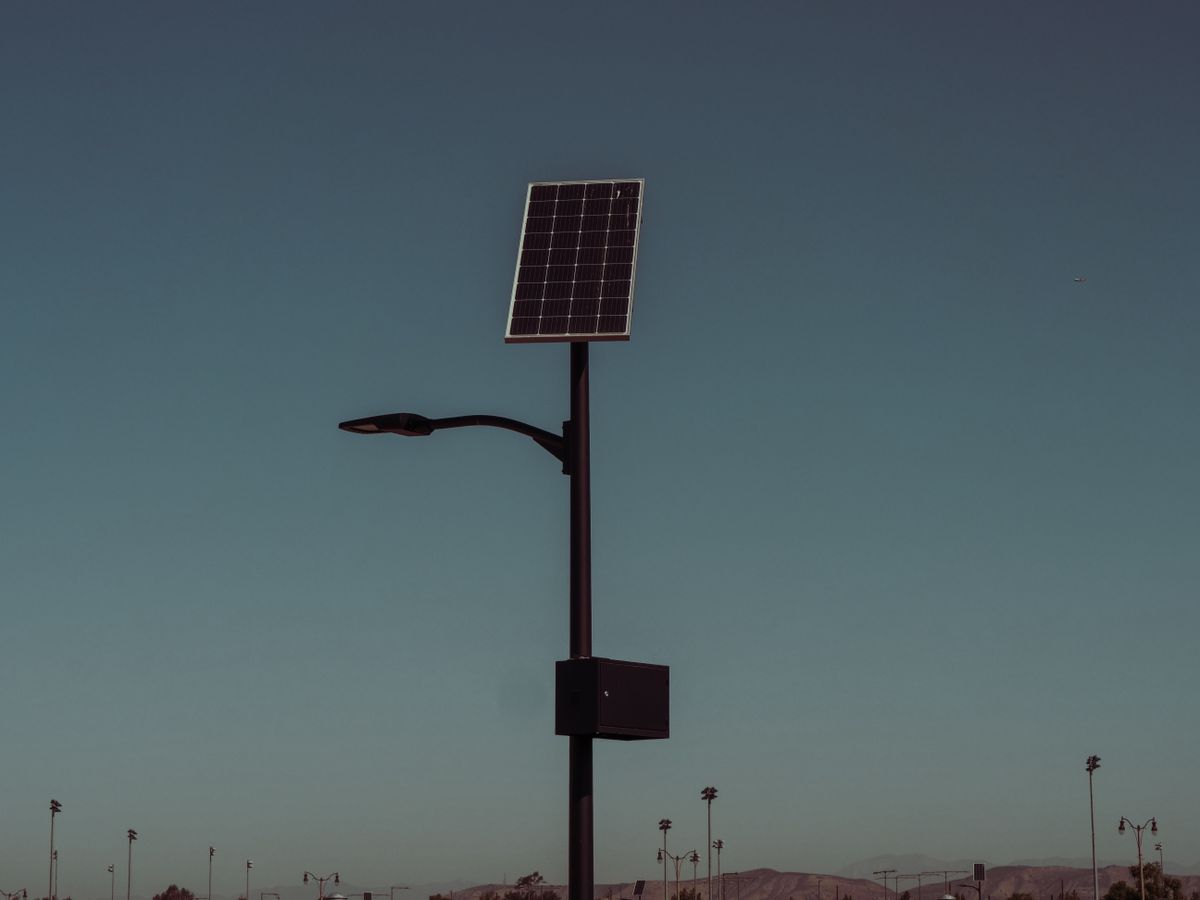
Photo by Kindel Media on Pexels
Here's the part nobody talks about: maintenance. When a battery dies or a solar panel on a top-mounted unit gets covered in grime, servicing it requires lowering the entire flagpole. This is not a simple task for most homeowners. In contrast, ground-based spotlights are accessible for cleaning, battery replacement, or repositioning without any specialized equipment. This design oversight prioritizes a one-time easy setup over years of reliable operation, a trend visible across many recent market updates.
The Power Deficit of Compact Designs
Run the math: the compact, circular design of a top-mounted light inherently limits the surface area of its solar panel and the physical size of its battery. A smaller panel collects less energy, especially during the shorter, often overcast days of winter. This leads to dimming, reduced runtimes, and outright failure when you need the light most. The push for a compact form factor compromises the system's ability to provide Solar Spot Lights for Continuous Flag Illumination, a critical failure for a product designed for dusk-to-dawn operation.A Ground-Based Strategy for Proper Illumination
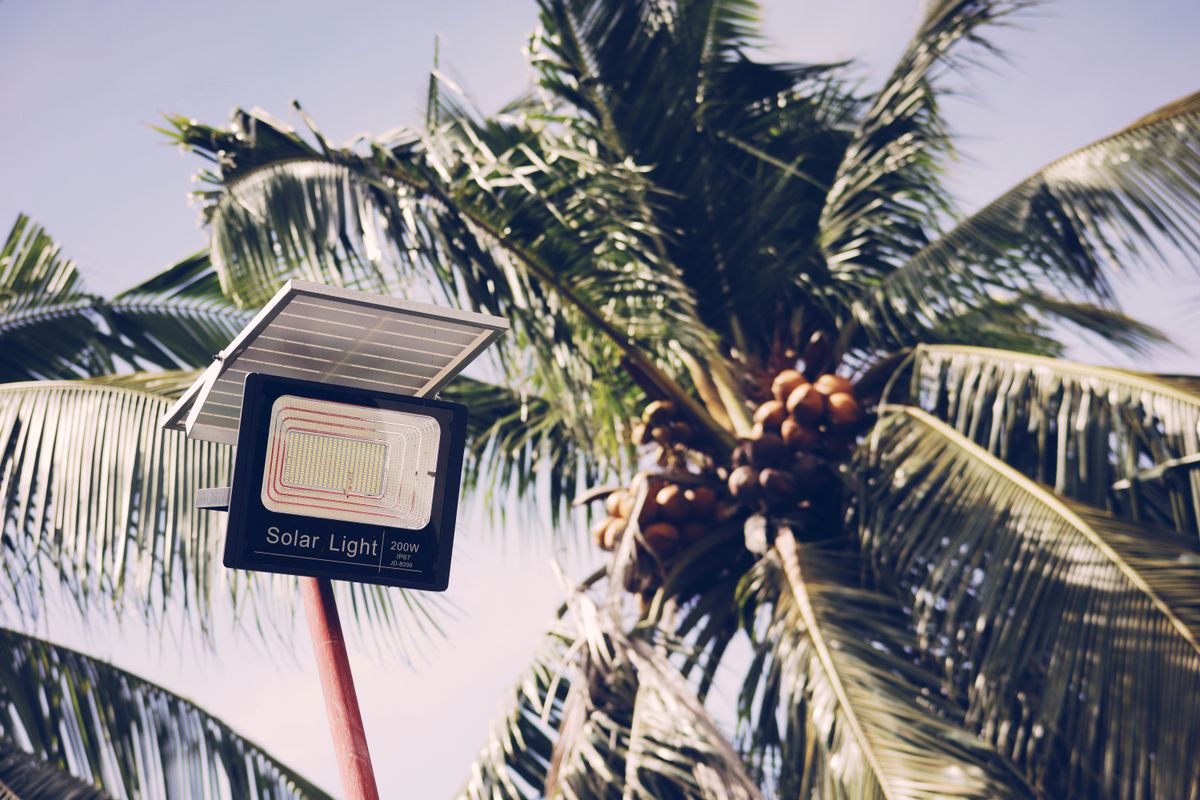
Photo by Nothing Ahead on Pexels
A more robust strategy involves using one or two ground-based solar spotlights. Position the light(s) three to five feet from the base of the pole, aimed upward. This angle ensures the beam spreads to cover the entire flag. The separate, larger solar panel can be positioned independently to receive maximum sun exposure, ensuring better charging and demonstrating superior resilience in harsh weather. This approach separates the light source from the power source, optimizing both for their specific functions.
I'll change my mind when a top-mounted unit can match the power, serviceability, and aesthetic quality of a dedicated, ground-based spotlight system.
How far from the flagpole should a spotlight be placed?
For a standard 20- to 25-foot residential flagpole, placing the spotlight approximately three to five feet from the base provides an ideal beam angle. This distance allows the light to spread and illuminate the entire flag as it waves, avoiding the harsh 'hot spots' and deep shadows common with poorly placed lighting.Why does my top-mounted flagpole light seem dim in winter?
Top-mounted lights often dim or fail in winter due to a combination of two factors: a small solar panel and shorter daylight hours. The limited surface area cannot collect enough energy to fully charge the battery on short, overcast days, resulting in reduced performance and runtime.