Positioning Solar Spot Lights for Palm Trees: 3 Key Rules
 Jordan HaleStaff Writer
Properly illuminated palm trees can transform a property, creating a dramatic, resort-style ambiance. Unlike deciduous trees, palms have unique vertical trunks and high canopies that demand a specific lighting strategy. Using the right solar landscaping lights for palm trees is crucial, but placement is what truly creates a professional look. By mastering a few core positioning rules, you can highlight your palms' architectural beauty from dusk until dawn.
3 Key Rules for Positioning Your Solar Spot Lights
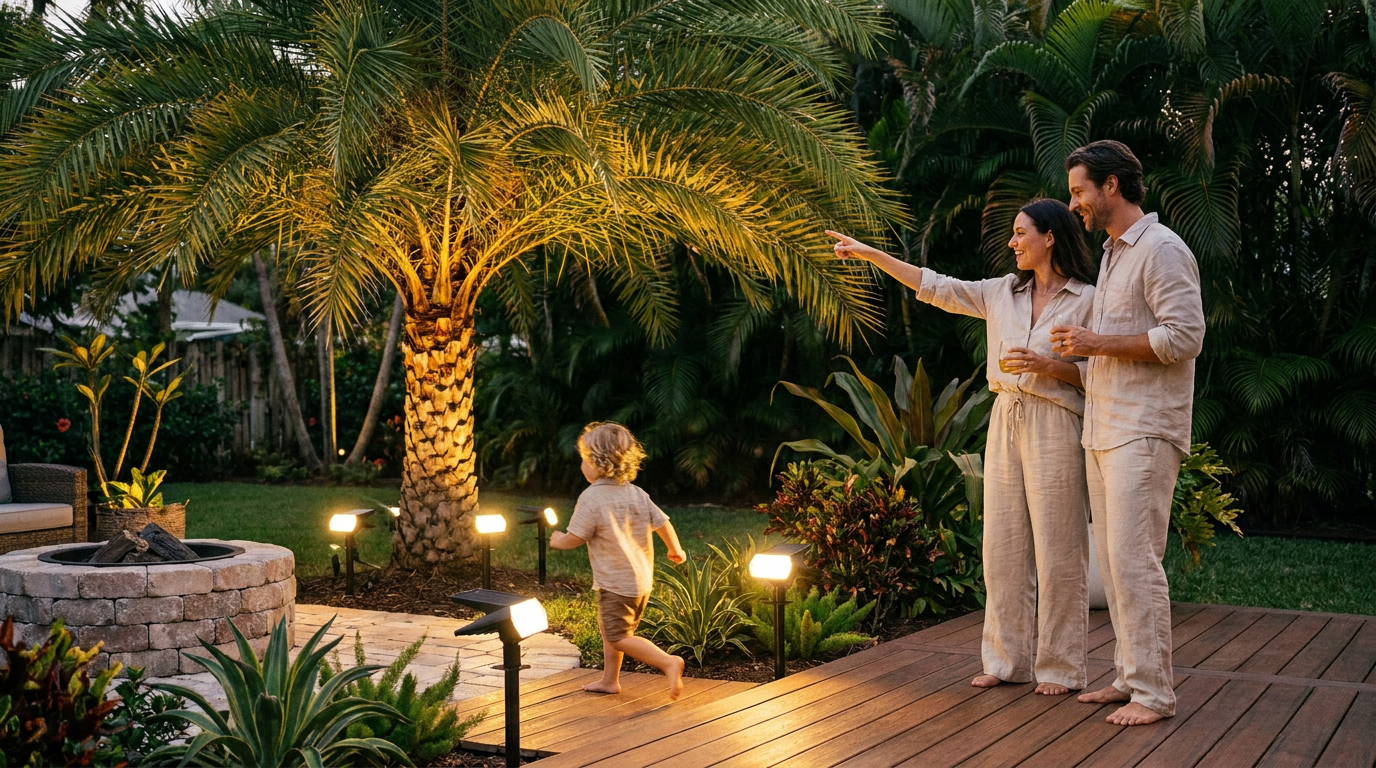
Achieving a polished, layered look involves more than just pointing a light at the tree. Professional installers often use a dual-zone approach, washing the trunk with one light while focusing a second on the fronds to create depth, as recommended by landscape lighting experts. You can replicate this professional strategy by focusing on three key areas:
1. Trunk Grazing to Emphasize Texture
The textured, fibrous bark of a palm tree is one of its most defining features. To highlight it, use a technique called "trunk grazing." Place your Solar Spot Light 12 to 18 inches from the base of the trunk and aim the beam sharply upward. This steep angle catches the ridges and diamond patterns, creating dramatic shadows and revealing the trunk's unique character. An adjustable neck on your spotlight is essential for dialing in the perfect angle.2. Canopy Highlighting for a Floating Effect
To prevent the tree from looking like a disembodied trunk, you must illuminate the fronds. For canopy highlighting, place a second Solar Spot Light further back—typically 3 to 5 feet from the base. This wider positioning allows the beam to spread and wash the underside of the canopy in light. This technique requires high-lumen solar spotlights, as the light needs sufficient power to reach fronds that can be 30 feet or higher. The goal is to make the canopy appear to float, creating a stunning visual anchor in your nightscape.3. Backlighting to Create Silhouette Depth
The final touch for a truly professional setup is creating depth. This is achieved by placing a third light source behind the palm tree, aimed towards a wall, fence, or other backdrop. This separates the tree from the dark background, outlining its form in a dramatic silhouette. This method adds a layer of sophistication and ensures your palm stands out as a focal point. The high-intensity performance needed for this is similar to what's required for a solar powered flag pole light, which also needs to cast a strong, focused beam.Selecting the Right Hardware
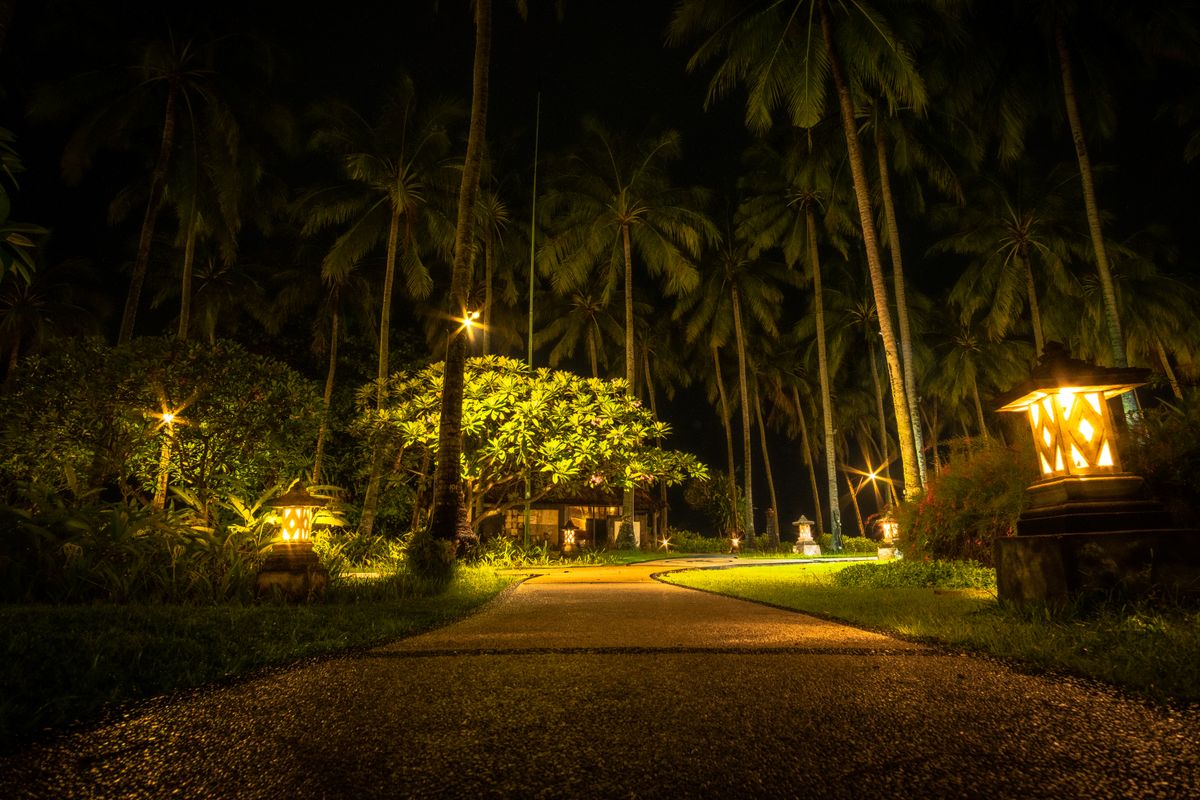
Photo by Unggul Budi on Pexels
Your lighting strategy is only as good as the equipment you use. For palm trees in humid or coastal areas, choose units with an IP65 or higher waterproof rating. High-efficiency monocrystalline solar panels ensure a reliable 8-12 hour runtime. While some lighting techniques can be complex, you can learn how to install solar uplights for trees with a few simple steps, as the principles of placement remain consistent.
Palm Tree Lighting FAQs
Photo by Marcelo Chagas on Pexels
What color light is best for palm trees?
For a natural and elegant look, warm white solar spotlights are highly recommended. Warm white light (around 2700K-3000K) enhances the rich greens of the fronds and the earthy browns of the trunk, creating a welcoming, high-end feel.How many lumens do I need to light a palm tree?
The required brightness depends on the tree's height. For smaller palms (under 20 feet), 150-300 lumens per light may suffice. For taller, mature palms (20-50+ feet), you'll need high-lumen models providing 400-800 lumens per fixture to effectively illuminate the trunk and high canopy.