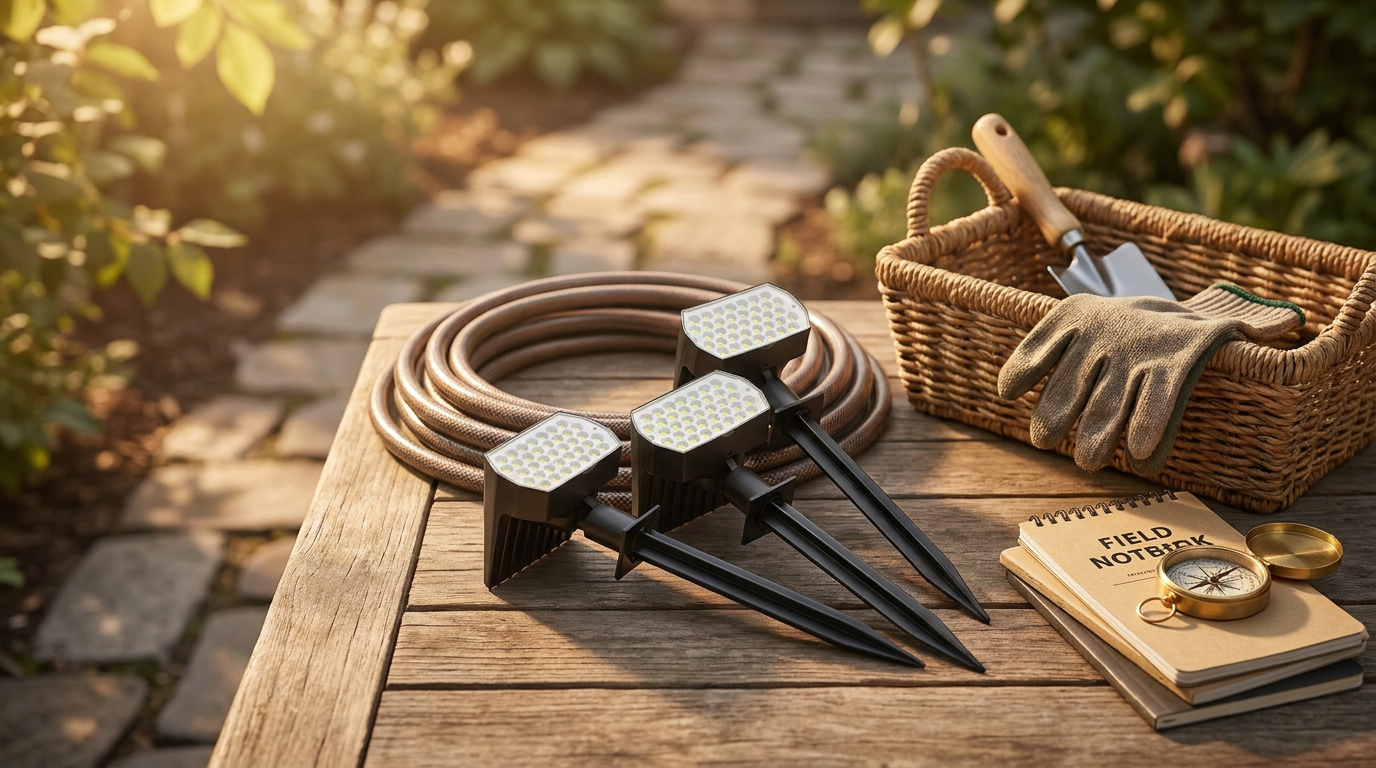
Securing Property with Solar Spot Lights and Motion Sensors
 Sam VasquezBuying Guide Lead
June 10, 2026. This guide examines how motion-sensing technology integrates with off-grid illumination to secure residential perimeters. It is written for homeowners seeking reliable safety upgrades that do not require an electrician.
The Vulnerability of Dark Perimeters
Most property owners realize that dark corners are an invitation for unwanted activity, but the cost of trenching wires for traditional floodlights often leads to procrastination. Standard landscape lighting provides aesthetics, but it lacks the reactive element needed for true security. When we look at the logistics of traditional security lighting, the barrier isn't usually the light fixture itself; it's the labor. Hiring a licensed electrician to run conduit to a remote fence line or a detached garage can easily exceed the cost of the hardware three times over. Without a reactive component, a light that stays on all night at a low level might actually help an intruder see what they are doing rather than startling them. According to Outdoor Solar Store, their Watchdog II Solar Security Light solves this by automatically turning on when motion is detected at night, providing a blend of security, safety, and convenience without the need for professional wiring. This reactivity is the difference between a decorative glow and a functional security perimeter. Many people searching for solar spot lights outdoor are finding that the transition from simple illumination to motion-triggered response is the most significant upgrade they can make to their yard. Skip this if you already have high-voltage floodlights installed and are merely looking for accent lighting for your flower beds.
How Motion-Sensing Solar Spot Lights Function
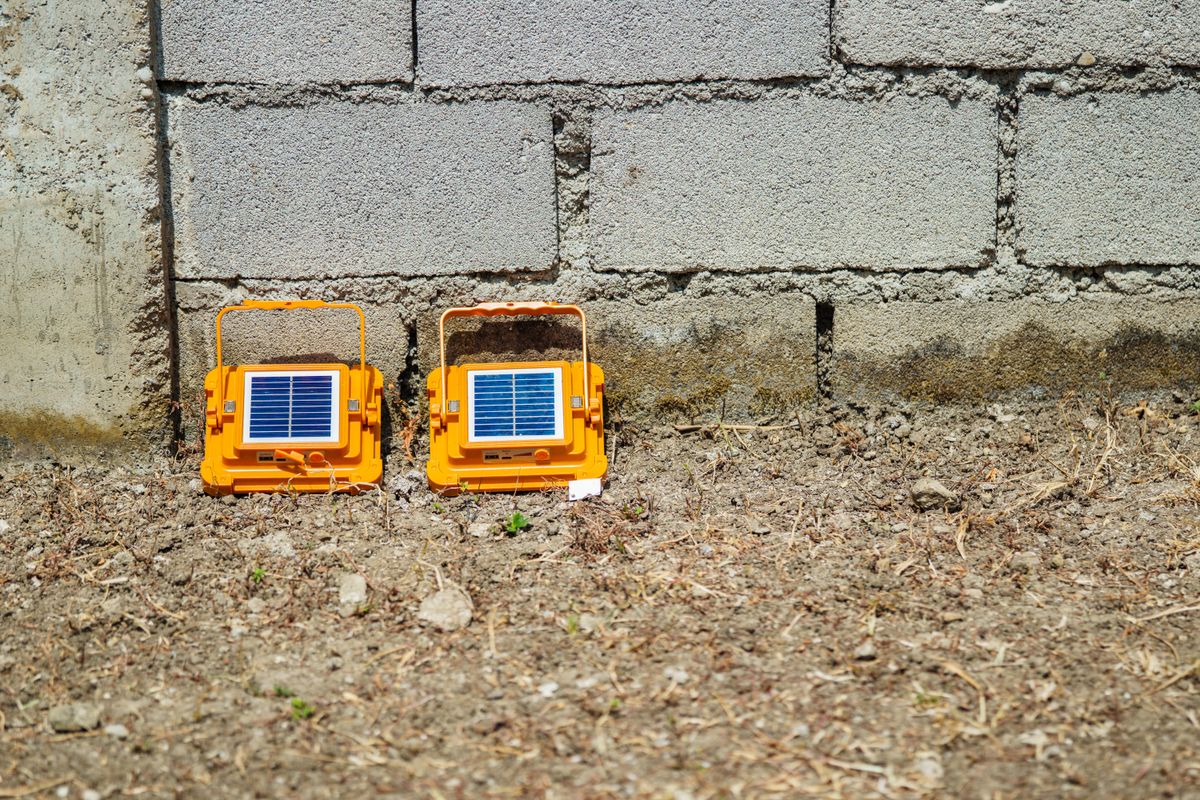
Photo by Nothing Ahead on Pexels
Modern Solar Spot Lights utilize Passive Infrared (PIR) sensors to detect heat signatures moving across their field of vision. Unlike older technology that might be triggered by a blowing leaf, PIR sensors look for the specific infrared heat emitted by humans or large animals. When I look at the current market, I see two distinct ways these units handle the "dusk to dawn" requirement. Some units remain completely dark until they sense movement, which preserves the maximum amount of battery life for a high-intensity burst. Others operate as dusk to dawn solar spotlights, maintaining a low-level ambient glow that jumps to full brightness when the sensor is tripped. If you are looking for the brightest solar spotlights for house applications, you have to consider the lumen output during that triggered state. For example, the MAXSA Innovations Motion-Activated Solar-Powered Security Floodlight uses 20 SMT LEDs to deliver a concentrated beam. Between these two styles—the 'dark-to-bright' or 'dim-to-bright'—I’d go with the dim-to-bright option for front walkways, while the dark-to-bright is better for side alleys where you want the element of surprise. These units often feature high lumen solar spotlights capabilities, ensuring that when the light does activate, it provides enough clarity for security cameras to capture a usable image. If you're on a budget, focusing on a single high-output sensor light for the driveway is more effective than buying four cheap, low-lumen stakes that won't reach the street.
Choosing the Right Hardware for Your Yard
Selecting the right unit requires balancing the battery capacity with the expected foot traffic. If a light is placed in a high-traffic area where it triggers fifty times a night, a small solar panel won't be able to keep up. You need to look for a unit where the solar panel can be mounted separately from the light itself, allowing you to place the LEDs under an eave while the panel sits in direct sun. When evaluating solar landscape spotlights, here is what I’d actually buy: a unit with an adjustable timer and a detachable panel. This allows you to customize how long the light stays on—usually between 30 and 90 seconds—preventing the battery from draining during a windy night if a tree branch enters the sensor field. You should also ensure the housing is rated for at least IP65 water resistance, especially if you live in a climate with heavy snowfall or tropical rain.
Before you commit to a specific model, run through this checklist:
- Does the unit allow for the solar panel to be tilted independently of the light head?
- Is the PIR sensor range at least 25 feet to ensure early detection?
- Does the battery have a capacity of at least 2200mAh to handle multiple triggers per night?
- Are the LEDs 'Surface Mount' (SMT) for better heat dissipation and longevity?
- Is there a manual override or an 'off' switch for when you are hosting backyard events?
Sources
Photo by Gurgenidze G on Pexels
- Watchdog II Solar Security Light | Motion Sensor - Outdoor Solar Store
- Motion Activated Solar-Powered Lights/Cameras - MAXSA Innovations