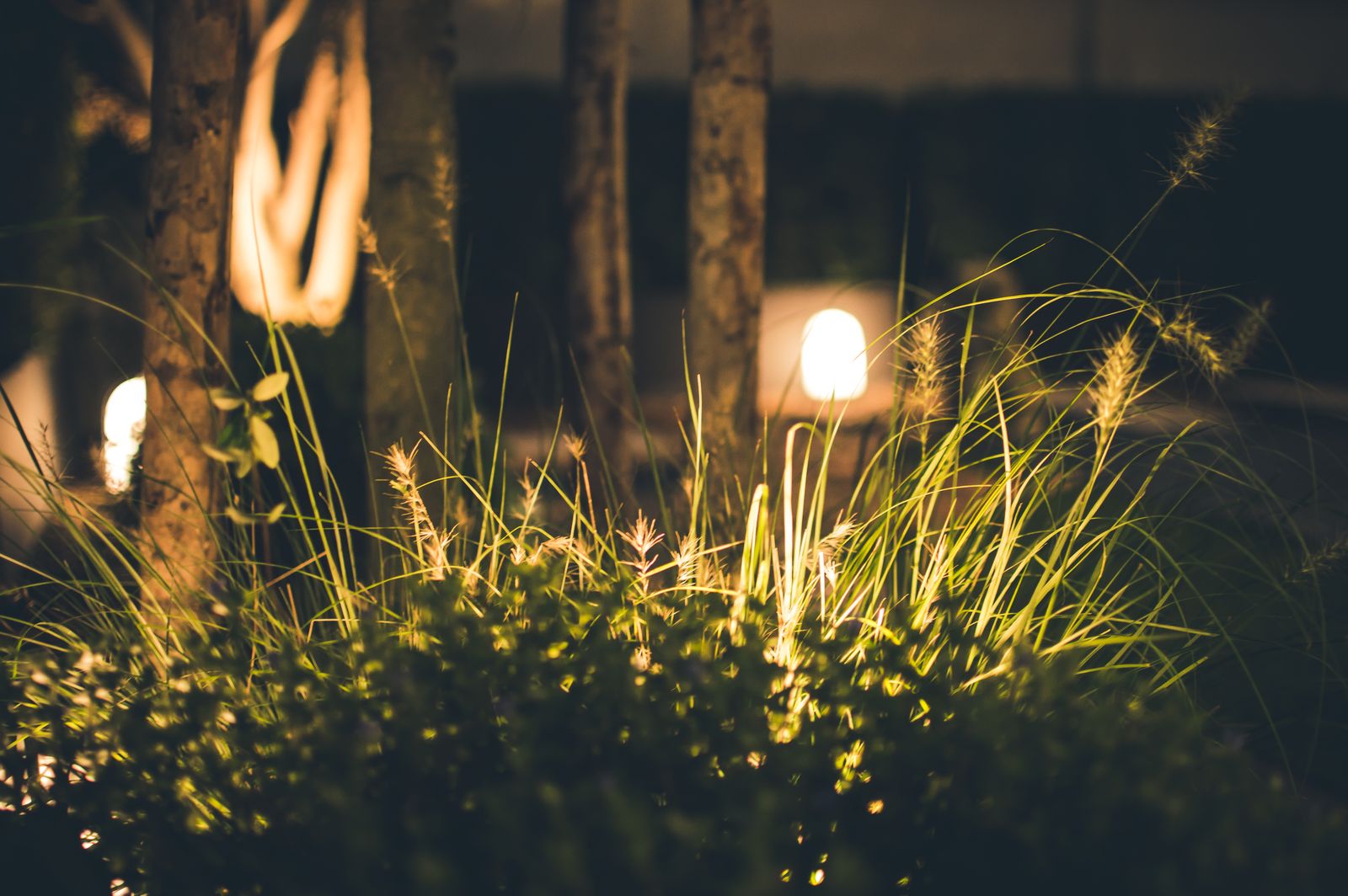
How to Uplight Trees and Garden Features with Solar Spotlights
To uplight trees and garden features with solar spotlights, stand the fixture 6–10 feet from the trunk or object, tilt the 120-degree head up through the canopy, and keep the 1.5W–2W panel out of that same shade. Use warm white on bark and foliage; cool white only on a flag or silver sculpture. Stake 4–6 inches so the 600-lumen, 74-LED beam stays put. Uplighting is a setback-and-tilt craft. If the panel sits under the tree you are lighting, dusk-to-dawn dies even when the aim looks perfect at 8 p.m.
Find the pretty side, then find the sun
Walk around the tree at dusk. The garden feature you want is usually one face of bark, a branch fork, or a specimen shrub’s shape. Place the solar spotlight on that axis, 6–10 feet back. Too close and you get a hot trunk with a black canopy. Too far and 600 lumens turns to haze.
Then check noon sun. If the pretty side is the deep-shade side, you have two honest options: wall-mount the 2-in-1 kit on a sunny fence and aim back, or accept a shorter winter runtime. The polycrystalline panel at about 20% efficiency cannot invent photons under a dense maple.
Aim up, not at the neighbor
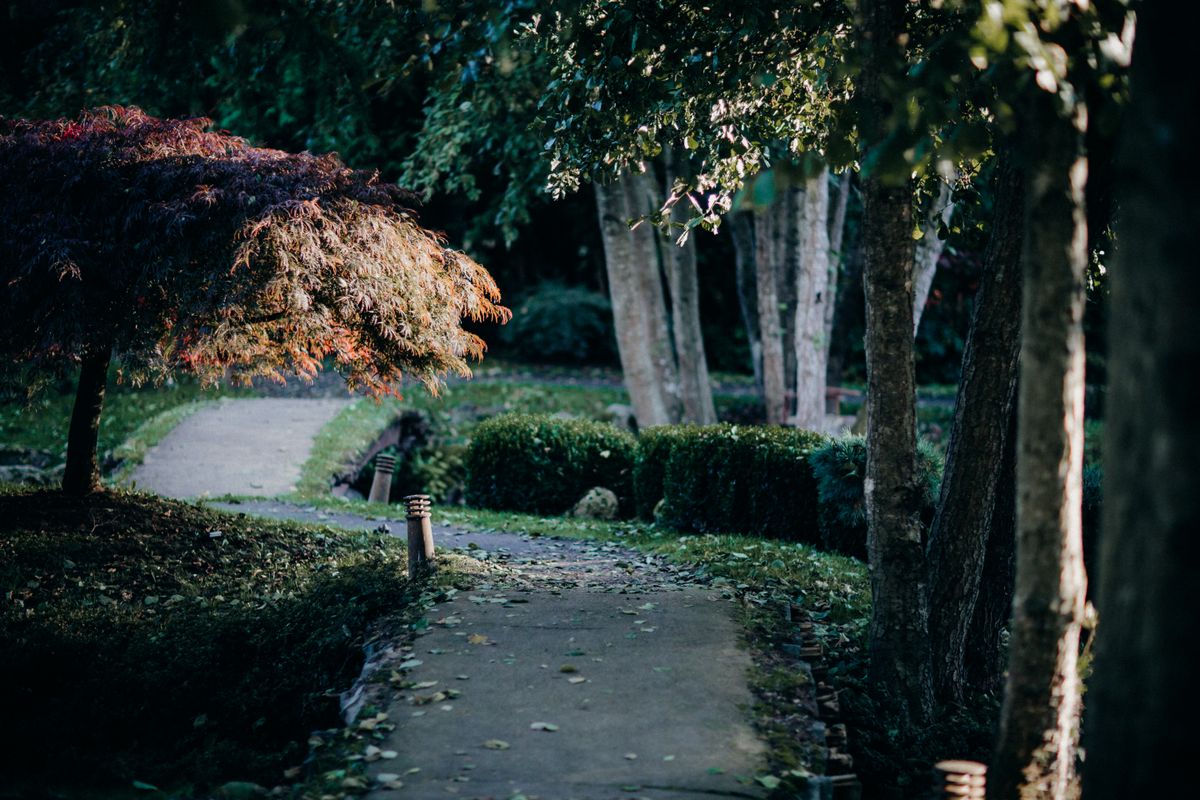
Uplight means the beam climbs. Start at the flare of the trunk and let light leak into the lower canopy. Stop before you hit a bedroom. The 120-degree adjustable head should split duties: lamp up, panel toward south sky. Warm white near 3000K makes oak, brick edging, and planting beds feel like one landscape. Natural white helps mixed stone features. Cool white toward 6500K is a flag or a modern metal piece—not most leaves.
One head per specimen tree. A pair, staggered, for a wide crown or a hedge garden feature. Do not stack two beams on the same bark; that is how you get a white hole.
Install details that keep the uplight honest
Stake 4–6 inches. Water hard soil. Keep mowers and string trimmers off the housing. IP65 covers rain. Irrigation spray spots the glass and cuts charge into the 2000 mAh pack. Install is $0 DIY. After the first night, look from the sidewalk—the view that matters—and nudge the tilt. Operating down to about -4°F is fine; a snow cap on the panel is not.
Trees vs garden features vs flags vs facades
| Subject | Color mode | Distance / aim | Panel trap | | --- | --- | --- | --- | | Specimen tree | Warm or natural white | 6–10 ft, beam up the trunk | Self-shade under the canopy | | Shrub / garden feature | Warm white | Graze from the side, slightly up | Low shrubs hiding the glass | | Flag in the garden | Cool or natural white | Low, onto the flag face | Pole shadow on the panel | | House facade beyond beds | Warm white | 6–10 ft, graze up the wall | Eave shade if you wall-mount high | | Wired uplight alternative | Usually fixed warm | Set by trench | None—but you paid for dirt work |
Aim, placement, and charging checklist
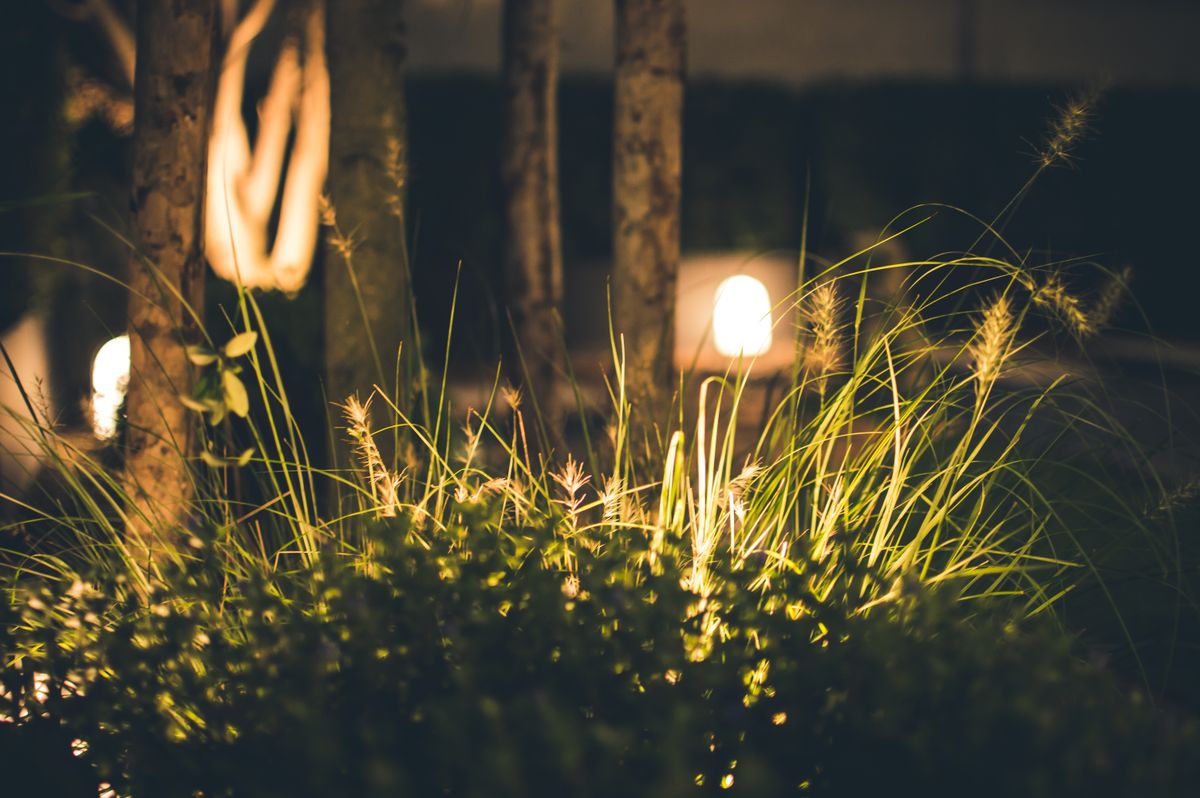
Photo by suzukii xingfu on Pexels
- [ ] Pick the face of the tree or garden feature you want seen from the street.
- [ ] Set the solar spotlight 6–10 feet back; stake 4–6 inches.
- [ ] Tilt the 120-degree head up through bark and into the lower canopy.
- [ ] Rotate the 1.5W–2W panel to open sky—out of the drip line.
- [ ] Choose warm white for foliage; cool white only for flags or metal.
- [ ] Use one head per tree; stagger a pair on wide crowns.
- [ ] Charge the 2000 mAh pack a full day before judging the uplight.
- [ ] Look from the sidewalk and kill any beam that hits a window.
Frequently asked questions
How far should I set a solar spotlight to uplight trees?
Start at 6–10 feet. Closer punches a hole in the bark. Farther wastes 600 lumens as haze. Fine-tune after one night from the sidewalk.
Can I uplight a tree if the only pretty angle is in shade?
You can light the tree and still fail the panel. Move the fixture into sun and aim back, or wall-mount on a sunny fence. Garden features are not worth a dead battery.
Is 600 lumens enough for a tall oak?
It will model the trunk and lower canopy, not the whole sky. For a huge crown, use two staggered heads rather than hunting an invented lumen number.
Should garden sculptures get the same aim as trees?
Shorter setback, less uptilt, and often natural or cool white on metal or stone. Keep the beam off neighboring glass the same way.
Do I need to bury cable to uplight a tree in the lawn?
No. $0 DIY stake. Skip trenching unless you already have a landscape circuit you love.
Related reading
- guide to choosing solar spot lights for landscape design
- how to install solar spot lights in garden soil
- complete outdoor solar spot lights guide
- how to highlight a home facade with solar spotlights
What to do next
Pick one tree and one garden feature. Stake a solar spotlight 6–10 feet from each, tilt up, and force the panel into sun even if that means a slightly off-axis beam. Live with it two nights. Then copy the aim—or move it—before you uplight the whole yard.
Cover photo by suzukii xingfu on Pexels.