Best Solar Spot Lights for Garden Beds and Trees: A Buyer's Guide
The best solar spot lights for garden beds and trees are 2-in-1 fixtures you can stake into soil or wall-mount, with 74 LEDs at 600 lumens, a 120-degree adjustable head, and warm, natural, or cool color modes. Place them 6–10 feet from trunks or planting edges, push the stake 4–6 inches deep, and keep the 1.5W–2W polycrystalline panel in sun. This buyer's guide shows how to pick brightness, color, and mounting so garden trees and beds look layered after dark—not washed out.
Why garden beds and trees need a different beam than a porch
Garden beds and trees fail after dark when you treat them like a porch flood. A stoop wants a wide wash. A maple wants a narrow uplight that climbs bark and stops before it hits a bedroom window. A perennial bed wants a low grazing beam that shows leaf texture, not a white hotspot in the mulch.
A 600-lumen, 74-LED solar spotlight is enough for a small-to-medium tree or a mixed bed if you stand it 6–10 feet back and tilt the 120-degree adjustable head. Closer than that, the beam punches a hole. Farther, the canopy goes muddy. Warm white near 3000K is the default for foliage and brick. Cool white toward 6500K can crisp silver bark or a flag, but it turns most leaves gray. Natural white sits in the middle when house and planting share one view.
The panel is a 1.5W–2W polycrystalline silicon collector at about 20% efficiency. That is enough for dusk-to-dawn operation from a 2000 mAh pack if the face sees real sun. Shade from the very tree you are lighting is the usual reason a garden fixture looks dim by 10 p.m.
Ground stake in the bed versus a wall mount on the fence
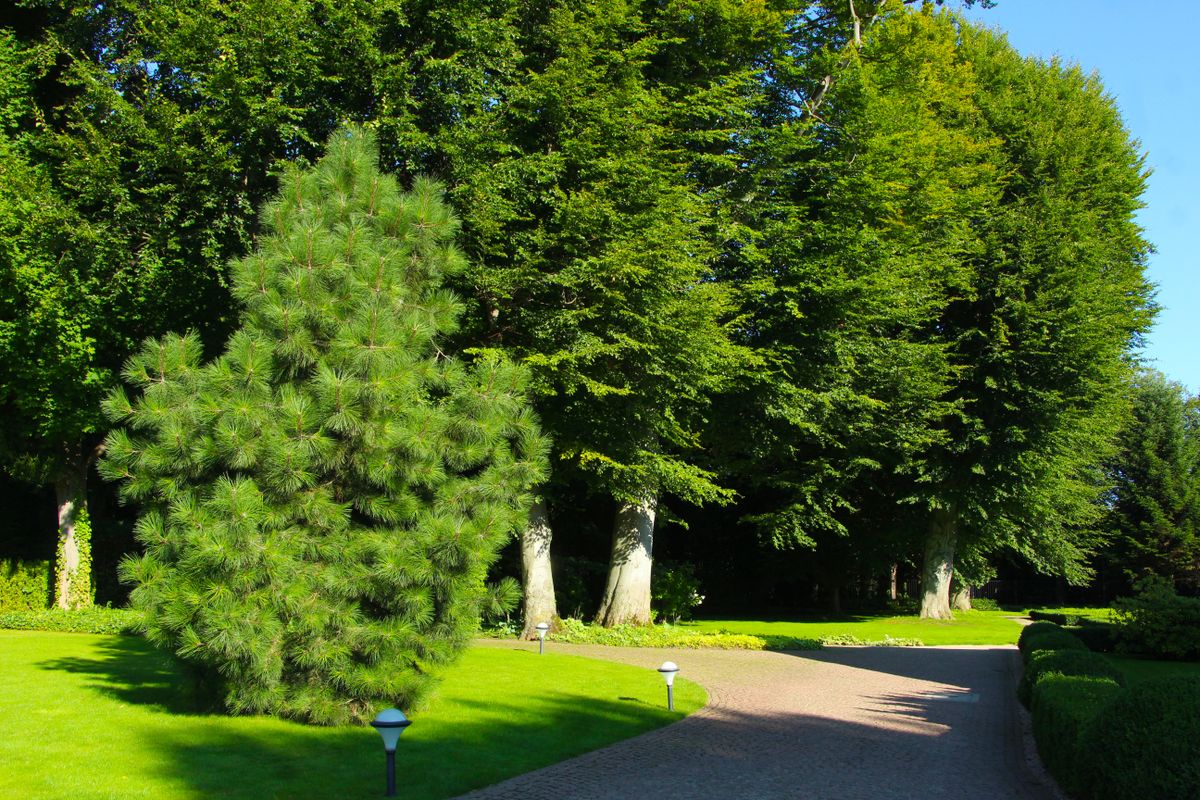
Most garden work is a ground stake. Push it 4–6 inches into soil so a mower or a dog does not kick it over. Aim the head at the trunk or the back of the bed, then twist the panel toward open sky—not toward the leaves. The 2-in-1 design also wall-mounts if the only sun sits on a fence post or a raised-bed wall.
Hard soil, roots, and the drip line are the three stake problems. Water the hole, use a 1/4 inch starter if you hit a root mass, and keep the fixture out of irrigation spray so the lens does not stay spotted. IP65 waterproofing handles rain; it does not like a sprinkler aimed at the panel all summer.
If you already have wired landscape lighting on the patio, solar is still the cheaper way to add trees that sit far from a transformer. Install cost is $0 DIY. You are not trenching through a planted bed to feed one uplight.
What best actually means in this buyer's guide
Best is not the highest lumen claim on a box. Best for garden trees is a fixture you can move after the first night: stake, look from the sidewalk, tilt, and walk away. Look for three color modes so foliage, flags, and facades share one SKU; a 120-degree adjustable head so the panel can face south while the beam faces the trunk; IP65 weatherproof housing; automatic dusk-to-dawn so you are not switching a garden circuit; a 2000 mAh class battery; and operation down to about -4°F so a cold snap does not kill the pack.
Polycrystalline panels are the right efficiency class for this job. You do not need a rooftop-grade array to light a redbud. One light per specimen tree is the starting layout. A hedge or a long mixed border usually wants a pair, staggered so beams overlap rather than stack. For a flag in the same garden, sit the beam lower and cooler if you want stars and stripes to read. For a house facade beyond the bed, warm white keeps brick from looking cold.
Garden trees, beds, flags, and facades compared
| Target | Best color mode | Typical distance | Mount | | --- | --- | --- | --- | | Garden tree (uplight) | Warm or natural white | 6–10 feet from trunk | Ground stake, 4–6 inches | | Mixed planting bed | Warm white (~3000K) | Grazing along the edge | Stake behind plants | | Flag in the garden | Cool or natural white | Low, aimed at the flag face | Stake or wall mount | | House facade behind beds | Warm white | 6–10 feet from wall | Stake in bed or wall mount | | Wired landscape alternative | Fixed by fixture | Set by trench route | Transformer + cable |
Aim, placement, and charging checklist
- [ ] Walk the garden at dusk and mark which trees and beds actually disappear.
- [ ] Stake 6–10 feet from the trunk or bed edge; look from the sidewalk, not from the fixture.
- [ ] Push the ground stake 4–6 inches deep; water hard soil first.
- [ ] Aim the 120-degree head at bark or foliage, then rotate the panel to open sky.
- [ ] Choose warm white for most plants; save cool white for flags or silver bark.
- [ ] Keep the 1.5W–2W polycrystalline panel out of the tree’s own shade and out of sprinklers.
- [ ] Give the 2000 mAh pack a full day of sun before judging brightness.
- [ ] Confirm IP65 seals are seated after you handle the housing in wet soil.
Frequently asked questions
How many solar spot lights does a garden bed need?
Start with one per specimen tree and a staggered pair for a long mixed border. Overlap beams instead of stacking two lights on the same trunk. Walk the sidewalk after dark and add a fixture only where a gap still bothers you.
Will 600 lumens wash out small plants?
It can if you stand the light two feet from a hosta. At the recommended 6–10 feet, 74 LEDs at 600 lumens graze a bed instead of bleaching it. Tilt the head up into the canopy for trees; tilt it down and across for low plantings.
Can I use the same fixture on a flag and a tree?
Yes. Switch to a cooler color mode for the flag so the fabric reads, and keep warm or natural white on foliage. The 2-in-1 stake or wall mount lets you move the same style of light without a second product family.
Do garden solar lights work under a dense canopy?
The beam can, the panel often cannot. If the tree you are lighting shades its own panel, wall-mount the fixture on a sunny fence or shift the stake outside the drip line and aim back in.
Is a ground stake better than wiring through a bed?
For planted beds, yes. A stake installs at $0 labor, lifts out for dividing perennials, and never cuts a drip line. Wired lighting only wins if you already have a trench open and want switchable, continuous power.
Related reading
- how to install solar spot lights in garden soil
- landscape design guide for choosing garden fixtures
- color temperature comparison for plants and brick
- complete outdoor solar spot lights guide
What to do next
Pick one tree and one bed tonight. Stake a 600-lumen solar spotlight 6–10 feet back, set warm white, bury the stake 4–6 inches, and face the panel at the sky. Live with that aim for two nights before you buy a second pair or open a trench.
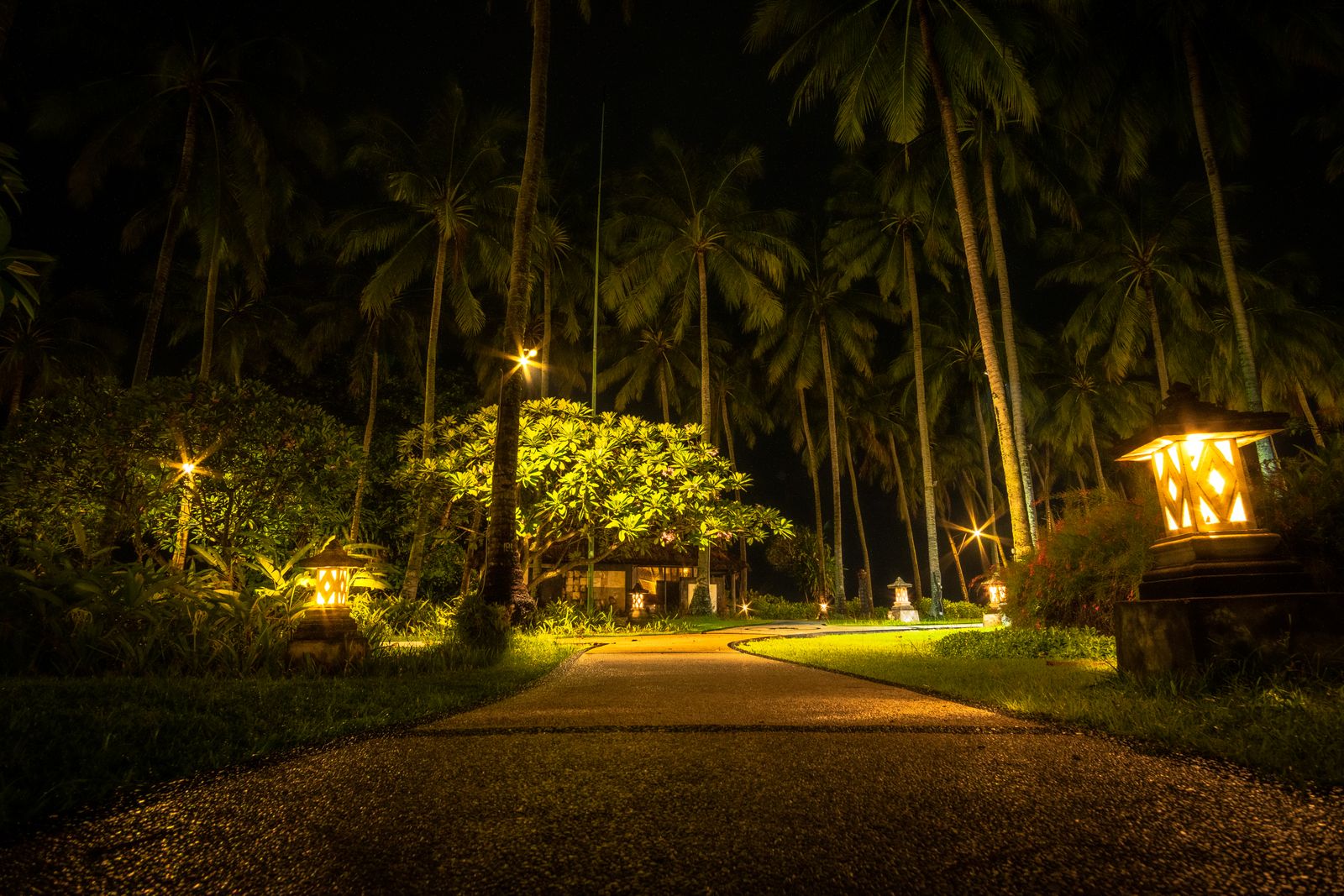
Cover photo by Unggul Budi on Pexels.