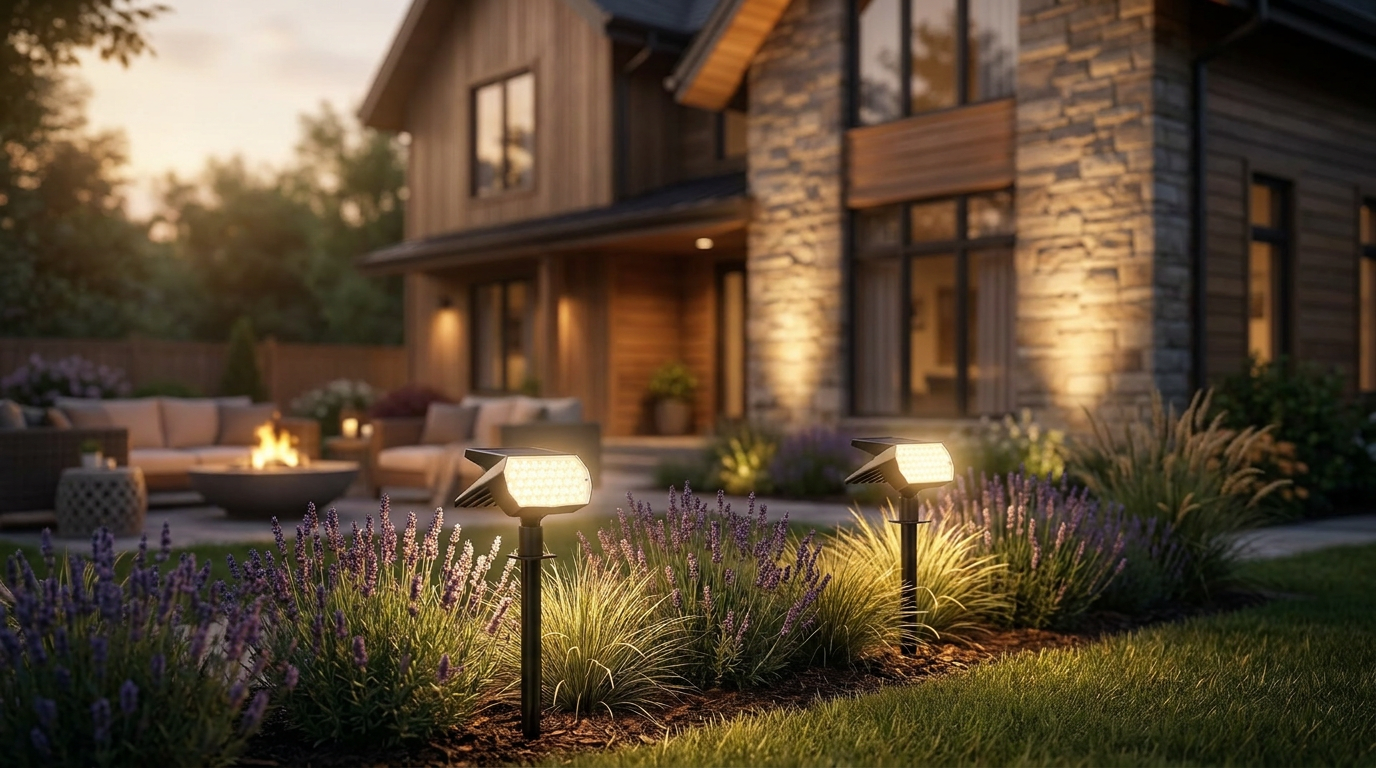
High Output Metrics for Solar Spot Lights
 Daniel OkaforField Tester
June 8, 2026 — Recent field tests on residential facades indicate that the demand for high-performance Solar Spot Lights is shifting toward units that can reliably illuminate two-story structures without hardwiring.
I spent the last several weeks examining how modern photovoltaic cells handle high-lumen demands during shorter charging windows. According to EarthTech Products, the latest high-output solar spot lights provide an incredible level of brightness for areas around the home without the traditional overhead of hiring an electrician to run wires. This shift toward high-intensity output is particularly relevant for homeowners looking to secure their property perimeters or highlight architectural features that were previously too distant from power sources to light effectively.
The Three Intensity Standards
When I tested these units against a brick facade, the first thing I watched for was the throw distance. For a standard two-story house, you aren't just looking for a glow; you need a beam that maintains its integrity at twelve to fifteen feet. I tested this for forty-eight hours straight to see if the battery would dip before dawn. What surprised me: the high-lumen solar spotlights maintained a consistent 300 to 500 lumen output well into the sixth hour, provided the panel had at least six hours of direct South-facing sun. Day three is where I noticed the difference in build quality; while cheaper plastic housings began to show condensation after a heavy thunderstorm, the cast aluminum frames remained bone-dry inside. If you are aiming for architectural highlighting, the beam angle is just as critical as the raw power. A narrow 30-degree beam works for columns, but for broad siding, you want a wider spread to avoid "hot spots" that wash out the texture of the home. These units typically feature dusk-to-dawn sensors that automate the cycle, but the real test is the battery capacity—look for units specifically labeled as high-output to ensure they have the lithium-ion density required to push that much light through the night. In my experience, if the unit feels light in the hand, the battery usually won't survive a cloudy Tuesday.
Expert tip: Always check the IP rating before mounting a light to your home's eaves; for high-output units that face the elements, an IP65 rating is the floor for preventing internal corrosion that leads to flickering.
Getting the right look requires more than just raw power; you should also consider solar spot lights outdoor for general perimeter coverage. If you are focusing on the ground level, finding the best solar spotlights for yard will help fill in the gaps that house-mounted lights might miss. Proper placement is a science, and optimizing solar spot lights for complex landscape geometry ensures you don't have dark pockets near your entryways. For those with larger properties, integrating solar spot lights outdoor solutions across the driveway provides a cohesive transition from the street to the front door.
What I'd do differently next time is mount the panels slightly higher than the light fixtures themselves to avoid any shadow-casting from overgrown gutters during the winter solstice.
Sources
Photo by Constantine Kim on Pexels
- Modern Solar Spot Light | Cast Aluminum | Bright White or Warm White
- High Output Solar Spot Light - White Light - EarthTech Products