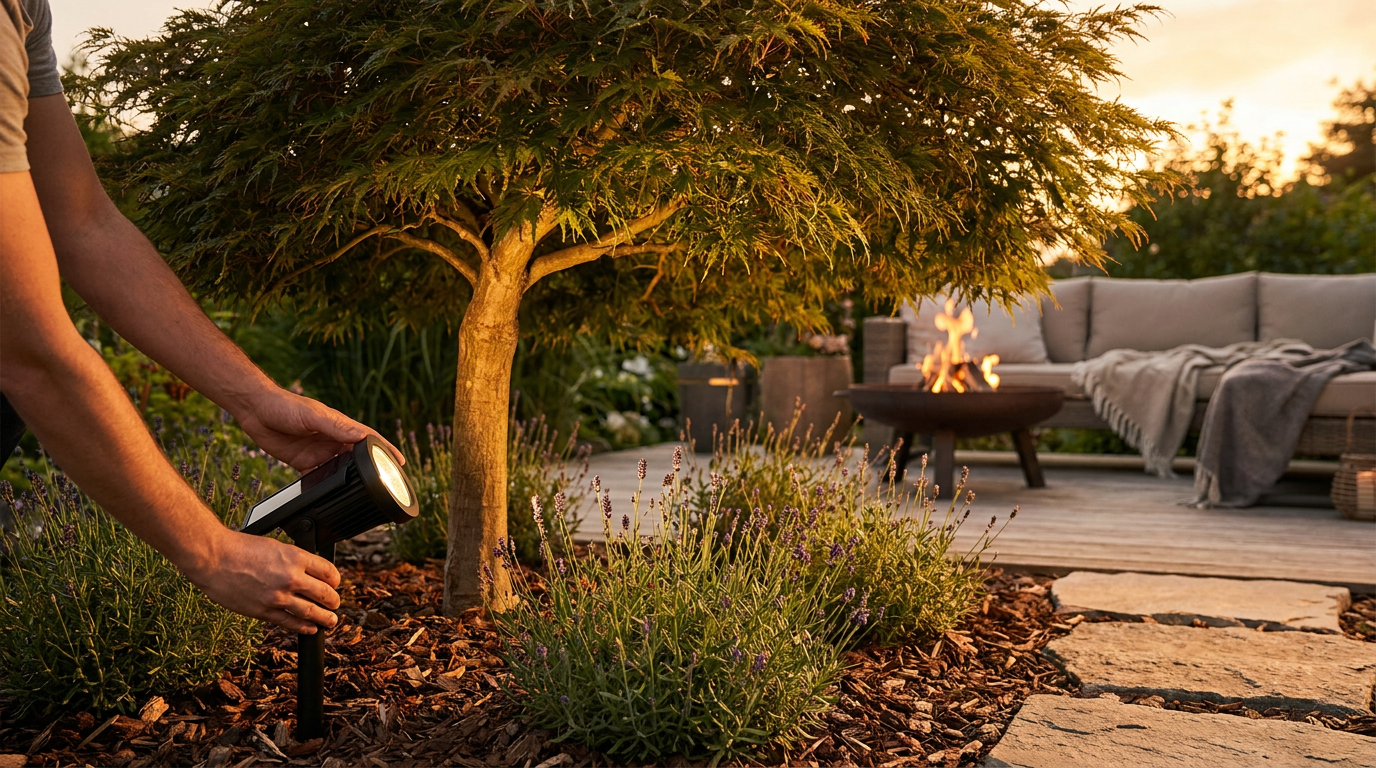
Applying Solar Spot Lights for Specimen Tree Illumination
 Maya ChenContributing Editor
July 1, 2026. This analysis evaluates the technical viability of utilizing solar-powered fixtures for high-angle tree illumination. It is intended for property owners seeking to minimize electrical overhead while maintaining specific aesthetic standards for specimen trees.
The Limitations of Low-Output Decorative Lighting
The conventional wisdom says that any stake-mounted light can effectively highlight a mature oak or maple, provided it is positioned at the base. This is incorrect. Most consumer-grade garden lights fail because they lack the concentrated beam angle necessary to penetrate a dense canopy. According to Silicon Solar, professional-grade tree uplighting requires high-output LED configurations, such as their 36-LED multi-purpose kits, to achieve the throw distance required for vertical applications. When consumers attempt to use standard solar landscape spotlights for tall trees, the light often dissipates before reaching the first branch structure. Run the math: a 50-lumen fixture cannot overcome the ambient light pollution of a typical suburban neighborhood to create a meaningful focal point on a 20-foot trunk. Furthermore, the light must be projected at a 30-to-60-degree angle to avoid creating a flat, washed-out appearance. Many available solar garden up lights for trees are designed with fixed heads that prevent this precise adjustment, leading to wasted energy and poor visual results.
Technical Requirements for Solar Spot Lights in Dense Canopies
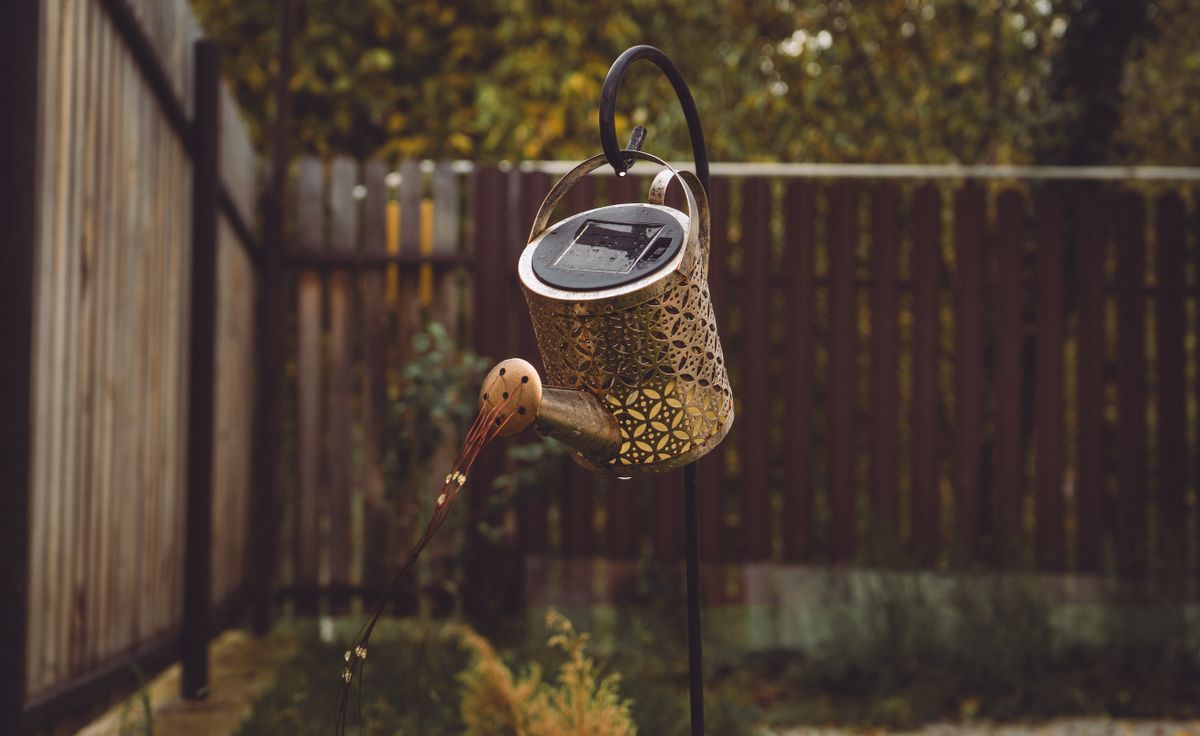
Photo by Gurgenidze G on Pexels
Here's the part nobody talks about: the solar panel's efficiency is often inversely proportional to the light's ideal placement. For effective tree uplighting, the fixture must sit near the trunk, which is precisely where the canopy creates the most significant shade. To solve this, high-performance solar spot lights must utilize high-lumen outputs and separate, remote-mountable photovoltaic panels. Data from search queries indicates that users are increasingly looking for dusk to dawn solar spotlights, which requires a battery capacity capable of sustaining 300 to 500 lumens for at least eight hours. This is not achieved by the small, integrated panels found on budget-tier hardware. The success of solar garden up lights for trees depends entirely on the lithium-ion battery's discharge rate and the quality of the LED chips. If a fixture cannot maintain its rated brightness through the 2:00 AM dip, it fails the basic utility test for security and landscape architecture. We see a high volume of interest in high lumen solar spotlights precisely because the market is saturated with decorative toys that provide less than 100 lumens, which is insufficient for anything beyond a small shrub. Consistent performance in solar landscape spotlights is only possible when the hardware accounts for seasonal shifts in daylight hours.
Selection Framework for Tree Uplighting Projects
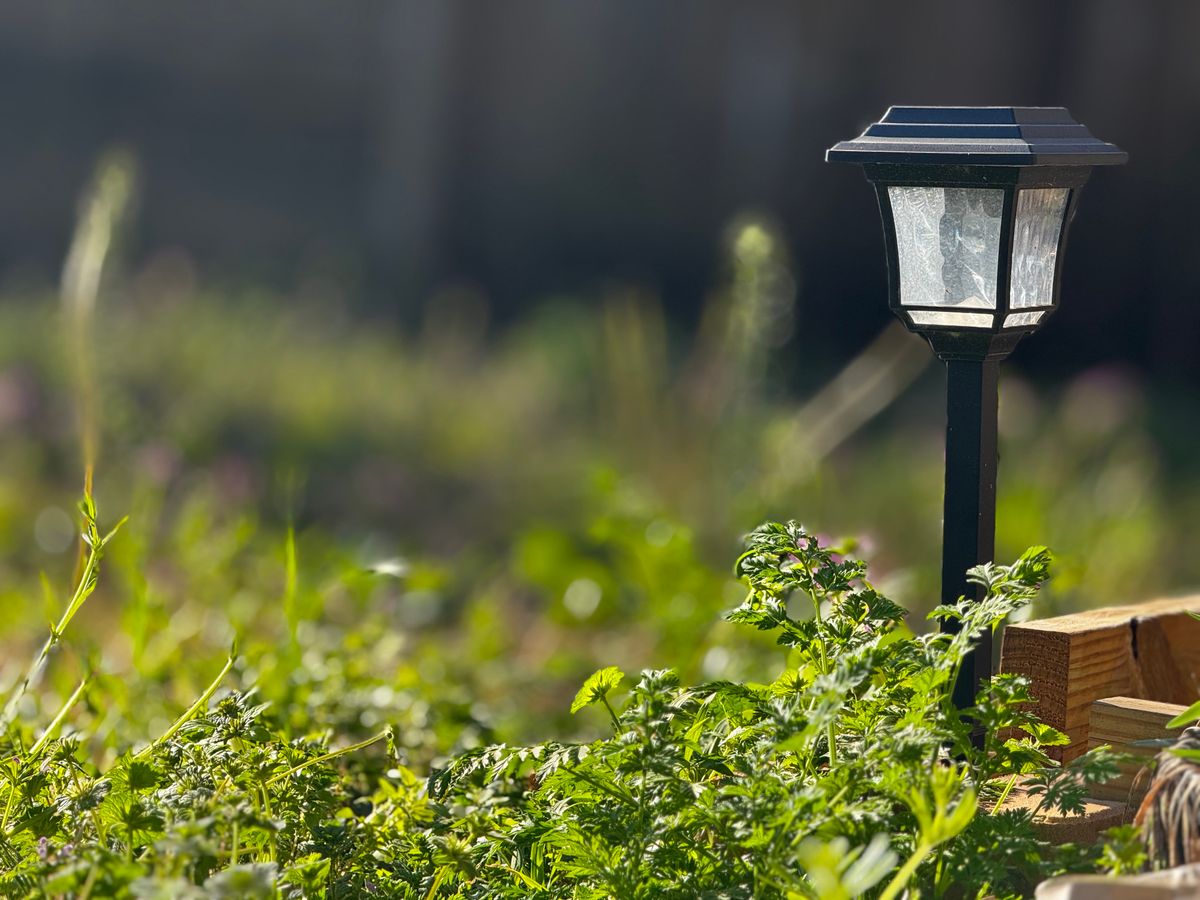
Choosing a fixture based on a product photo is a mistake. Instead, prioritize the hardware's ability to withstand environmental stressors and its specific optical output. Use the following criteria to evaluate whether a solar solution is viable for your specific tree species:
- Panel Separation: Ensure the solar panel can be mounted at least 10 feet away from the light head to bypass the tree's shadow.
- Beam Angle Control: Look for optics that offer a narrow beam (under 40 degrees) to focus light on the trunk and primary limbs rather than spilling into the sky.
- Luminous Flux: For trees over 15 feet, a minimum of 300 lumens is required to provide visible contrast.
- IP Rating: Only consider fixtures with an IP65 rating or higher to ensure the internal circuitry survives heavy rain and irrigation cycles.
- Battery Chemistry: Prioritize Lithium Iron Phosphate (LiFePO4) batteries for longevity and better performance in high-heat environments.