Linkind Smart Solar Deal vs Nacinic Efficiency
 Maya ChenContributing Editor
June 6, 2026 — Recent market shifts have pushed smart-enabled outdoor lighting into the budget category, exemplified by a 31% price drop on Linkind hardware. While the tech industry pushes app-based customization as the new standard, the hardware fundamentals of these units often remain secondary to software features.
The conventional wisdom says that a $12 smart light is an automatic bargain. According to 9to5Toys, the Linkind Smart Solar Spot Lights are currently retailing for $24 for a two-pack, down from the regular $35 price point. This promotion highlights app-based color customization as a primary selling point. However, here's the part nobody talks about: connectivity and software layers introduce failure points that don't exist in high-output dedicated hardware like the Nacinic solar landscape lights.
Photo by Amy k on Pexels
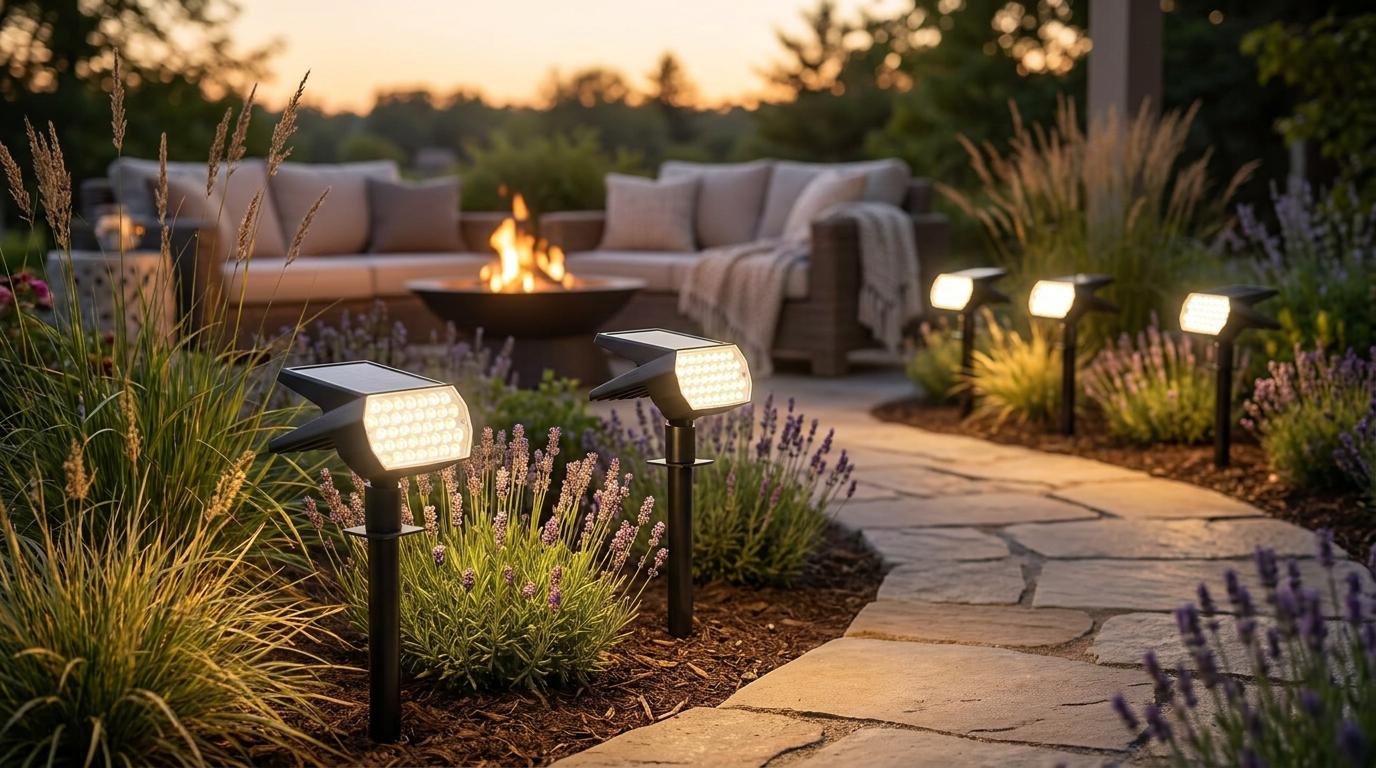
Run the math: The Nacinic units utilize 74 high-power LED beads to reach 600 lumens, powered by polycrystalline silicon panels with a 20% conversion rate. While the Linkind units prioritize the "smart" ecosystem, Nacinic focuses on a 120-degree adjustable head and an IP65 waterproof rating designed for long-term exposure to frost and snow. If you are illuminating garden plants or securing home exteriors, raw lumen output and weatherproofing typically outweigh the ability to change colors from a smartphone.
Reliability in pathway lighting and flagpole illumination depends on battery duration. Nacinic claims 6-14 hours of continuous illumination on a single charge, a range that fluctuates based on which of the three color temperature modes—Cool, Warm, or Natural White—is selected.
Expert tip: When installing 2-in-1 solar lights, prioritize the 120-degree tilt adjustment to maximize panel exposure to the sun rather than just the light's aim. A perfectly aimed light that only receives four hours of direct sun due to poor panel positioning will fail to meet its 600-lumen potential regardless of the retail discount.
I'll change my mind when app-integrated budget lights can demonstrate a 20% conversion efficiency consistently over a three-year lifecycle without firmware degradation.