Illuminating Palm Trees: A Guide to Solar Landscape Lighting
Palm trees are the quintessential symbol of tropical elegance and relaxed luxury. During the day, their graceful fronds sway against a blue sky, but what happens when the sun goes down? An unlit palm Fades into the darkness, its daytime beauty lost until morning. With the right lighting, however, a palm tree can transform into a breathtaking nocturnal sculpture, adding drama, depth, and sophistication to your entire landscape.
This guide is your comprehensive resource for using modern solar lighting to showcase your palm trees. We'll explore why solar power, specifically high-quality products like those from Solar Spot Lights, is the superior choice for this task. From selecting the right brightness and features to mastering professional placement techniques, you’ll learn everything you need to turn your yard into a stunning nighttime oasis—sustainably and affordably.
Table of Contents
- Why Solar Lights Are the Ideal Choice for Palm Trees
- Understanding the Types of Solar Lights for Palm Trees
- Key Features to Look for in Solar Spot Lights for Palm Trees
- Strategic Placement: How to Uplight Your Palm Trees
- Installation and Maintenance for Lasting Performance
- Troubleshooting Common Solar Lighting Issues
- Transform Your Landscape with Solar Spot Lights
Why Solar Lights Are the Ideal Choice for Palm Trees
For years, landscape lighting meant hiring an expensive electrician, digging trenches for low-voltage wires, and watching your electricity bill climb. Solar technology has completely changed the game, offering a solution that is smarter, safer, and more sustainable.
- Unbeatable Cost-Effectiveness: The single greatest advantage is the elimination of ongoing energy costs. Solar lights are a one-time purchase. They harness free energy from the sun, meaning they add zero dollars to your monthly utility bills. Furthermore, you save hundreds or even thousands of dollars by avoiding professional installation fees associated with traditional wired lighting.
- Eco-Friendly and Sustainable: Choosing solar is a vote for a healthier planet. By using renewable energy, you reduce your home's carbon footprint and reliance on fossil fuels. It's a method of beautification that you can feel good about.
- Superior Safety: Conventional landscape lighting involves electrical currents that, while low-voltage, still require careful handling and installation to prevent shocks or fire hazards. Solar lights operate on self-contained, low-voltage DC power. There are no external wires to trip over, accidentally cut with a shovel, or pose a risk to curious pets and children.
- Effortless DIY Installation: Installing solar landscape lighting is a project almost anyone can complete in an afternoon. There's no wiring, no trenching, and no need for specialized tools. Most units, including the high-performance models from Solar Spot Lights, are designed for simple stake-in-the-ground placement.
- Unmatched Flexibility: Your landscape evolves. Trees grow, and your design preferences may change. With solar lighting, you aren't locked into a fixed position. Want to move a light a few feet to the left to better capture the texture of a growing palm? Simply pull the stake out of the ground and reposition it. This flexibility is invaluable for long-term landscape design.
Understanding the Types of Solar Lights for Palm Trees
While many types of solar lights exist, a few are particularly well-suited for illuminating the unique vertical structure of palm trees.
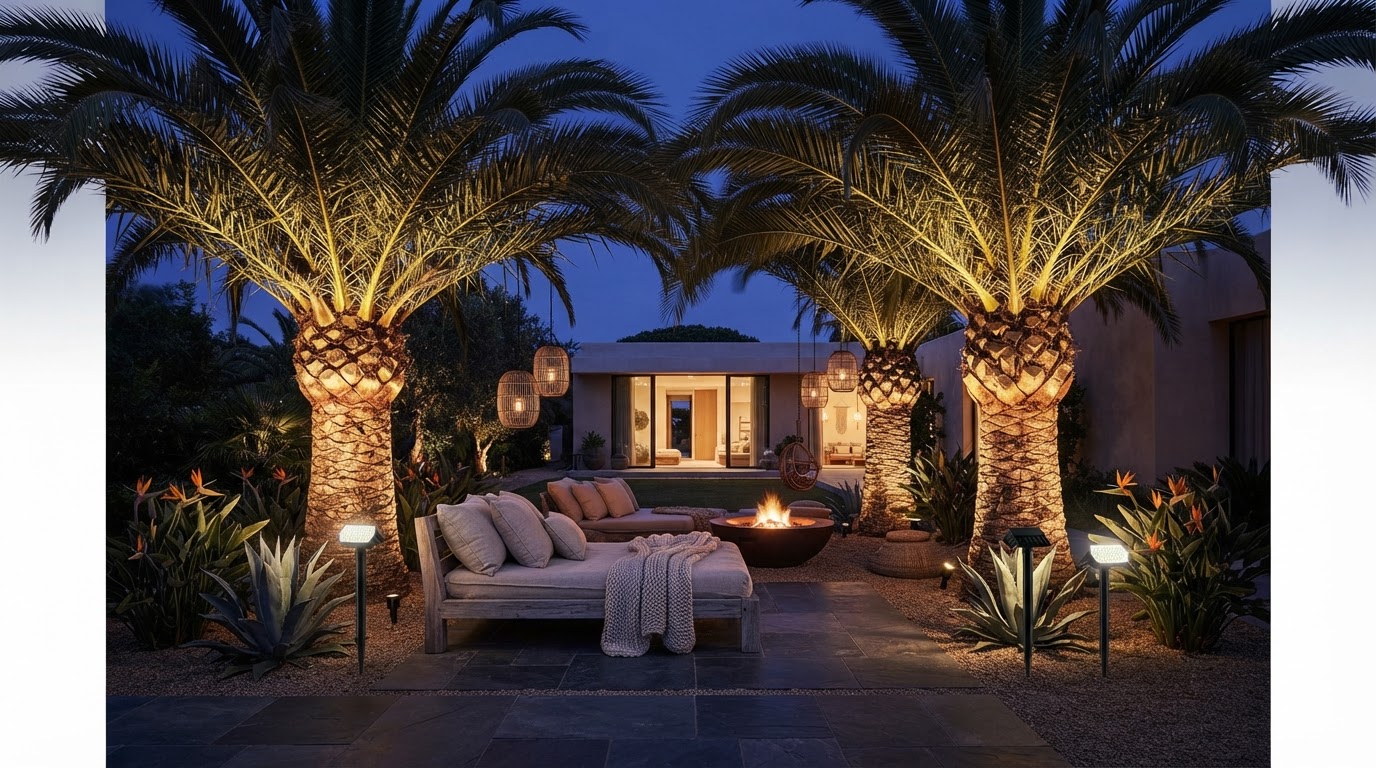
- Solar Spotlights (Uplighting): This is the premier choice for palm tree illumination. Spotlights produce a focused, narrow beam of light that is perfect for aiming directly up the trunk. This technique, known as uplighting, creates a dramatic silhouette, highlights the texture of the trunk, and makes the tree's fronds glow from underneath. Products from Solar Spot Lights are specifically engineered for this purpose, offering the power and adjustability needed to create a professional look.
- Solar Floodlights: Similar to spotlights, floodlights cast a wider beam of light. They are best used for illuminating large, mature specimen palms, or for lighting up a cluster of several smaller palms from a distance. A single floodlight can wash a wide area with light, but offers less of the focused, dramatic effect of a spotlight.
- Solar String Lights: For a more festive or whimsical ambiance, solar-powered string lights (or "fairy lights") can be wrapped around the trunk of a palm. This is a popular look for entertainment areas, patios, and poolside palms, creating a resort-like atmosphere.
- Solar Well Lights: These are in-ground fixtures that sit flush with the ground, casting light upwards. They offer a very subtle, clean look as the fixture itself is nearly invisible. They work well for uplighting palms that are situated in lawns or high-traffic pathways where a staked light might be an obstruction.
Key Features to Look for in Solar Spot Lights for Palm Trees
Not all solar lights are created equal. When selecting a fixture to highlight a valuable tree, quality matters. Here are the critical features to evaluate.
Brightness (Lumens) and Power
Lumens are the measure of a light's brightness. The height and maturity of your palm tree will dictate how many lumens you need.
- Small to Medium Palms (under 20 feet): A spotlight with 100-300 lumens is typically sufficient to illuminate the trunk and lower fronds effectively.
- Tall, Mature Palms (20+ feet): To properly light a tall palm and make its canopy glow, you’ll need a more powerful fixture in the 300-800+ lumen range.
Battery Capacity and Lifespan
The battery is the heart of a solar light. It stores the energy collected during the day to power the light through the night.
- Capacity (mAh): Measured in milliamp-hours (mAh), a higher number generally means a longer run time. Look for high-capacity Lithium-ion (Li-ion) batteries, which offer excellent energy density and longevity.
- Run Time: A quality solar spotlight should provide at least 8-12 hours of light on a full charge, ensuring your landscape stays illuminated from dusk until dawn.
Solar Panel Quality and Efficiency
The solar panel is the engine. Its ability to convert sunlight into electricity directly impacts performance, especially on overcast days.
- Panel Type: Monocrystalline panels are more efficient than their polycrystalline counterparts, meaning they generate more power from a smaller surface area and perform better in lower light conditions.
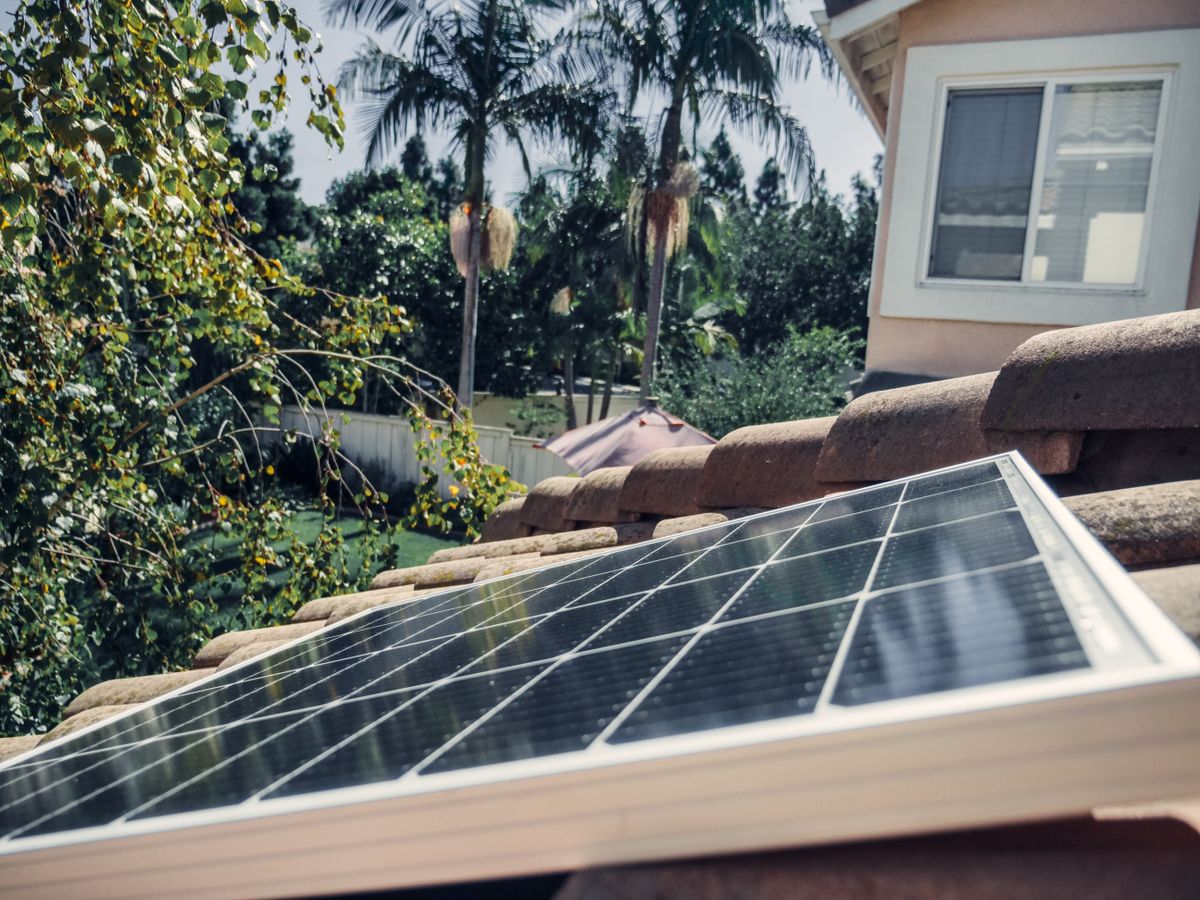
- Detached vs. Integrated: Many high-performance solar spotlights feature a detached solar panel connected by a wire. This is a significant advantage, as it allows you to place the light fixture in the shaded area at the base of the palm while positioning the panel several feet away in direct, unobstructed sunlight.
Durability and Weatherproofing (IP Rating)
Your lights will be exposed to rain, wind, heat, and cold. A high durability rating is non-negotiable. The Ingress Protection (IP) rating indicates a device's resistance to solids (like dust) and liquids (like water).
- IP65: Rated as "dust tight" and protected against water jets from any angle. This is a good minimum for landscape lighting.
- IP67: Rated as "dust tight" and protected against temporary immersion in water. This offers superior protection and peace of mind in areas with heavy rainfall or temporary flooding. Solar Spot Lights products are built with high IP ratings to ensure year-round reliability.
Adjustability and Flexibility
To achieve the perfect lighting angle, you need adjustable components. Look for spotlights where both the light head and the solar panel can be tilted and rotated independently. This allows you to aim the light precisely onto the trunk or canopy while simultaneously positioning the panel for maximum sun exposure.
Color Temperature (Kelvin)
Color temperature, measured in Kelvin (K), describes the appearance of the light.
- Warm White (2700K - 3000K): This is the most recommended choice for landscape lighting. It produces a soft, golden, inviting glow that mimics traditional incandescent bulbs and enhances the natural colors of foliage.
- Cool White (5000K+): This produces a stark, blue-toned light that can often look harsh and unnatural in a landscape setting. It's better suited for security or task lighting.
Strategic Placement: How to Uplight Your Palm Trees
Where you place your lights is just as important as the lights you choose. Experimentation is key, but these professional techniques will give you a fantastic starting point.
The Classic Uplight
This is the most common and effective technique. Place one or two solar spotlights 1-3 feet from the base of the palm tree, aimed directly up the trunk. This creates a powerful, dramatic effect, making the tree appear taller and more majestic. A single light will create deep shadows, while two lights placed opposite each other will provide a more even illumination.
Creating Depth with Cross-Lighting
For thicker palms or clumping varieties (like Areca palms), use two or more spotlights positioned at different angles (e.g., 10 o'clock and 2 o'clock). This cross-lighting technique minimizes harsh shadows and reveals the three-dimensional ahape and texture of the trunks, adding significant visual depth.
The Grazing Technique for Textured Trunks
If your palm has a uniquely textured trunk, such as the woven fibers of a Trachycarpus fortunei or the retained "boots" of a Washingtonia, use the grazing technique. Place your spotlight very close to the trunk (less than a foot away) and aim it almost parallel to the surface. This low-angle light will "graze" the trunk, casting tiny shadows that dramatically emphasize its intricate texture.
Illuminating the Full Canopy
For very tall, majestic palms like a Royal Palm or Coconut Palm, lighting just the trunk isn't enough. To make the entire tree a feature, position a more powerful spotlight further back from the base (5-10 feet or more) and angle it up towards the canopy. This will illuminate the vast spread of the fronds, creating a stunning "glowing crown" effect that can be seen from a distance.
Why Solar Panel Placement is Critical
The success of your solar lighting hinges on one thing: sunlight. As noted by lighting professionals, the goal is to light the tree, which is often in a dark or shaded spot, especially at its base Source. This is why using a product with a detached solar panel is so crucial. You can place your Solar Spot Lights fixture in the perfect, shady spot under the palm's canopy while running the connecting wire to a nearby garden bed, lawn edge, or mounting the panel on a fence post that receives 6-8 hours of direct sun daily. Never place the panel where the palm tree itself will cast a shadow over it during the day.
Installation and Maintenance for Lasting Performance
One of the best aspects of solar lighting is its simplicity. By following a few basic steps and performing minimal maintenance, your lights will perform beautifully for years.
Simple Installation Steps
Common Mistakes to Avoid
- Shaded Panels: The most common error is placing the solar panel in a shady area. Monitor the spot throughout the day to ensure it's not shaded by the house, other plants, or the palm tree itself.
- Light Pollution Interference: Don't place the solar light right next to a porch light or streetlamp. The ambient light can trick the photosensor into thinking it's still daytime, preventing your light from turning on.
- Ignoring a Dirty Panel: A panel covered in dust, pollen, or bird droppings can't charge effectively.
Long-Term Maintenance and Care
Solar lights are incredibly low-maintenance, but not "no-maintenance." Real-world users in communities like the PalmTalk forums emphasize that a little care goes a long way in ensuring longevity and performance Source.
- Clean the Solar Panel: Every 2-3 months, simply wipe the surface of the solar panel with a soft, damp cloth to remove any grime. This is the single most important maintenance task.
- Check the Fixture: Brush away any spiderwebs, leaves, or debris that may have collected on or around the light fixture and lens.
- Prune Overgrowth: Periodically check that new plant growth isn't starting to cast a shadow over your solar panel.
- Battery Replacement: After 3-5 years, depending on the model and usage, the rechargeable battery may start to lose its ability to hold a full charge. Most quality solar lights, including those from Solar Spot Lights, have easily replaceable batteries, allowing you to refresh your fixture for a fraction of the cost of a new one.
Troubleshooting Common Solar Lighting Issues
If your light isn't performing as expected, a few simple checks can usually solve the problem.
- Light Won't Turn On:
- Run Time is Short:
- Light is Flickering:
For any persistent issues, the customer support team at Solar Spot Lights can provide guidance and help resolve problems under warranty.
Transform Your Landscape with Solar Spot Lights
Illuminating your palm trees is one of the most impactful upgrades you can make to your home's curb appeal and outdoor living space. It elevates your landscape from ordinary to extraordinary, creating a resort-quality ambiance every single night.
With today's advanced solar technology, this stunning effect is no longer a costly or complicated endeavor. By choosing high-quality, purpose-built fixtures, you can achieve professional results with a simple DIY installation. You get all the beauty with none of the hassle, cost, or environmental impact of traditional wired systems.
Explore the range of powerful and durable products from Solar Spot Lights to find the perfect solution for your queen palms, pindo palms, pygmy dates, and more. Take the first step today and get ready to see your landscape in a whole new light.
---