
Warm White vs. Cool White Solar Spotlights: Choosing the Right Color Mode for Your Home Exterior
Warm white vs cool white solar spotlights is a 3000K versus 6500K choice on your home exterior, not a hardware swap. Warm white flatters brick, wood, and planting; cool white reads as security and makes flags and pale stone pop. Natural white sits between them when one facade has mixed materials. Choosing the right color mode on a 3-mode solar spotlight takes a dusk walk, not a new circuit. Set the mode, aim the 120-degree head, and judge from the street—not from the fixture.
What warm, cool, and natural actually do on a house
Color temperature is the Kelvin number on the beam, not the heat of the housing. Warm white near 3000K is the amber-cream light people call “porch light.” It is the right color mode for red brick, cedar, stucco with a cream cast, and most garden beds in front of the home. Cool white toward 6500K is the bluish-white of a shop lamp. On a home exterior it can look like a parking lot if you flood the whole facade, but it is useful on pale limestone, metal, house numbers, and flags that need the stars to stay white.
Natural white is the compromise mode. Use it when the same solar spotlights have to cover a brick wing and a white trim gable, or when warm feels too yellow on fiber-cement siding. You are not stuck. Three color lighting modes mean you can change the look after you see neighbors’ windows and the sidewalk, without buying a second set.
Choosing by surface, not by habit
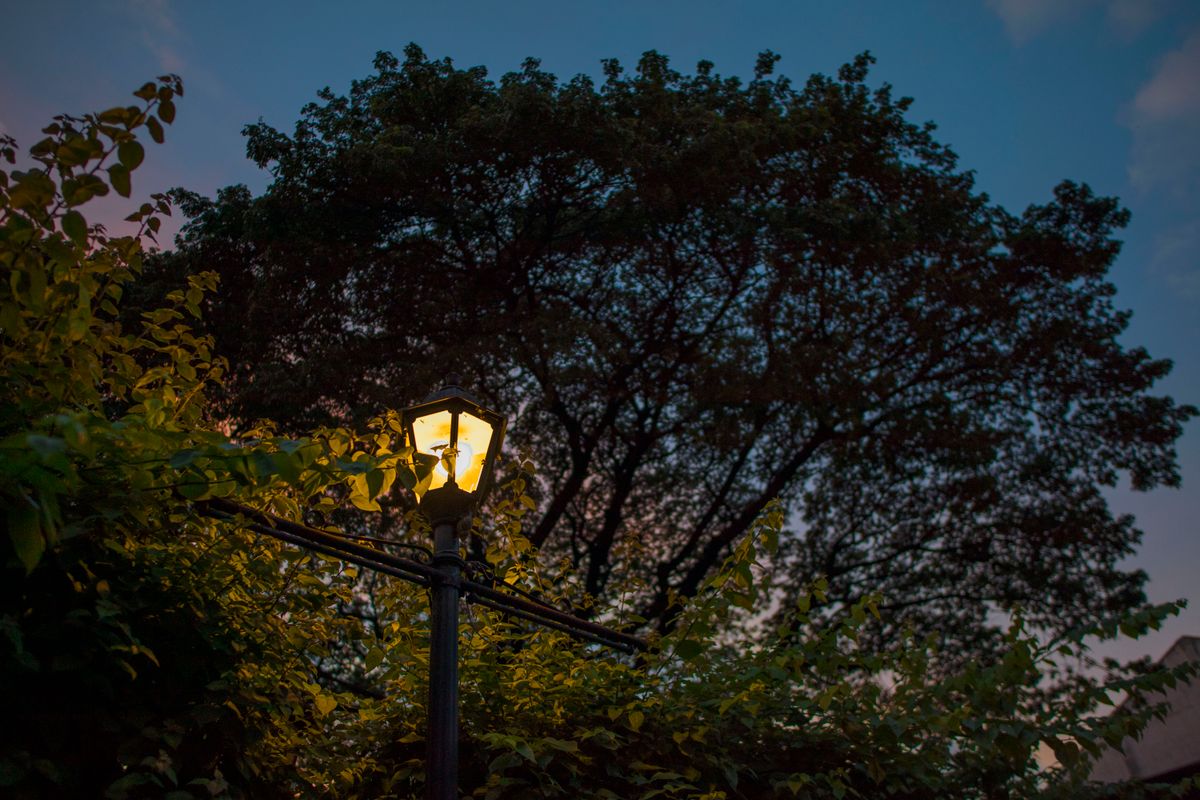
Photo by Wilson Ren on Pexels
Walk the home exterior at dusk with one fixture on warm and one on cool if you have a pair. Brick and wood almost always win on warm white. A north-facing white clapboard wall can take cool white without looking harsh because there is less competing sunset color. Mixed facades—stone base, painted body—often look more expensive on natural white than on a hard cool wash.
Security is the other axis. Cool white makes faces and clothing easier to describe. Warm white still lights a side yard; it just feels like landscape lighting instead of a deterrent. Many homes use cool on the driveway apron and warm on the garden and facade. The same 74-LED, 600-lumen head does both jobs. You are choosing a mode, not a brighter lamp.
Aim, distance, and why the panel does not care about Kelvin
The 1.5W–2W polycrystalline panel and 2000 mAh battery do not change with color mode. Charging still needs sun, a clean face, and a 120-degree adjustable head aimed at the sky even while the beam hits the wall. Place fixtures 6–10 feet from the facade. Too close, and warm white still makes a hot patch; too far, and cool white turns into a faint haze.
Dusk-to-dawn operation will show you the color on a full night, including how it sits next to a neighbor’s porch. If the beam feels cold at 9 p.m., switch to warm. If the flag looks dingy, switch that one head to cool. IP65 weatherproofing keeps rain out of the switch and housing while you experiment.
Warm white vs cool white vs natural white on a home exterior
| Color mode | Kelvin range | Best on | Skip when | | --- | --- | --- | --- | | Warm white | ~3000K | Brick, wood, planting, most facades | You need a flag or metal to read true white | | Cool white | ~6500K | Flags, pale stone, house numbers, security | You are lighting red brick or a dining patio | | Natural white | Between warm and cool | Mixed siding and trim, one-fixture yards | You already love a fully warm or fully cool look | | Wired landscape default | Often fixed 2700–3000K | Designer-specified facades | You want to change color without new lamps |
Color, aim, placement, and charging checklist
- [ ] Stand in the street at dusk and decide whether the home exterior should feel like a porch or a checkpoint.
- [ ] Set warm white on brick, wood, and garden beds first.
- [ ] Set cool white only on flags, pale stone, numbers, or a security corner.
- [ ] Use natural white when one beam has to cover mixed materials.
- [ ] Place solar spotlights 6–10 feet from the wall; look from the sidewalk.
- [ ] Aim the 120-degree head at the surface, then rotate the panel to sun.
- [ ] Charge a full day before judging color—half batteries look yellower or dimmer.
- [ ] Recheck color after rain; a wet facade shifts how warm vs cool reads.
Frequently asked questions
Is warm white always the right color mode for a home exterior?
It is the right starting point for brick, wood, and planting. It is not automatic for a white modern facade, a flag, or a side-yard security beam. Choosing means matching the surface, not copying a catalog photo.
Does cool white use more battery than warm white?
On these 3-mode solar spotlights, runtime is governed by the 2000 mAh pack, panel sun, and how long dusk-to-dawn stays on—not by Kelvin. A dim cool beam is usually a dirty panel or shade, not the color mode.
Can I mix warm and cool on the same house?
Yes, and it often looks more intentional. Warm on the facade and garden, cool on the flag or driveway, keeps the home exterior from reading as one flat wash.
What is natural white for if I already have warm vs cool?
Natural white is the tie-breaker when mixed materials fight each other. It is also the mode to try if warm feels dingy on gray siding and cool feels like a warehouse.
Will 600 lumens look harsh in cool white?
It can if you mount the head too close. At 6–10 feet with the beam grazed up the wall, even cool white is usable. Glare is an aim problem more than a lumen problem.
Related reading
- guide to outdoor color temperatures for solar spotlights
- why choose warm white solar spot lights outdoors
- how to highlight a home facade with solar spotlights
- warm white vs cool white house facade comparison
What to do next
Tonight, set one head to warm white on the main facade and one to cool white on a flag or pale corner. Stand in the street. Keep the mode that matches the home exterior and move the other. Do not rewire anything until the color is right.
Cover photo by ROMAN ODINTSOV on Pexels.