Solar vs. Hardwired Landscape Lighting: 5-Year Cost, ROI, and Performance Comparison
Should you choose solar or hardwired landscape lighting for your property? For over 90% of homeowners, high-efficiency solar spot lights are the smarter choice. Low-voltage hardwired systems cost $1,200 to $3,500+ installed due to professional electrician fees, lawn trenching, and transformers. Modern 600-lumen solar spotlights with 20% high-conversion solar panels deliver equivalent accent illumination for under $150, with zero ongoing utility charges, full payback in under 3 months, and a 10-minute tool-free installation.
5-Year Cost & ROI Comparison by Yard Scenario
| Scenario / Property Layout | Hardwired 12V System (10 Lights) | Solar Spotlight System (10 High-Efficiency Spotlights) | 5-Year Net Savings & Value Advantage |
| --- | --- | --- | --- |
| Standard Suburban Front Lawn (50 ft setback) | $1,450 ($450 fixtures/transformer + $900 installation + $100 electricity) | $120-$160 (complete kit purchase, $0 install, $0 utility power) | Save $1,290–$1,330 with zero lawn damage or trenching. |
| Long Driveway & Perimeter Fence Line (150+ linear ft) | $2,800 ($600 fixtures + $300 high-wattage transformer + $1,800 trenching & line extension) | $240-$300 (multiple 2-in-1 solar spotlight packs) | Save $2,500+ by eliminating long wire runs and voltage drop problems. |
| Multi-Tier Garden & Retaining Wall Accent | $1,950 ($550 brass fixtures + $1,200 masonry drilling & conduit + $200 power) | $160-$200 (2-in-1 wall mount & ground stake solar spotlights) | Save $1,750+ with 120° flexible head targeting on walls and shrubs. |
| Full Architectural Facade & Specimen Trees | $3,200 ($800 pro-grade fixtures + $2,100 electrician labor + $300 power) | $320-$400 (high-lumen 74-LED solar spotlights with 3 color modes) | Save $2,800+ while gaining Warm, Natural, and Cool White flexibility. |
Compare the 5-year financial outlay and labor commitment between a traditional 12V hardwired system and a high-output solar spotlight system across common residential scenarios.
Failure Modes & Key System Trade-Offs
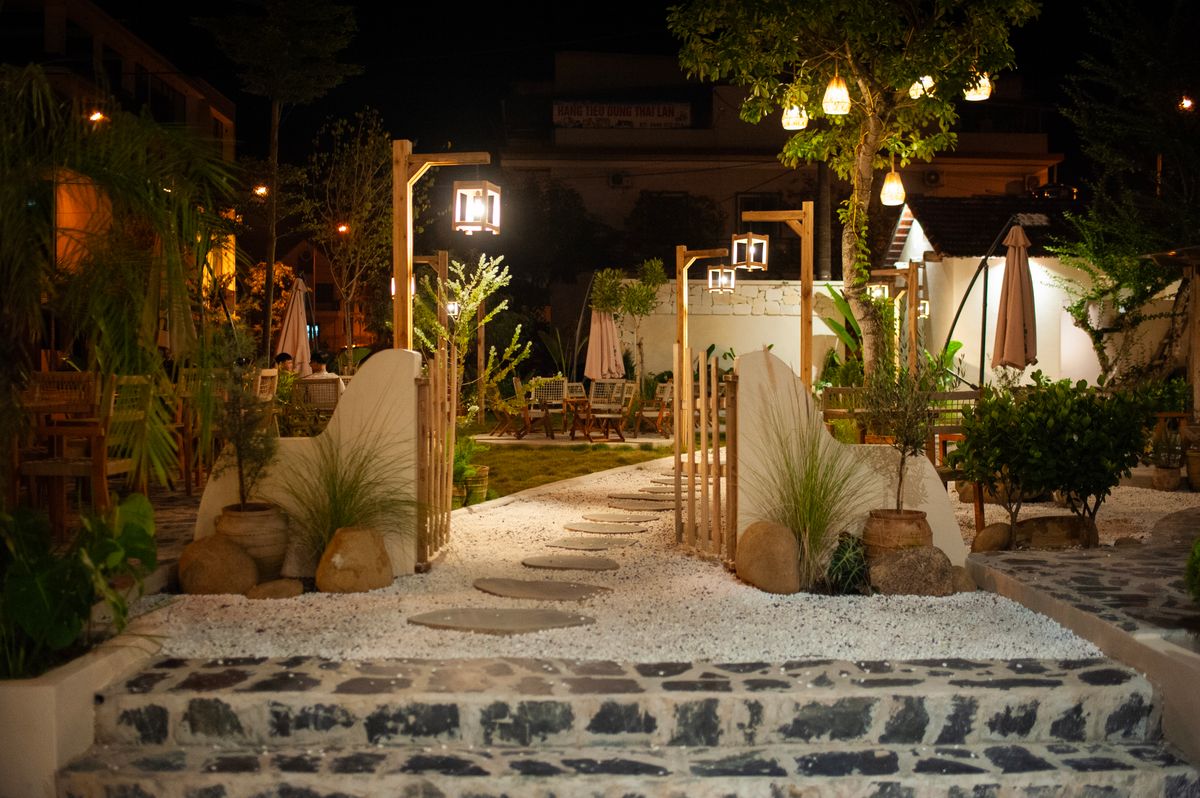
Photo by Thang Nguyen on Pexels
Pros
- Zero utility electricity costs for life
- Effortless 10-minute DIY setup with no trenching or wire splicing
- 2-in-1 versatile mounting: ground stake or exterior wall mount
- Adjustable 120-degree lighting heads for precise beam positioning
- 3 selectable color temperatures (3000K Warm, 4000K Natural, 6000K Cool White)
- Automatic dusk-to-dawn operation with energy-efficient light sensors
- Requires 4 to 6 hours of unshaded daily sunlight for maximum overnight runtime
- Winter runtimes in extreme northern latitudes may decrease from 14 hours to 6-8 hours
- Rechargeable lithium batteries eventually require replacement after 3-5 years
Editor's Recommendation: Which System Wins for Your Yard?
Choose High-Output Solar Spotlights if you want fast, budget-friendly, high-brightness landscape lighting without hiring an electrician or tearing up your turf. With 600 lumens per light, 74 high-power LEDs, and 20% panel conversion efficiency, solar spotlights like Nacinic equal the accent performance of 20W-35W halogen hardwired spots at a fraction of the cost.
Interactive Tool: Landscape Lighting 5-Year TCO Calculator
Use this interactive calculation logic to estimate your exact 5-year savings when choosing solar spot lights over hardwired low-voltage lighting.
Your Action Plan: Moving from Decision to Setup
Your decision: Choose high-efficiency 600-lumen solar spotlights if you want zero utility bills, rapid 10-minute setup, and bright landscape illumination without trenching wires.
Do this next: Assess your yard's sunlight exposure, pick your target focal points (trees, flagpoles, house facade), and choose your preferred color temperature mode.
- Read next: Outdoor Lighting Costs FAQ: Trenching, Electricity Bills, and Solar Alternatives
- Read next: How to Replace Hardwired Outdoor Lights with Solar Spot Lights Without Digging
Consider Nacinic 600-Lumen Solar Spotlights featuring 74 high-power LEDs, 20% conversion efficiency polycrystalline panels, 3 color modes, and IP65 waterproof housing for immediate setup.
Follow these simple steps to transform your outdoor landscape lighting in a single afternoon.
Key Comparison Highlights
- Upfront Cost: Solar spot lights cost $120–$200 for a 10-fixture setup compared to $1,200–$3,500+ for electrician-installed hardwired systems.
- Brightness Match: 600-lumen solar spotlights with 74 LED beads deliver equivalent targeted brightness to standard 20W–35W halogen or 5W–7W low-voltage LED hardwired spots.
- Zero Property Disruption: 2-in-1 solar ground stakes and wall mounts eliminate grass slicing, flowerbed trenching, and masonry drilling.
- Energy Savings: Solar spotlights run on 100% free solar energy, saving $30–$80 annually on home utility power.
- Weather Resilience: IP65-rated solar spotlights resist rain, snow, heat, and frost, operating continuously for 6–14 hours per charge.
Installation Visual: Underground Trenching vs. 2-in-1 Solar Setup
This visual cross-section illustrates the installation complexity difference between underground hardwired wiring and zero-dig solar spotlight mounting.
5-Year Maintenance & Ownership Timeline
- Day 1 (Installation) — Unpack solar spotlights, select color mode (Warm/Natural/Cool White), insert ground stakes into sunny landscape beds or mount to exterior walls with included screws. (Total time: 10-15 minutes).
- Month 6 — Wipe solar panel surfaces with a moist cloth to remove dust or pollen buildup, ensuring maximum 20% energy conversion efficiency.
- Year 2 — Inspect fixture angles; adjust 120-degree heads as garden shrubs and trees grow to maintain ideal spotlight focal points.
- Year 3 - 5 — Solar spotlights continue operating effortlessly. Hardwired systems by this stage often require wire repair, socket corrosion cleaning, or transformer bulb replacement.
Pre-Purchase Property Evaluation Checklist
- Measure direct sunlight exposure (confirm minimum 4-6 hours of unshaded sunlight for solar panel placement).
- Identify key focal points: architectural features, flagpoles, garden trees, or entry pathways.
- Determine mounting style: ground stake insertion for soil/garden beds vs wall mount for fences/exterior siding.
- Select preferred color temperature mode: Warm White (3000K) for cozy ambiance, Natural White (4000K) for landscaping/foliage, or Cool White (6000K) for security.
- Verify IP65 weatherproofing to withstand rain, snow, and irrigation sprinklers.
Decision Support: Selecting the Right System for Your Property
Photo by Warren Griffiths on Pexels
High-output solar spotlights are ideal for residential homes, rental properties, and expansive yards where trenching wires is expensive or impractical.
Best choice for
- Solar Spot Lights — Requires zero electrical skills, zero yard digging, and can be relocated instantly.
- Solar Spot Lights — Eliminates high copper wire costs and severe voltage drops over long distance runs.
- Hardwired 12V Systems — Used only when locations receive less than 2 hours of direct sunlight daily.
- Avoid cheap 10-50 lumen solar stakes that fade after 2 hours; insist on 600-lumen output with 20% conversion panels.
- Avoid hardwired systems if you plan to update garden landscaping within 3 years, as underground wires restrict bed redesigns.
- Hybrid Solar-Powered Wall & Stake Lights — Offers 2-in-1 installation flexibility for both fence siding and garden soil.
Top-Rated Solar Alternative: Nacinic 600-Lumen Solar Spotlights
For homeowners seeking hardwired-level brightness without electrician costs, Nacinic Outdoor Solar Spotlights set the industry benchmark for landscape performance.
Key Product Specifications:
- Brightness & LEDs: 74 high-power LED beads producing 600 lumens of ultra-bright accent illumination.
- Color Temperature Versatility: 3 selectable lighting modes—Warm White (cozy architectural highlight), Natural White (vibrant foliage display), and Cool White (crisp security beam).
- Solar Panel Efficiency: High-efficiency polycrystalline silicon solar panel with up to 20% energy conversion rate.
- Continuous Runtime: Delivers 6 to 14 hours of continuous lighting on a single day's charge, operating automatically dusk-to-dawn.
- 2-in-1 Installation: Insert directly into ground soil with included heavy-duty stakes or mount onto walls/fences with included hardware.
- Weatherproof Rating: IP65 waterproof and heatproof casing designed to withstand heavy rain, snow, ice, and intense summer sun.
- Flexibility: 120-degree vertically adjustable head for precise spotlight angle targeting.
Real-World Application Scenarios
Illuminating Tall Garden Trees & Japanese Maples — Position the solar spotlight 3 to 5 feet from the trunk, adjust the head upward to 45–60 degrees, and select Natural White (4000K) to highlight rich leaf colors.
Architectural House Facade & Stone Columns — Place solar spot lights 2 feet from the foundation wall angled upward. Select Warm White (3000K) to accentuate stone textures and warm exterior paint tones.
Fence Line & Pathway Safety Illumination — Mount solar spotlights on fence posts using included screws, angled downward along walkways. Select Cool White (6000K) for high-contrast security vision.
Flagpole Night Illumination — Place two solar spotlights on opposite sides of the flagpole angled straight up at 75–90 degrees to ensure full flag illumination meeting US flag code guidelines.
See how high-output solar spotlights excel across standard outdoor residential applications.
When comparing solar lighting to low-voltage 12V hardwired systems, historical misconceptions often mislead homeowners. Early solar accent lights produced a dim 10 to 30 lumens, suitable only as faint marker lights. Modern engineering has transformed solar landscape performance through three critical technical advancements:
1. High-Density LED Arrays (600 Lumens Output)
Modern solar spotlights utilize 74 high-power LED beads concentrated behind optimized optical lenses. This design yields 600 lumens of directional spot brightness. In practical terms, 600 lumens matches the luminous output of a traditional 20W to 35W halogen spot bulb or a 5W to 7W low-voltage LED hardwired fixture—providing bright accent beams up to 25 feet high on trees and exterior house walls.2. 20% High-Efficiency Polycrystalline Solar Panels
The primary engine of light duration is energy conversion efficiency. Standard low-cost solar panels convert only 10% to 12% of sunlight into stored battery energy. Advanced polycrystalline silicon panels achieve conversion rates as high as 20%. This high efficiency allows the internal rechargeable battery to reach full capacity even under hazy, overcast, or shorter winter sun conditions, securing continuous lighting for 6 to 14 hours from dusk until dawn.3. IP65 Weatherproof Durability vs. Underground Cable Vulnerability
Hardwired lighting systems rely on buried 12/2 or 14/2 low-voltage wire connected to a central 120V-to-12V transformer. Over time, ground settling, moisture intrusion in wire connectors, and accidental shovel slices create short circuits that shut down the entire lighting loop. Solar spotlights operate as independent, self-contained units. Rated IP65 waterproof, they feature hermetically sealed housings that prevent rain, snow, dust, and sprinkler spray from reaching internal components.> Contractor Note on Installation Line Items: > "A typical 10-fixture hardwired landscape lighting job includes a $150–$300 transformer, 150 feet of direct-burial wire, individual fixture brass housing costs ($45–$80 each), plus 6 to 10 hours of electrician and trenching labor billed at $75–$120 per hour. Solar spot lights completely eliminate three-quarters of these line items, allowing homeowners to achieve professional accent lighting for less than the cost of a transformer alone."
Related Outdoor Lighting Guides & Technical Deep Dives
- DIY Solar Spotlights vs. Hardwired Outdoor Lighting: Installation & Cost Comparison
- Solar Spot Lights vs Hardwired Landscape Lighting
- Solar vs. Hardwired Landscape Spotlights: Performance & Cost Comparison
Frequently Asked Questions
Get rapid, clear answers to common questions about switching from hardwired systems to solar spot lights.
Final Summary & Next Steps
Your decision: Choose high-efficiency 600-lumen solar spotlights for maximum financial savings, flexible setup, and bright landscape illumination.
Do this next: Assess your property focal points, determine stake or wall mounting locations, and choose high-efficiency 600-lumen solar spotlights.
- Read next: Outdoor Lighting Costs FAQ
Upgrade your home landscape with Nacinic 600-Lumen Solar Spotlights featuring 74 LEDs, 3 color modes, 20% conversion efficiency, and IP65 waterproof design.
Make your property look stunning tonight without spending thousands on electrician bills or trenching your yard.
Cover photo by Kindel Media on Pexels.