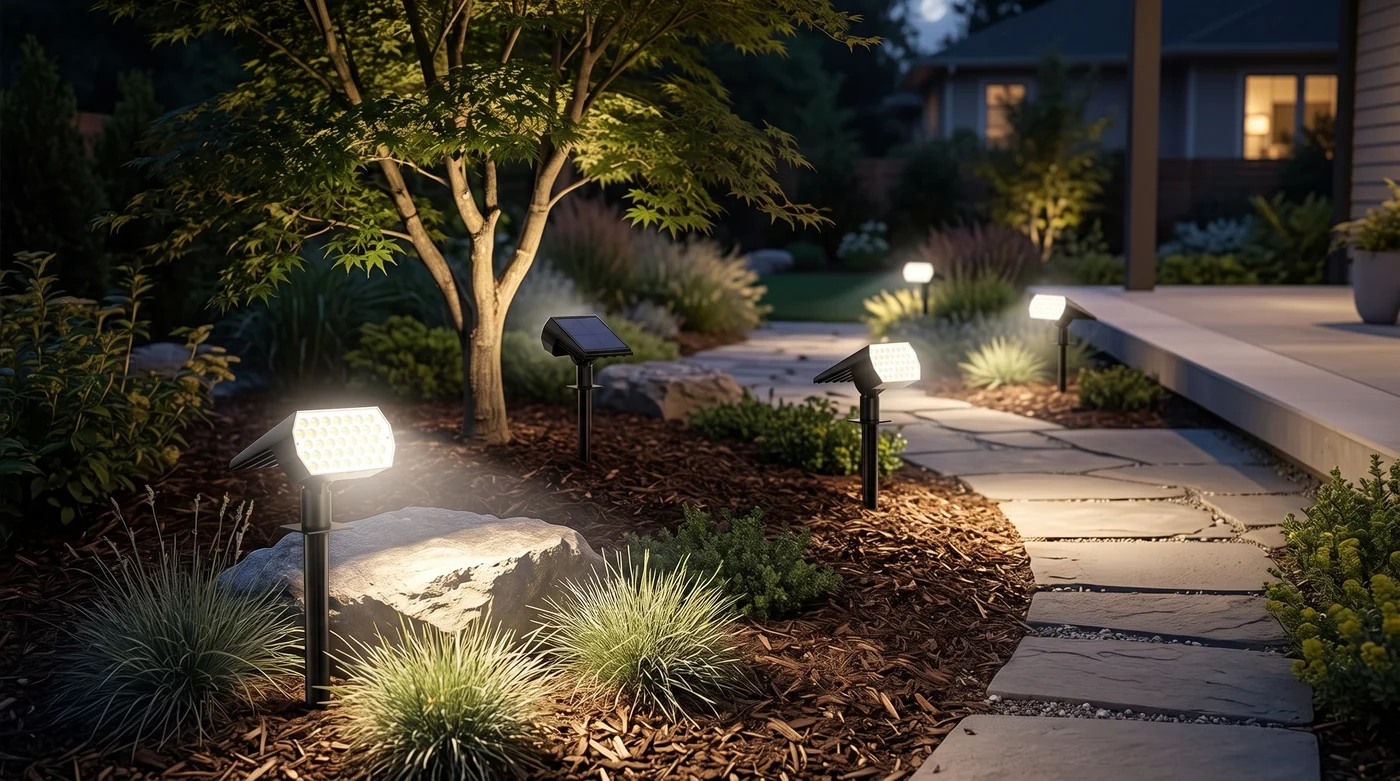
How Outdoor Solar Landscape Spot Lights Work
Solar Energy Conversion and Photovoltaics
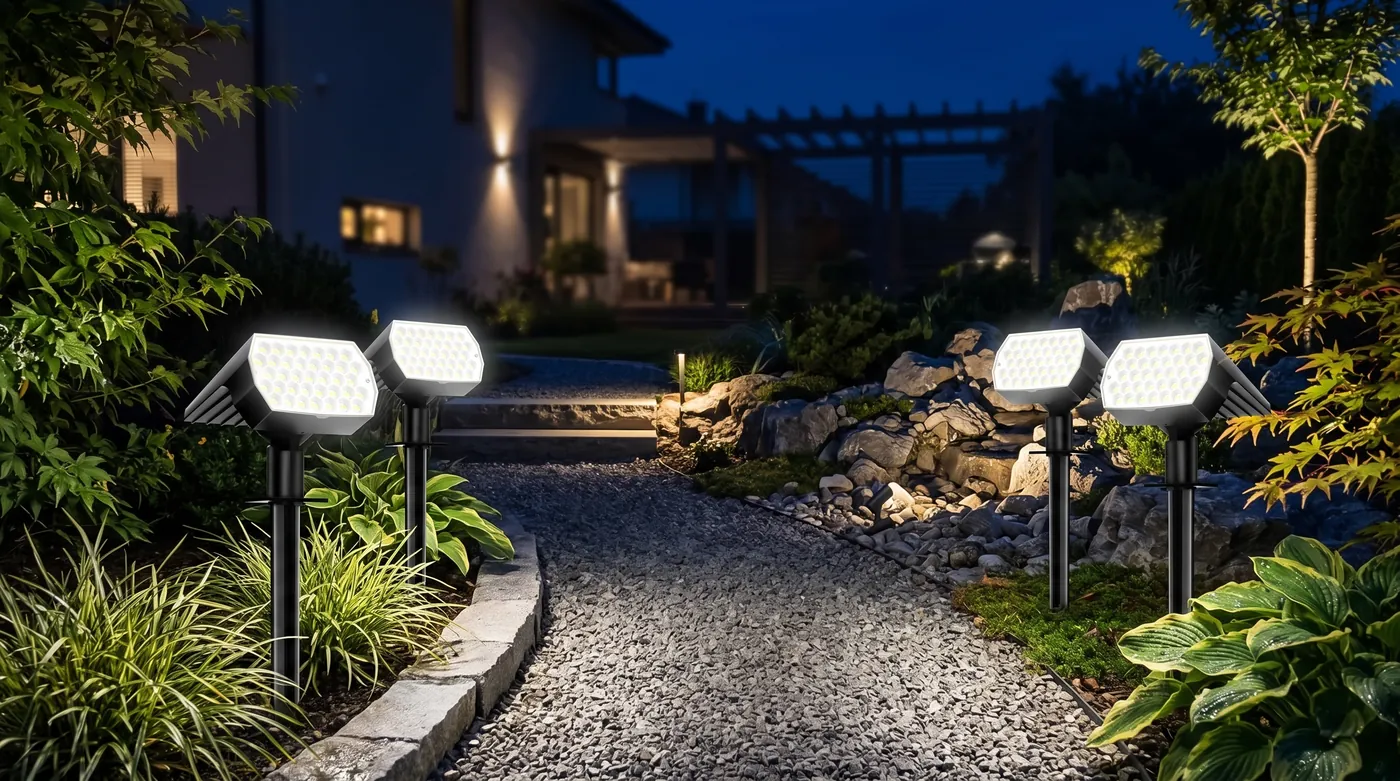
Understanding how modern outdoor solar spot lights convert sunlight into bright illumination reveals why solar tech has become the premier choice for exterior lighting. At the core of every unit is a polycrystalline silicon solar panel. These panels achieve energy conversion rates as high as 20%, rapidly absorbing solar photons throughout daylight hours and converting them into electrical energy.
For a deeper dive into landscape design and overall lighting placement, refer to [the main guide]. The panel's efficiency determines how rapidly energy flows into internal storage, making silicon quality essential for reliable nighttime performance. Polycrystalline cells are made from silicon fragments melted together rather than sliced from a single crystal, which keeps manufacturing costs reasonable while still delivering strong efficiency. A 20% conversion rate means roughly one-fifth of the solar energy striking the panel becomes stored electricity — a high figure for compact garden fixtures, where the collecting surface is limited to the top face of the light.
Orientation is the variable owners actually control. Because the head adjusts through 120 degrees, the panel can face open sky even while the beam points sideways at a wall or tree trunk. A panel shaded for part of the day still charges, but output drops sharply, which is why placement under eaves, dense canopy, or north-facing walls is the most common cause of short runtimes — not a fault in the light itself. When a solar fixture seems weak, relocating it into longer direct sun usually solves the problem before any other troubleshooting is needed.
Battery Storage and Dusk-to-Dawn Automation
Electrical current generated by solar panels flows directly into built-in energy storage. Utilizing a robust 2000 mAh battery capacity, these systems hold sufficient charge to provide 6-14 hours of continuous night operation on a single charge.
Automation is governed by intelligent light sensors. The landscape lights automatically sense surrounding ambient brightness, keeping LEDs switched off during the daytime to maximize charge accumulation. Once ambient light falls below functional thresholds at dusk, the internal circuitry switches on automatically to emit uninterrupted light. The wide 6-14 hour range is not vagueness — it reflects real charging conditions. A clear summer day fills the battery completely and supports the long end of the range; short, overcast winter days deliver less charge, so runtime lands nearer the low end. The system degrades gracefully either way: a partially charged battery still covers the early evening hours when illumination matters most, rather than failing outright.
The dusk sensor protects the battery as well as automating it. Because the LEDs stay off whenever ambient light is present, no charge is spent during daylight, and everything gathered is reserved for darkness. This is also why a unit installed near a bright porch lamp or streetlight can behave oddly — the sensor reads that spill as daylight and delays switch-on. Keeping fixtures out of the throw of other light sources ensures the automation stays clean and punctual through the whole season.
Optics and LED Light Output
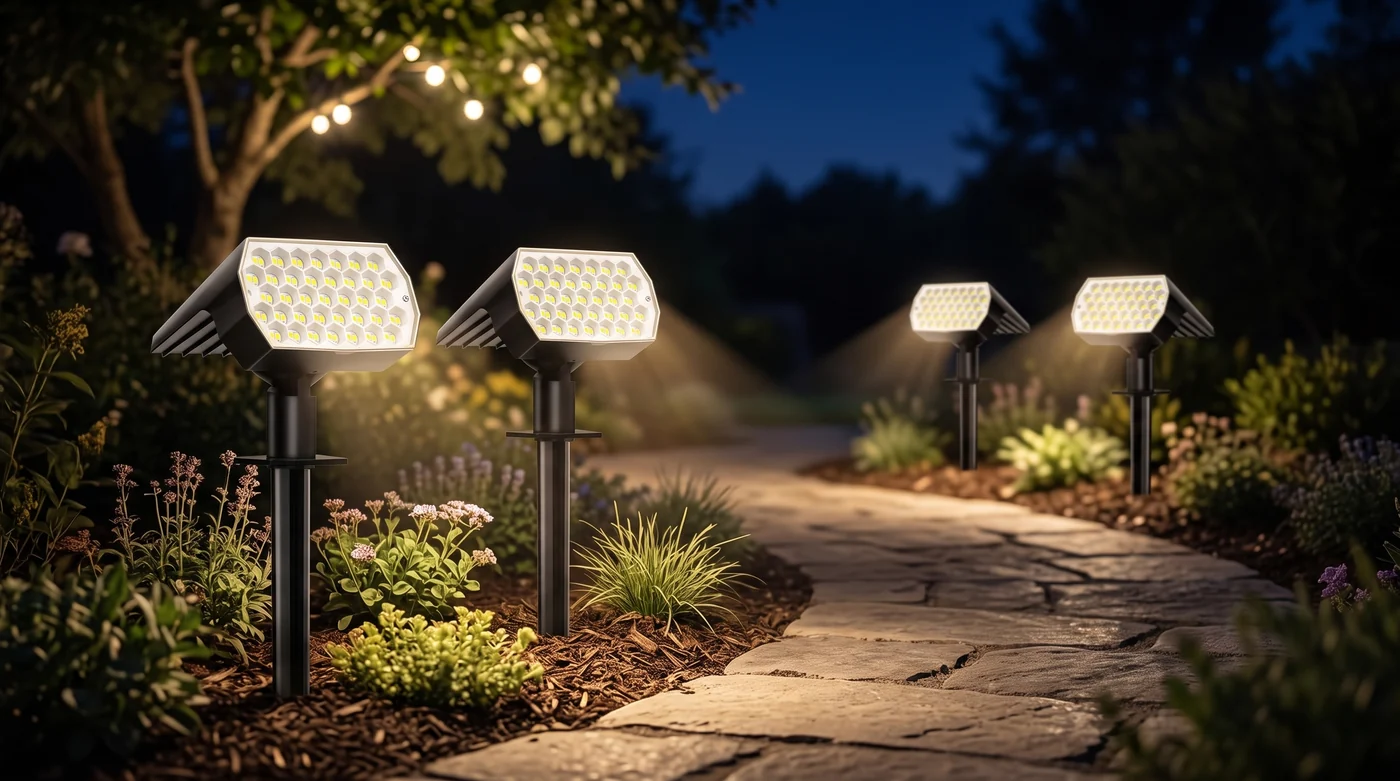
Illumination efficiency depends heavily on diode density and optical design. Units featuring 74 high-power LED beads project up to 600 lumens of brightness. Furthermore, flexible 120-degree adjustable heads allow homeowners to position solar panels upward for direct exposure to solar rays while directing concentrated light beams directly onto trees, walls, or lawn ornaments.Read the full guide: The Complete Guide to Outdoor Solar Landscape Spot Lights
Spreading output across 74 diodes rather than a single emitter has practical benefits beyond raw brightness. The beam is more even, with fewer harsh hot spots on the surface being lit, and the fixture tolerates an individual diode failing without going dark. Distributing the work across the array also spreads heat, and heat is the main factor that shortens LED lifespan.
The three color modes switch electronically, so moving from 3000K warm white to 6500K cool white takes a moment and requires no bulb change or tools. In practice, warm white reads as amber and relaxed, natural white as neutral daylight, and cool white as crisp and slightly blue. The choice is purely aesthetic rather than mechanical — a meaningful difference from older landscape fixtures, where changing the look of a lighting scheme meant buying and swapping physical hardware. Aim the beam first, then audition each mode against the actual surface; stone, siding, and foliage each respond differently to the same light.
Distance changes the footprint as well. A fixture placed close to a wall throws a tight, dramatic scallop of light, while pulling it a few feet back widens the wash and softens the edges — often a bigger lever on the final look than any setting on the unit itself.