How do outdoor Solar Spot Lights work in landscaping?
 Sam VasquezBuying Guide Lead
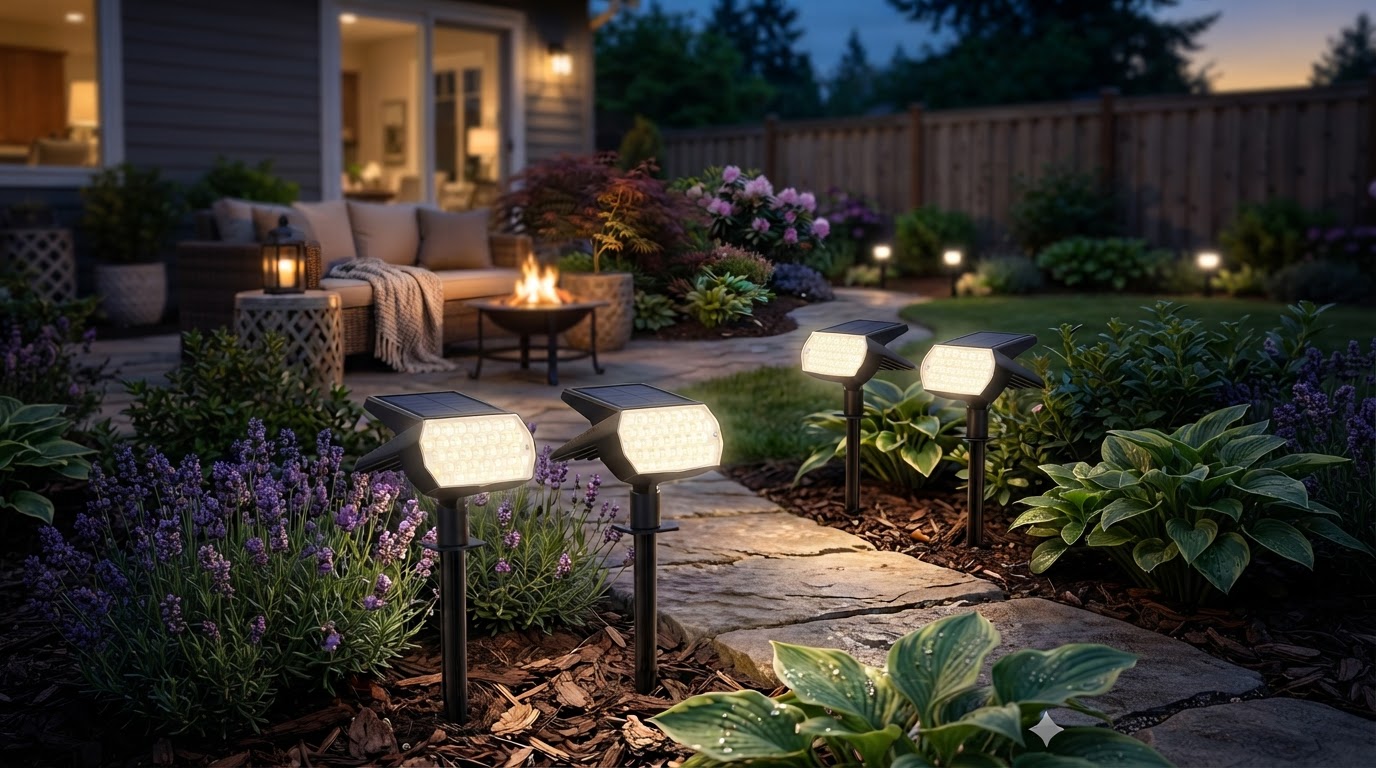
August 3, 2026 — Outdoor Solar Spot Lights function by converting sunlight into electrical energy during the day using photovoltaic cells, which is then stored in internal batteries to power high-intensity LEDs after dusk.
Homeowners looking to upgrade their curb appeal without the expense of trenching for high-voltage wiring often turn to these self-contained units for targeted illumination. Understanding the mechanics of beam angles and battery discharge rates is essential for selecting a fixture that remains functional throughout the night while highlighting specific architectural features.
How does the light beam differ from a floodlight?
The primary difference lies in the concentration of the beam, as Solar Spot Lights are designed to project a narrow, focused stream of light typically limited to a 45-degree spread. According to Linnemann Lawn Care, these spotlights create a concentrated beam that allows for specific highlighting of landscape elements rather than washing out an entire area. This design makes them ideal for "uplighting," a technique described by Malory Lighting that involves placing the fixture at the base of a tree and angling it upward to illuminate the trunk and canopy. Between these two options—spots and floods—I’d go with a spotlight for aesthetic focal points and a floodlight only if you need broad security lighting for a driveway. If you're on a budget, focusing on three high-quality spots for your best trees will look better than five cheap, dim floodlights scattered randomly.
What components ensure a solar spotlight lasts all night?
Photo by 🇻🇳🇻🇳Nguyễn Tiến Thịnh 🇻🇳🇻🇳 on Pexels
A reliable solar spotlight relies on the synergy between a high-efficiency monocrystalline solar panel, a lithium-ion battery, and a dusk-to-dawn sensor. For instance, the Luxoro Outdoor Spotlight utilizes a spike-mounted base to ensure the panel can be positioned for maximum solar absorption while the LED remains pointed at the target. These systems use a photoresistor to detect the absence of light, triggering the battery to discharge into the LED circuit. Skip this if your target area is in deep shade all day, as the battery won't reach the voltage necessary to maintain brightness for more than two hours. In my experience, looking for units with an IP65 waterproof rating is non-negotiable for longevity in garden environments. Here's what I'd actually buy: a model with a separate solar panel and a 15-foot cord if the tree you want to light is under a heavy evergreen canopy, ensuring the panel itself gets direct southern exposure.
Quick answers
Q: Can solar spotlights be used for flag poles? A: Yes, specific models like the solar flag pole light are designed with top-mounted circular arrays or ground-based spots that provide the 3600 to 5400 lumens often required to reach the top of a 20-foot pole.
Q: What is the standard beam angle for a landscape spotlight? A: Most residential Solar Spot Lights feature a 45-degree beam spread, which is tight enough to highlight a single architectural column or a medium-sized shrub without significant light spill.
Q: How do these lights handle rain and snow? A: High-quality units are built with an IP65 or IP67 waterproof rating, meaning they are protected against low-pressure water jets and can withstand heavy rain or snow without shorting the internal circuitry.
Learn more about Solar Spot Lights at https://solaroutdoorspotlight.com.
Sources
Photo by JINU JOSEPH on Pexels
- Spot Lights: The Secret to Transforming Your Outdoor Space
- 5 Creative Ways to Use Spotlights in Your Landscape Lighting Design
- Best Outdoor Spotlights And How To Use Them