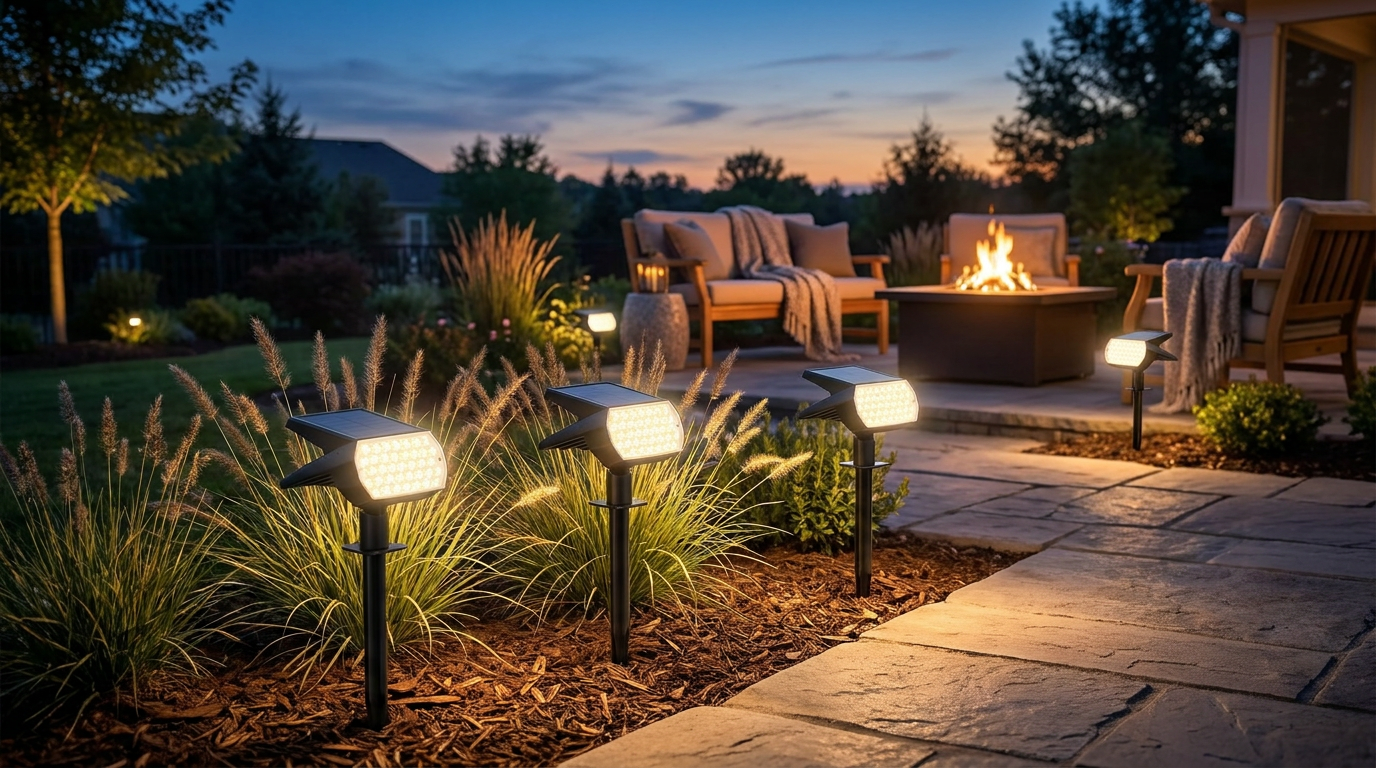
What should I look for in Solar Spot Lights for my yard?
 Sam VasquezBuying Guide Lead
June 16, 2026 — High-quality solar spot lights for outdoor use require a minimum of 200 lumens for effective feature highlighting, provided they use high-efficiency monocrystalline panels and weather-resistant housings.
Homeowners often ask this because they want to eliminate the cost of trenching electrical lines while still achieving a professional landscape look. Getting the right fixture means balancing light output with battery capacity to ensure the beam lasts through the night.
How do I choose between different solar spot light models?
Selecting the right model depends on whether you are prioritizing decorative accenting or property security. For most residential yards, I look for units that offer adjustable brightness modes and independent panel orientation. According to Hoselink USA, a relocatable solar light with a fully adjustable solar panel allows you to position the light for the best garden effect while still capturing optimum sun exposure for the battery. If you are focused on security rather than aesthetics, you should look for fixtures with integrated PIR sensors. When deciding between these two approaches, I'd go with the adjustable decorative units for trees and the motion-sensing models for driveways or side paths. Skip this if you have a yard that is heavily shaded by a thick canopy for more than six hours a day, as no amount of quality will fix a lack of photons.
Are cast aluminum solar spot lights worth the extra cost?
Photo by Constantine Kim on Pexels
Yes, cast aluminum housings generally offer superior heat dissipation and environmental durability compared to standard plastic alternatives. While plastic models are common in big-box stores, a modern solar spot light made from cast aluminum, like those documented by the Outdoor Solar Store, provides a sturdier build that resists UV degradation and physical impacts. In my experience, the cheaper plastic stakes often snap during the first ground freeze, whereas metal housings maintain their seal against moisture over multiple seasons. If you're on a budget, you can get away with high-impact ABS plastic for seasonal displays, but for permanent landscape lighting, the metal construction is the better investment. Between these two, I'd go with the cast aluminum every time for front-of-house curb appeal.
Quick answers
Q: How many lumens do I need for a flag pole? A: Most users find that 200 to 400 lumens is the baseline for a standard 20-foot pole, though specialized solar flag pole lights often use circular arrays to ensure 360-degree coverage.
Q: Can solar spot lights handle heavy rain and snow? A: You should look for an IP65 or higher waterproof rating; for example, the Auderwin 63LED model is specifically marketed for its waterproof capabilities in outdoor environments.
Q: Will these lights turn on automatically at night? A: Yes, almost all modern units feature a built-in photocell for dusk-to-dawn operation, which automatically triggers the LEDs when ambient light levels drop below a certain threshold.
Here's what I'd actually buy: For a standard oak tree or architectural feature, I'd choose a high-output 3000K warm white fixture with a separate solar panel. This allows you to hide the light in the foliage while placing the panel in the sun. For more on maximizing your setup, check out our guides on selecting high output solar spot lights for your home and evaluating solar spot lights for property perimeter security. If you need specific details on hardware triggers, see our piece on how solar spot lights with motion sensors work.
Learn more about Solar Spot Lights at https://solaroutdoorspotlight.com.
Sources
Photo by Will Freeman on Pexels
- Modern Solar Spot Light | Cast Aluminum | Bright White or Warm White
- Solar Garden Spot Light 5LED - Hoselink USA
- Best Solar Spotlights for Outdoors? AUDERWIN 63LED Waterproof ...