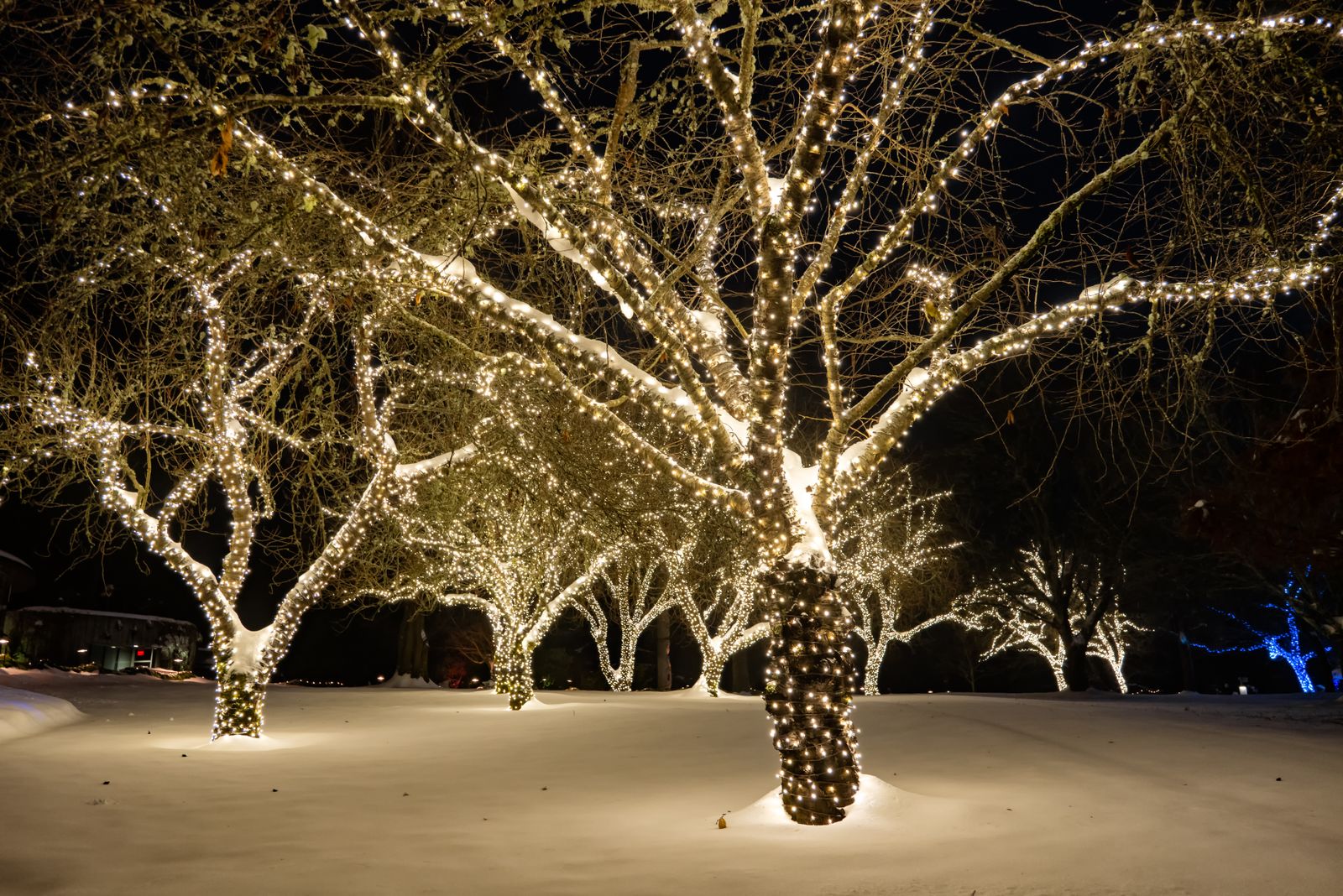
Solar Spot Light Winter Performance Guide: How to Keep Lights Bright in Low Sun
Contrary to popular belief, cold weather does not stop solar lights from working—low sun angles, short daylight hours, and panel debris do. To maintain dusk-to-dawn brightness in winter, tilt solar panels to your latitude plus 15 degrees, clear snow with a microfiber cloth, and switch to energy-saving lighting modes.
Fall-to-Winter Solar Lighting Preparation Timeline
- Late October (Pre-Winter Prep) — Clean all solar panels of fall pollen and dust using a microfiber cloth. Adjust the adjustable spotlight panel head upward by 15° relative to your home latitude, positioning the panel face strictly toward the Southern sky.
- Mid-November (First Frost) — Switch lighting color modes from high-output Cool White to energy-efficient Warm White or Natural White. Inspect ground-staked lights to ensure stems sit above heavy leaf accumulation and potential snowdrifts.
- December Solstice (Lowest Sun Arc) — Perform a 48-hour deep boost charge by switching units to OFF for two consecutive sunny days. Ensure nearby dormant tree branches are trimmed back to prevent long winter shadow coverage.
- Late January (Mid-Winter Check) — Inspect IP65 waterproof seals and housing after heavy snow or freeze-thaw cycles. Wipe down panel lenses after winter storms to clear road salt mist, ice crusts, or grime.
- Late February (Spring Transition) — Re-evaluate night-time runtimes as sun elevation rises. Return panel tilt angles gradually toward spring baselines and clean winter grime off the photovoltaic glass face.
Winter Solar Panel Maintenance Schedule
- Weekly Maintenance — Gently sweep away dry snow or dust accumulation using a soft bristle brush or dry microfiber cloth. Avoid letting snow ice over on the panel surface.
- Bi-Weekly Maintenance — Check fixture stability in soft or freezing ground. Re-tighten 120-degree panel adjustment thumb screws if strong winter winds altered the target solar angle.
- Monthly Maintenance — Wipe panel surfaces with lukewarm water and a drop of mild dish soap to strip away grease, grime, and environmental residue. Never use abrasive chemical cleaners.
- Post-Storm Routine — Clear packed snow drift surrounding the lower base of ground stakes. Confirm that wall-mounted spotlight heads remain unobstructed by hanging roof icicles.
Expert Tip: Managing Multi-Mode Brightness & Power Consumption
If your solar spot lights feature multi-mode color options, winter is the time to leverage lower-kelvin lighting. High-output settings (like 6000K Cool White operating at maximum 600 lumens) consume battery energy at a significantly faster rate. By switching to Warm White (3000K) or Natural White (4000K), you reduce the hourly milliamp draw on the internal lithium battery.
During short 8-hour winter sunlight windows, high-efficiency polycrystalline solar panels (operating up to 20% conversion efficiency) will generate enough power to run lower-intensity warm modes for 10 to 14 hours continuously. Reserving high-brightness cool white modes for long summer nights ensures year-round dusk-to-dawn performance without premature battery depletion.
Winter Performance Troubleshooting Matrix
| Symptom / Problem | Low-Sun / Winter Cause | Immediate Fix | Long-Term Prevention |
| --- | --- | --- | --- |
| Light turns off after only 2 to 3 hours | Panel receives insufficient direct sun due to low horizon trajectory or tree shadows. | Re-angle the 120-degree tilt head strictly due South; switch unit to Warm White low-draw mode. | Relocate fixture using wall mount hardware or high stakes away from winter shadow zones. |
| LED light flickers repeatedly at night | Battery voltage dropped below operational threshold; circuit toggles on/off. | Turn switch to OFF for 48 consecutive hours during sunny days for a deep boost charge. | Maintain clean panel faces and adjust solar panel tilt angle to Latitude + 15 degrees. |
| Fixture will not turn on at dusk | Panel completely covered in snow/ice layer, or ambient street lights trick sensor. | Wipe snow/ice using a microfiber towel soaked in lukewarm water; reposition panel away from artificial light. | Elevate fixtures higher on exterior walls or posts to stay above regional snowpack levels. |
| Dim beam output despite full sunny day | Sub-zero temperatures temporarily reduced chemical battery discharge capacity. | Switch to eco/warm brightness settings; confirm solar panel surface is free of frost film. | Ensure IP65 waterproof housing is fully sealed to prevent internal condensation freezing. |
Diagnose common cold-weather spotlight issues, identify environmental root causes, and apply instant remedies to restore full illumination.
Frequently Asked Questions: Solar Spot Light Winter Performance
Get answers to essential low-sun maintenance, battery care, and ice clearance questions.
US Regional Winter Solar Calendar & Latitude Tilt Guide
| US Region & Example States | Average Latitude | Recommended Winter Panel Tilt | Optimal Winter Lighting Mode | Expected Winter Runtime |
| --- | --- | --- | --- | --- |
| Northern Tier (WA, MT, MN, NY, ME) | 45° N - 48° N | 60° to 63° South Tilt | Warm White / Eco Mode | 6 to 9 Hours |
| Central US (CO, IL, OH, PA, KS) | 38° N - 42° N | 53° to 57° South Tilt | Natural White / Warm White | 8 to 11 Hours |
| Southern Sunbelt (CA, TX, FL, GA, AZ) | 30° N - 35° N | 45° to 50° South Tilt | Cool White / Natural White | 10 to 14 Hours |
Because the sun drops closer to the southern horizon during North American winters, solar panel tilt must be adjusted based on your US geographical latitude. Set your panel angle to Local Latitude + 15 Degrees facing due South.
Key Takeaways: Maintaining Dusk-to-Dawn Illumination
- Angle matters most: Tilt solar panels to Latitude + 15° facing due South to capture low-horizon winter sun rays.
- Select lower brightness: Switch multi-mode spotlights from Cool White to Warm White to reduce hourly power draw and stretch runtime.
- Clear snow promptly: Use soft microfiber cloths and lukewarm water to remove snow, frost, and salt crusts without scratching panel glass.
- Utilize 48-hour boost charges: Turn units off for two sunny days after severe storms to completely restore depleted lithium batteries.
- Rely on IP65 weatherproofing: Ensure seals are tight so ground-staked or wall-mounted fixtures withstand snow, ice, and sub-zero frost.
Climate-Specific Care: Snow, Ice, Frost, and Freezing Temperatures
Photo by MrGajowy3 Teodor on Pexels
Operating solar spotlights in severe US winter environments requires understanding how environmental factors impact hardware.
Snow Accumulation & Panel Shading
Snow resting on a solar light panel acts as a light blocker, dropping energy generation to 0%. Because polycrystalline solar panels produce a minor amount of heat while actively charging, light frost usually evaporates under direct sunlight. However, heavy snow drifts must be manually brushed off. Ensure ground stakes elevate the solar head at least 6 to 12 inches above typical snow accumulation lines, or transition fixtures to exterior wall mounts.Sub-Zero Battery Performance
Lithium-ion batteries operate via chemical reactions that slow down in sub-zero cold. While total stored capacity temporarily drops by 15% to 20% in severe freezing weather, high-efficiency solar panels with up to 20% conversion rates compensate by maximizing charge during sunny daytime hours.Moisture Seal Integrity (IP65 Rating)
Freeze-thaw cycles cause water to expand in small crevices. Verify that your spotlight fixtures feature robust IP65 waterproof ratings with tight rubber gaskets around optical lenses, power buttons, and wiring joints. This prevents meltwater from entering the housing and freezing internal electronics.Late-Fall Solar Spotlight Winterization Checklist
- Wipe solar panels clean using a soft microfiber cloth and mild water solution to remove pollen and grime.
- Adjust solar panel tilt upward by 15° relative to your local latitude, pointing due South.
- Trim back dormant tree branches or brush that cast long winter shadows across the panel face.
- Switch light setting from High Brightness (Cool White) to Low/Eco Brightness (Warm White) to save battery energy.
- Elevate ground stakes or wall-mount fixtures above the expected regional snow line.
- Inspect rubber weather-seals and IP65 casings to ensure moisture cannot enter and freeze inside.
- Perform a 48-hour boost charge (turn switch OFF for 2 full days of sun) before peak winter solstice.
Related Guides & Placement Strategies
- The 3 Lux Test That Separates Solar Spot Lights From Toys
- Solar Spot Light Troubleshooting: Fixing Sensors, Flickering, and Charge Runtime
- Winter Solar Light Care: Snow, Frost & Battery Maintenance Guide
Recommended All-Weather Solar Spot Lights
When selecting solar spotlights for harsh winter climates, look for key architectural features: high panel efficiency, multi-mode lumen control, multi-axis angle adjustment, and certified IP65 weatherproofing.
Action Plan for Reliable Winter Landscape Lighting
Your decision: Determine your local latitude and adjust solar spotlight panel heads to Latitude + 15° facing due South while switching to eco/low-brightness modes for winter.
Do this next: Perform a late-fall maintenance sweep: clean panel lenses with warm soapy water, inspect IP65 seals, clear away dead leaf shade, and perform a 48-hour deep charge if lights run down early.
- Read next: How to Angle Solar Spot Lights for Maximum Sunlight Capture Year-Round
- Read next: Why Your Solar Spot Lights Run Out of Power Early
Nacinic 74-LED Solar Spot Lights featuring 20% efficient polycrystalline panels and 120° adjustable heads for easy winter angle optimization.
Don't let short days and low sun leave your yard in the dark. Take control of your outdoor solar lighting performance today by adjusting panel angles and optimizing color modes for cold weather.
Cover photo by James Wheeler on Pexels.