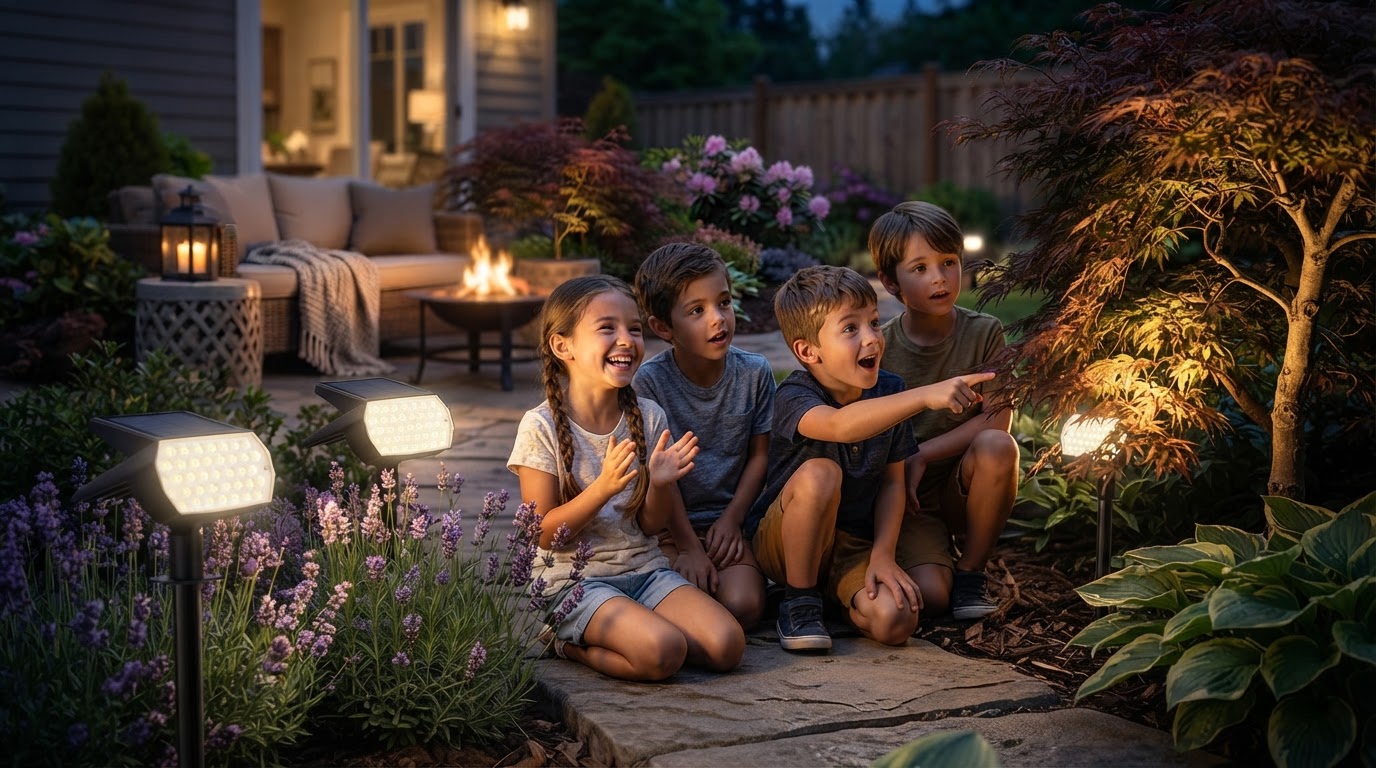
5-Step Setup for Solar Spot Lights Yard Uplighting
 Jordan HaleStaff Writer
November 9, 2026 — Recent shifts in outdoor design show a surge in homeowners adopting Solar Spot Lights to define their property boundaries without the labor of trenching wires. The first thing I noticed was how a simple shift in light angle could turn a flat, dark lawn into a textured landscape with real architectural depth. According to The Spruce, modern solar fixtures like the AloftSun models now offer sophisticated motion sensing and dusk-to-dawn capabilities that rival traditional low-voltage systems. I spent an evening recently testing how these units handle the transition from sunset to deep night, watching the warm glow catch the underside of my oak branches.
The 5-Step Setup Framework
Setting up solar powered uplights for your yard requires a strategic approach to both solar gain and beam spread. First, identify the primary focal points, such as ornamental trees or textured stone walls, ensuring you understand the difference between solar flood lights vs spot lights to choose the right beam width. Second, position the stakes at a 45-degree angle approximately two feet from the base of the object to capture the full vertical texture. Third, ensure the photovoltaic panel is oriented toward the southern sky; even high-performance Solar Spot Lights require clear access to UV rays to hit their peak 12,000-impression performance standards. Fourth, adjust the lumen output settings—many units offer a high-brightness mode for shorter durations or a dimmed mode for extended 12-hour runtimes. Finally, check the IP rating to ensure the housing is fully waterproof against irrigation overspray. It turns out that the most effective yard layouts often combine these focused beams with broader solar landscape spotlights to eliminate dark voids between features. When you are illuminating canopy depth with solar spot lights, the goal is to create layers of light rather than a single harsh glare. This is particularly effective when working with unique foliage, similar to the techniques used for solar uplighting for palm trees, where the trunk texture is the star of the show.
Expert tip: To maximize the life of your dusk-to-dawn sensors, wipe the solar panel with a damp microfiber cloth every two weeks to prevent pollen and dust buildup from triggering an early shut-off.
I keep coming back to the simplicity of this cordless transition, where the yard breathes new life the moment the sun dips below the horizon.
Sources
- Solar Lights - Solar Powered Outdoor Lights | VOLT® Lighting
- Solar Powered Landscape Lighting - Brilliance Outdoor
- Solar Garden Lighting - Hoselink USA