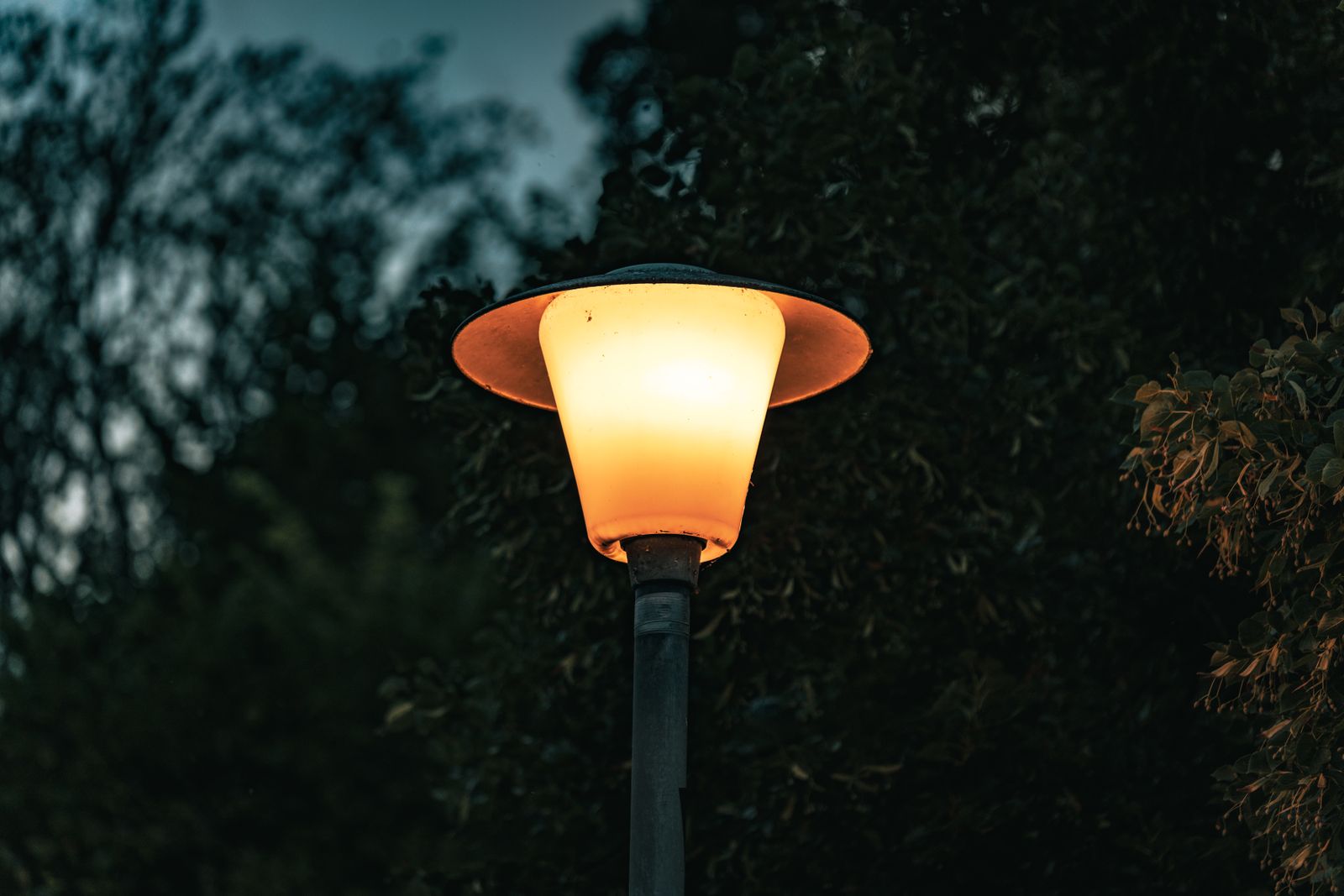
Best Solar Spotlight Layouts for Perimeter Home Security: Eliminating Dark Blind Spots
Many homeowners mistakenly believe mounting a single ultra-bright floodlight will secure an entire side yard or fence line. In reality, single-point lights project harsh directional beams that create deep, dark shadow pockets where intruders can easily hide. To eliminate perimeter blind spots completely, space 600-lumen solar spotlights 8 to 12 feet apart at a 45-degree downward angle. Wall-mount fixtures 6 to 8 feet high along entryways, or stake them into the ground along fence lines using 6500K Cool White light to achieve maximum visual contrast and camera clarity.
Perimeter Security Lighting Blueprint & Beam Overlap Geometry
To achieve seamless perimeter illumination without shadow gaps, light cone geometry must be calculated alongside solar panel orientation. The diagram below illustrates how 120-degree beam spread fixtures spaced 10 feet apart create a continuous 20% overlap zone while solar panels remain directed toward southern sunlight exposure.
Zone-by-Zone Perimeter Security Layout Scenarios
50-Foot Rear Fence Line — Space 5 ground-staked spotlights exactly 10 feet apart along the fence line. Angle the light heads up at 30 degrees to illuminate fence pickets, while rotating the polycrystalline solar panels south to clear fence shadows. Select 6500K Cool White mode for continuous 10-foot overlapping beam arcs.
Narrow Side Yard Alleyway (4-6 Feet Wide) — Wall-mount fixtures 7 feet high on the house siding, spaced 12 feet apart. Aim the light heads down at a 45-degree angle toward the walkway. Tilt the solar panels upward to extend past the roof eave shadow line, ensuring at least 6 hours of unshaded daily sunlight capture.
Dark Rear Entry & Sliding Glass Door — Flank the doorway with two wall-mounted spotlights positioned 6 feet off the ground and 4 feet to the left and right of the door frame. Cross-fire the 120-degree light beams toward the center step to eliminate shadows around the door handle and lockset.
Every property layout presents unique physical boundaries and shading challenges. Below are actionable layout blueprints tailored to standard residential security zones using 600-lumen, 120-degree adjustable solar spotlights.
5 Placement Mistakes That Leave Your Perimeter Vulnerable
Avoid these critical installation errors that compromise nighttime safety and drain battery life:
Pre-Installation Security Lighting Placement Checklist
- Measure total perimeter running distance in feet along fences, side alleys, and walls.
- Perform a midday sun audit to confirm proposed panel mounting spots receive 6–8 hours of unshaded daylight.
- Mark fixture locations precisely 8 to 12 feet apart to ensure a 20% beam overlap.
- Verify light heads can be aimed downward at 45° without pointing straight into neighboring windows.
- Confirm solar panels can tilt south/unshaded while light heads point toward target ground security zones.
- Select Cool White (6500K) mode for high-contrast security visibility around entryways and gates.
Visual Gallery: Effective vs. Ineffective Security Layouts
Compare real-world lighting footprints to visualize how proper spotlight height and overlap eliminate perimeter hazards.
Executing Your Security Lighting Layout Plan
Your decision: Determine your perimeter's primary security vulnerabilities (e.g., unlit side yard vs dark back door) and measure total running distance.
Do this next: Map out 8-12ft fixture intervals on your property, ensure proposed solar panel locations receive 6+ hours of direct sunlight, and set lights to Cool White mode.
Related resource: Downloadable PDF Layout Planning Grid for Residential Landscape Lighting.
Nacinic 74-LED 600 Lumen Solar Spot Lights (Pack of 4) with 3 Color Modes and 2-in-1 Mounting.
Follow these practical steps to transition from layout planning to field setup:
Key Security Placement Rules to Remember
- Space 600-lumen spotlights 8 to 12 feet apart to achieve an overlapping 120-degree light curtain with zero dark gaps.
- Mount fixtures 6 to 8 feet high on walls for entryways, or stake into the ground for fence lines and garden borders.
- Utilize 6500K Cool White lighting mode for security coverage to maximize facial recognition and contrast on security cameras.
- Take advantage of 120-degree dual-axis adjustment to aim the solar panel south while directing the light head downward.
- Ensure panels receive 6+ hours of unshaded sunlight daily to power 6-14 hours of continuous dusk-to-dawn operation.
Selecting the Right Setup for Each Security Zone
Choose between ground-stake and wall-mount configurations based on boundary height, architectural surfaces, and plant growth.
Best choice for
- Ground Stake Installation — Allows flexible placement along soil borders and easy angle adjustment upward to illuminate fence pickets.
- Wall Mount Installation — Elevates light source above head height to cast wide downward illumination without creating tripping hazards or glare.
- Avoid mounting under north-facing deep roof eaves where daylight exposure is under 4 hours.
- Avoid ground staking in low-lying garden beds prone to standing water or heavy tall foliage obstruction.
- Dual-Angle Elevation Staking — Use extended stakes in high mulch beds to elevate solar panels above low shrubbery.
Recommended Hardware for Perimeter Security Layouts
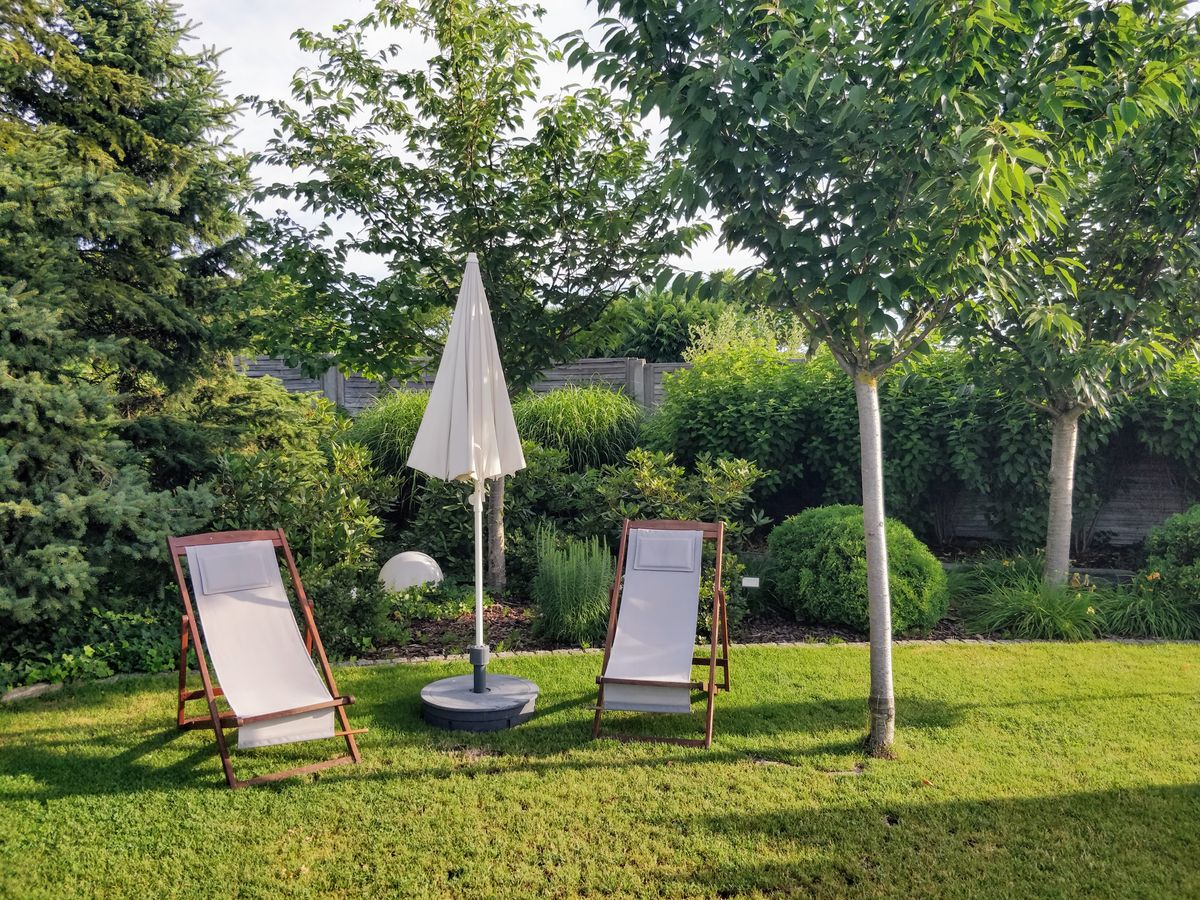
Photo by MrGajowy3 Teodor on Pexels
To execute a flawless perimeter security layout, hardware flexibility is essential. The Nacinic 74-LED 600 Lumen Solar Spot Light is specifically engineered for residential security applications. Equipped with 74 high-power LED beads generating 600 lumens of bright light, these fixtures feature high-efficiency polycrystalline silicon solar panels with a 20% conversion rate, ensuring 6 to 14 hours of continuous illumination on a single daylight charge.
With 3 selectable color modes—Cool White (6500K) for high-contrast security, Natural White (4000K) for balanced pathways, and Warm White (3000K) for landscape aesthetics—you can tailor lighting per zone. The 2-in-1 installation system allows effortless ground staking or secure wall mounting, while the 120-degree adjustable head solves eave shading issues. Backed by an IP65 waterproof rating, Nacinic spotlights withstand heavy rain, snow, wind, and frost year-round.
Ready to eliminate dark blind spots around your property? Equip your perimeter with Nacinic 600-Lumen 3-Color Solar Spotlights. With 20% high-efficiency solar panels, IP65 weatherproofing, and versatile 2-in-1 wall or ground mounting, securing your home has never been easier.
Security Coverage Matrix by Scenario
| Security Zone Scenario | Recommended Spacing | Mounting Method | Target Light Angle | Optimal Color Mode | Expected Runtime |
| --- | --- | --- | --- | --- | --- |
| 50ft Perimeter Fence Line | 10 Feet Apart | Ground Stake | 30° Upward onto Fence | Cool White (6500K) | 10 - 14 Hours |
| Narrow Side Yard Alleyway | 12 Feet Apart | Wall Mount (7ft Height) | 45° Downward onto Path | Cool White (6500K) | 8 - 12 Hours |
| Rear Patio & Sliding Door | 8 Feet Apart (Flanking) | Wall Mount (6ft Height) | 60° Cross-Fire Downward | Natural White (4000K) | 8 - 12 Hours |
| Front Walkway & Gate | 8 - 10 Feet Apart | Ground Stake | 45° Forward onto Path | Cool White (6500K) | 10 - 14 Hours |
Compare recommended fixture specs, mounting heights, and beam throw geometry across primary home perimeter security zones:
Pro Tip: Dual-Axis Adjustment for Shaded Eaves
When installing wall-mounted solar spotlights under deep roof eaves or soffits, ambient shade can dramatically restrict solar charging. Take advantage of the 120-degree independently adjustable light head and solar panel joint. Loosen the side thumb screw, tilt the polycrystalline solar panel forward and upward at a 30 to 45-degree angle toward the southern sky beyond the roof eave, and point the 74-LED light head downward at a 45-degree angle toward your target security zone. This dual-axis positioning preserves maximum solar absorption (maintaining up to a 20% conversion rate) while directing 600 lumens of light exactly where intruders might step.
Expand Your DIY Solar Security System
Explore these additional home security and outdoor solar lighting resources to complete your exterior plan:
- Ground Stake vs. Wall Mount Solar Spot Lights: Which Installation Method Is Best?
- Step-by-Step Guide: How to Wall-Mount Solar Spot Lights on Brick, Wood, and Stucco
- How to Angle Solar Spot Lights for Maximum Sunlight Capture Year-Round
- Why Solar Lights Run Out of Power Early: Troubleshooting Runtime & Sensors
Frequently Asked Questions About Solar Security Placement
How far apart should 600 lumen spotlights be spaced along a fence line?
For optimal security coverage without dark gaps, 600-lumen spotlights with a 120-degree beam spread should be spaced 8 to 12 feet apart. Spacing them further than 12 feet creates V-shaped shadow pockets along the ground.
Should I choose Cool White or Warm White for home security lighting?
Cool White (6000K-6500K) is best for home security because it delivers bright, high-contrast illumination that makes facial features, clothing colors, and movement clearly visible to human eyes and security cameras. Warm White (3000K) is better suited for decorative landscape accent lighting.
How do I keep solar panels charged if mounting spotlights under dark roof eaves?
Advise using the 120-degree adjustable head feature to tilt the panel forward or outward beyond the eave's shade line, or mount lights on outer wall surfaces and fence posts that receive at least 6 hours of unshaded south/southwest sunlight daily.
Can wall-mounted solar spotlights withstand heavy winter wind, rain, and freezing frost?
Reassure readers that quality spotlights rated IP65 waterproof are completely sealed against heavy rain, blowing snow, and frost. High-impact ABS construction prevents cracking in sub-zero winter temperatures.
Find fast answers to common placement and installation questions:
Next Steps: Complete Your Security Blueprint
Your decision: Determine your perimeter's primary security vulnerabilities (e.g., unlit side yard vs dark back door) and measure total running distance.
Do this next: Map out 8-12ft fixture intervals on your property, ensure proposed solar panel locations receive 6+ hours of direct sunlight, and set lights to Cool White mode.
Related resource: Downloadable PDF Layout Planning Grid for Residential Landscape Lighting.
Nacinic 74-LED 600 Lumen Solar Spot Lights (Pack of 4) with 3 Color Modes and 2-in-1 Mounting.
Take action today to secure your property lines and eliminate shadow pockets:
Cover photo by Baran Robin on Pexels.